
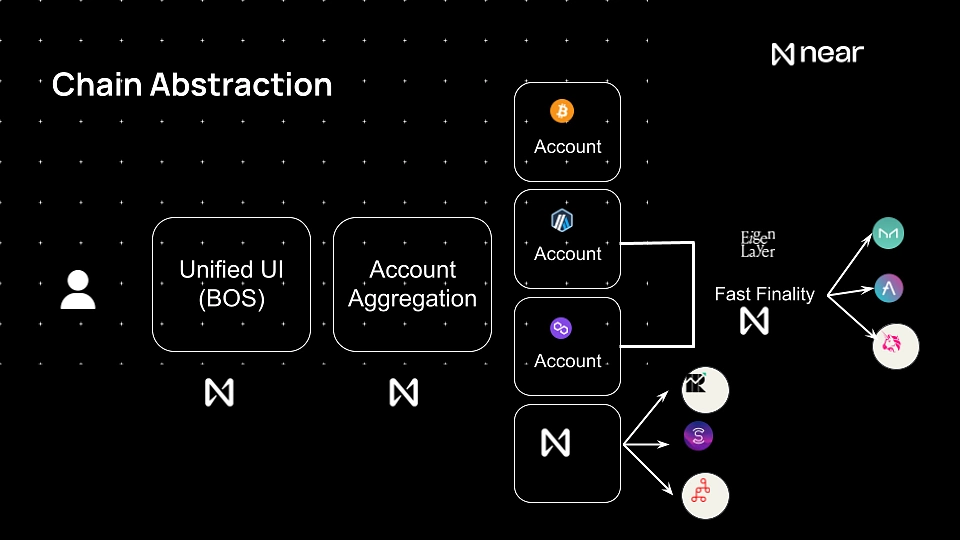
Defining chain abstraction in 2026
Chain abstraction is a user experience framework that unifies fragmented blockchain networks into a single interface. It shifts the focus from managing underlying infrastructure to executing specific financial intents. In this model, the user does not need to select a specific chain, manage native gas tokens, or track balances across multiple ledgers. Instead, the system handles the routing and settlement behind the scenes.
This approach is distinct from simple cross-chain bridging. Bridging requires the user to actively move assets from one chain to another, incurring fees and waiting for confirmations on both sides. Chain abstraction removes this friction entirely. The user expresses a desire, and an intent solver finds the most efficient path to fulfill it, regardless of where the assets currently reside.
Consider a concrete example: a trader wants to swap ETH for USDC on Arbitrum, but their funds are held on Base. In a bridged workflow, the user must manually bridge ETH from Base to Arbitrum, then execute the swap. With chain abstraction, the user simply submits the intent. The solver might settle the trade on Arbitrum using a liquidity pool on Base, or it might use a wrapped asset representation, all without the user ever seeing or interacting with the Base chain.
The primary goal is to make the underlying blockchain invisible. As noted by industry analysis, the design objective is to make users interact with applications without ever picking, seeing, or thinking about which chain they are using. This transforms the experience from a multi-step technical task into a single, unified action, similar to how email works without users needing to know which servers their message passes through.
How intent-centric architecture works
Intent-centric systems represent a structural shift in how blockchain interactions are defined and executed. In traditional Web3 workflows, the user is responsible for the entire execution chain: approving token allowances, bridging assets across networks, selecting the optimal routing path, and paying gas fees on every hop. This process requires deep technical literacy and exposes the user to significant execution risk. Intent-centric architecture decouples the user’s desire from the mechanics of fulfillment. The user declares what they want; a network of specialized agents, known as solvers, determines how to get it done.
To understand the mechanism, consider a concrete example. A user wants to swap ETH for USDC on Arbitrum, but their funds are currently sitting on Base. In a legacy model, the user must manually bridge the ETH, wait for confirmation, and then execute the swap on a decentralized exchange. In an intent-centric model, the user submits a signed intent: "Swap 1 ETH on Base for USDC on Arbitrum." This intent is broadcast to a competition of solvers. These solvers, which may be sophisticated algorithms or dedicated firms, compete to fulfill the request. They calculate the most efficient route, which might involve bridging the ETH via a specific liquidity pool, routing it through multiple DEXs, and settling the final USDC delivery on Arbitrum. The solver that can fulfill the intent with the best price or lowest risk wins the right to execute the transaction.
This competition among solvers is what drives efficiency and creates unified liquidity. Solvers aggregate liquidity from various sources—bridges, DEXs, and lending protocols—to find the optimal path for each intent. Because solvers are motivated by profit, they continuously optimize these routes, effectively creating a unified market for cross-chain assets. The user does not need to know which bridge or exchange is being used; they only need to trust that the solver will fulfill the signed intent. If a solver fails to deliver, the smart contract logic ensures the user’s funds are returned, mitigating the risk of loss.
The result is a system where the complexity of multi-chain operations is hidden behind a simple promise. The user retains custody of their assets until the moment of execution, and the solver bears the burden of routing and settlement. This architecture transforms blockchain from a series of disjointed transactions into a cohesive service layer, where the focus shifts from how to move assets to what the assets are for.
Execution checklist
When evaluating an intent-centric protocol, consider these structural safeguards:
- Verify that the solver network is permissionless or has transparent selection criteria.
- Check for atomic settlement guarantees that return funds if the intent fails.
- Review the fee structure to ensure solvers do not extract excessive slippage.
- Confirm that the user’s intent is signed locally and never stored on-chain before execution.
Unified liquidity across fragmented chains
Liquidity fragmentation remains the primary structural inefficiency in multi-chain ecosystems. Capital is siloed within individual layer-2s and sidechains, forcing users to manually bridge assets and manage disparate wallets. Chain abstraction resolves this by creating a unified pool of capital accessible via a single interface, significantly improving capital efficiency through intent-centric execution.
Instead of executing trades on isolated ledgers, intent solvers aggregate demand across the entire ecosystem. This allows a user to specify a high-level goal rather than a specific transaction path. The solver then routes the execution across the most efficient chains, handling bridging and settlement in the background. For example, a user might state, "I want to swap ETH for USDC on Arbitrum using funds on Base." The system identifies the best path, executes the swap, and settles the result without the user ever interacting with a bridge contract.
This shift transforms liquidity from a fragmented resource into a shared utility. Traditional multi-chain workflows require users to predict which chain holds the deepest liquidity and manually move assets, often incurring high gas fees and slippage. Abstracted UX eliminates this friction by presenting a single, aggregated balance to the user.
The following comparison illustrates the structural differences between legacy multi-chain interactions and abstracted execution models.
| Feature | Traditional Multi-Chain UX | Abstracted UX |
|---|---|---|
| Asset Movement | Manual bridging required | Auto-routing by solver |
| Wallet Management | Multiple wallets per chain | Single unified interface |
| Liquidity Access | Isolated to specific chain | Aggregated across all chains |
| Execution Logic | User specifies path | User specifies intent |
| Gas Fees | Paid per chain separately | Optimized and bundled |
Market impact and adoption signals
The shift toward chain abstraction is no longer theoretical; it is reshaping how capital moves across the Ethereum ecosystem. By 2026, the dominant narrative has moved from fragmented liquidity pools to intent-centric execution, where users submit high-level desires rather than manual transaction sequences. This structural change reduces friction and allows liquidity to flow more efficiently between Layer 2 networks.
Intent solvers are the engine behind this unified liquidity model. Instead of users manually bridging assets or swapping tokens across different chains, solvers aggregate orders and execute them off-chain or via cross-chain atomic swaps. For example, a user might submit an intent: "I want to swap ETH for USDC on Arbitrum using funds on Base." The solver finds the optimal path, executes the trade, and settles the result, all without the user managing bridges or gas on multiple chains.
This abstraction layer is gaining traction among institutional and retail users alike. Projects like Safe and NEAR are leading the charge by making the underlying blockchain infrastructure invisible to the end-user. The market impact is evident in the increasing volume of cross-chain intents, signaling a move toward a more seamless and efficient financial landscape.
The adoption of chain abstraction is driven by its ability to solve the liquidity fragmentation problem. As more users adopt intent-centric UX, liquidity providers can offer better rates by accessing a deeper, unified pool of assets. This creates a positive feedback loop, where improved UX drives adoption, which in turn deepens liquidity and further enhances the user experience.
What chain abstraction actually solves
The primary misconception is that chain abstraction eliminates the technical differences between blockchains. It does not. Instead, it manages them invisibly through intent solvers that handle the complex cross-chain logistics on the backend. The user interface remains unified, but the underlying settlement layers retain their distinct security properties and consensus mechanisms.
Consider the intent: "I want to swap ETH for USDC on Arbitrum using funds on Base." A naive interpretation might suggest a single, monolithic ledger. In reality, the intent solver orchestrates a series of atomic operations. It may lock assets on Base, bridge them via a trusted relay, and execute the swap on Arbitrum, all while guaranteeing that the user receives the specified output or gets a refund. This process hides the friction of bridging and gas management without removing the fundamental architectural boundaries that ensure network security.
This distinction is critical for high-stakes finance. Abstraction is a user experience framework, not a security upgrade. It unifies fragmented networks into a single interface, but it does not make the underlying blockchains identical or inherently safer. The security of the transaction still depends on the robustness of the individual chains and the integrity of the solvers managing the intent. Understanding this separation prevents false confidence in cross-chain operations and clarifies why liquidity remains distinct even when the user experience appears unified.
No comments yet. Be the first to share your thoughts!