
The invisible blockchain layer
Chain abstraction is the design goal of making users interact with blockchain applications without ever picking, seeing, or thinking about which network they are using. In 2026, the industry is shifting from a fragmented landscape of isolated silos to a unified experience where the underlying complexity is handled entirely in the background.
Currently, the user experience is defined by friction. To move value or interact with an app, a user must manually switch networks, hold native gas tokens for each chain, and navigate bridge interfaces that often fail or incur high fees. This fragmentation is a barrier to mass adoption. Most potential users do not want to be blockchain operators; they want to use applications.
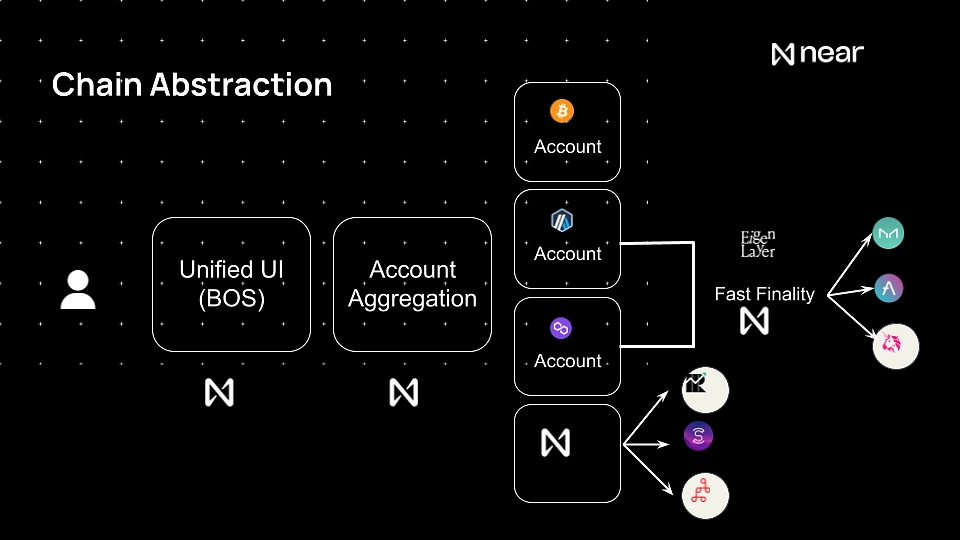
The solution is infrastructure that makes the modular mess invisible. Instead of the user acting as the router, the abstraction layer sits between the front-end application and the various blockchain networks. It allows a single transaction to settle across multiple chains seamlessly. The user sees one interface; the system handles the rest.
This shift matters because it aligns blockchain technology with standard software expectations. Just as you do not need to know how HTTP packets traverse the internet to send an email, you should not need to understand consensus mechanisms to use a decentralized finance app. By hiding the complexity, chain abstraction allows developers to build for the user, not the infrastructure.
How intent-based routing works
Intent-based routing replaces manual bridging with a declarative transaction model. Instead of instructing the network how to move assets across chains, the user specifies what they want to achieve. The system then autonomously handles the complex logistics of moving funds, executing swaps, and settling on the destination chain. This approach treats blockchain interaction less like a manual transfer and more like a service request.
The mechanism relies on a clear separation between the user's goal and the executor's labor. When a user submits an intent, they sign a message declaring their desired outcome, such as "send USDC from Ethereum to Base." They do not specify the route, the gas token, or the bridge to use. This abstraction hides the modular mess of fragmented liquidity, allowing the backend to find the most efficient path without user intervention.
Executors, often called solvers or oracles, compete to fulfill these intents. They monitor the mempool for valid requests and propose solutions that meet the user's criteria. The solver with the best rate or lowest cost wins the right to execute the transaction. This competitive marketplace ensures efficiency, as solvers optimize for speed and price slippage across multiple chains simultaneously.
The result is a unified user experience across disjointed networks. Users interact with a single interface while the underlying infrastructure manages the cross-chain complexity. This shift from procedural bridging to intent-based settlement is the core technical driver behind chain abstraction in 2026.
Unified accounts replace bridging
Chain abstraction aims to create a seamless user experience by allowing one account to interact with multiple blockchains, eliminating the need for manual bridging. This shift moves the complexity from the user to the backend, where smart account logic handles the heavy lifting.
The old way: Manual bridging and wrapping
Before unified accounts, users had to actively manage their liquidity across chains. This involved:
- Bridging assets: Sending funds to a bridge contract, waiting for confirmation, and hoping the bridge doesn't get hacked.
- Wrapping tokens: Converting native tokens into wrapped versions (e.g., wETH) to use on different chains.
- Managing gas: Holding native tokens on every chain to pay for transaction fees.
This process is fragmented and error-prone. A single mistake can result in lost funds or stuck transactions.
The new way: Unified accounts
Unified accounts consolidate balances across multiple chains into a single interface. Users see one total balance and can transact without worrying about which chain they are on. The backend automatically routes assets and pays for gas using any available token.
| Feature | Traditional Cross-Chain UX | Chain Abstraction UX |
|---|---|---|
| Account Management | Multiple wallets per chain | Single universal account |
| Asset Movement | Manual bridging required | Automatic routing |
| Gas Fees | Native token required per chain | Any token accepted |
| Token Format | Wrapped tokens necessary | Native token usage |
This approach significantly reduces friction, making cross-chain interactions feel like a single-chain experience.
| Feature | Traditional Cross-Chain | Chain Abstraction |
|---|---|---|
| Account Management | Multiple wallets per chain | Single universal account |
| Asset Movement | Manual bridging required | Automatic routing |
| Gas Fees | Native token required per chain | Any token accepted |
| Token Format | Wrapped tokens necessary | Native token usage |
The goal is to hide the modular mess from users, allowing them to focus on what they want to do rather than how to move their assets.
Market leaders in 2026
The chain abstraction narrative has moved from theoretical whitepapers to tangible market dominance. By 2026, the protocols winning this space are those that successfully hide the underlying modular complexity while maintaining robust security guarantees. Among the frontrunners, River (RIVER) has emerged as a primary market leader, leveraging its innovative "Chain Abstraction" omni-chain stablecoin protocol to bridge liquidity gaps that previously fragmented user experience.
River’s approach focuses on abstracting the friction of cross-chain transfers, allowing users to interact with a unified liquidity layer regardless of the underlying chain. This omni-chain strategy positions RIVER not just as a utility token, but as a central infrastructure component for seamless value transfer. The protocol’s rise reflects a broader market shift toward solutions that prioritize user experience over technical novelty.
To understand the current market valuation and momentum of these abstraction leaders, we can look at live price data for key assets like RIVER. This provides a real-time snapshot of how the market is pricing the potential of hidden modular infrastructure.
While River leads the stablecoin abstraction segment, the broader ecosystem includes various interoperability layers and account abstraction frameworks. These protocols collectively work to solve the "modular mess" by providing standardized interfaces for cross-chain communication. As the technology matures, the distinction between native and abstracted chains will likely blur, making the underlying infrastructure increasingly invisible to the end user.
Where the Abstraction Still Leaks
Chain abstraction promises to hide the modular mess, but in 2026, the curtain is still thin. While the user experience has improved, the underlying infrastructure remains a fragmented landscape of isolated rollups and heterogeneous chains. The abstraction exists, but it leaks through three critical failure points: gas complexity, security liabilities, and liquidity fragmentation.
Gas Complexity and Intent Routing
The most immediate leak is cost. Abstraction layers often route user intents through complex cross-chain paths. If the intent router selects an inefficient route, the user pays for multiple bridge fees and execution costs, negating the "one-click" promise. The abstraction hides the path, but it does not always optimize the cost.
Security Surface Area
Every abstraction layer adds a new attack vector. When a smart contract mediates between disparate chains, it becomes a high-value target. Bugs in the intent resolution logic or the cross-chain messaging protocol can lead to significant losses. The security model shifts from a single-chain trust assumption to a multi-chain trust assumption, which is inherently weaker.
Liquidity Fragmentation
Liquidity remains the hardest problem to solve. Even with abstracted wallets, funds are still physically trapped on specific chains. This fragmentation leads to slippage and poor execution prices. The user sees a single balance, but the underlying assets are scattered across dozens of isolated pools, making large trades expensive and risky.
No comments yet. Be the first to share your thoughts!