
Chain abstraction 2026 limits to account for
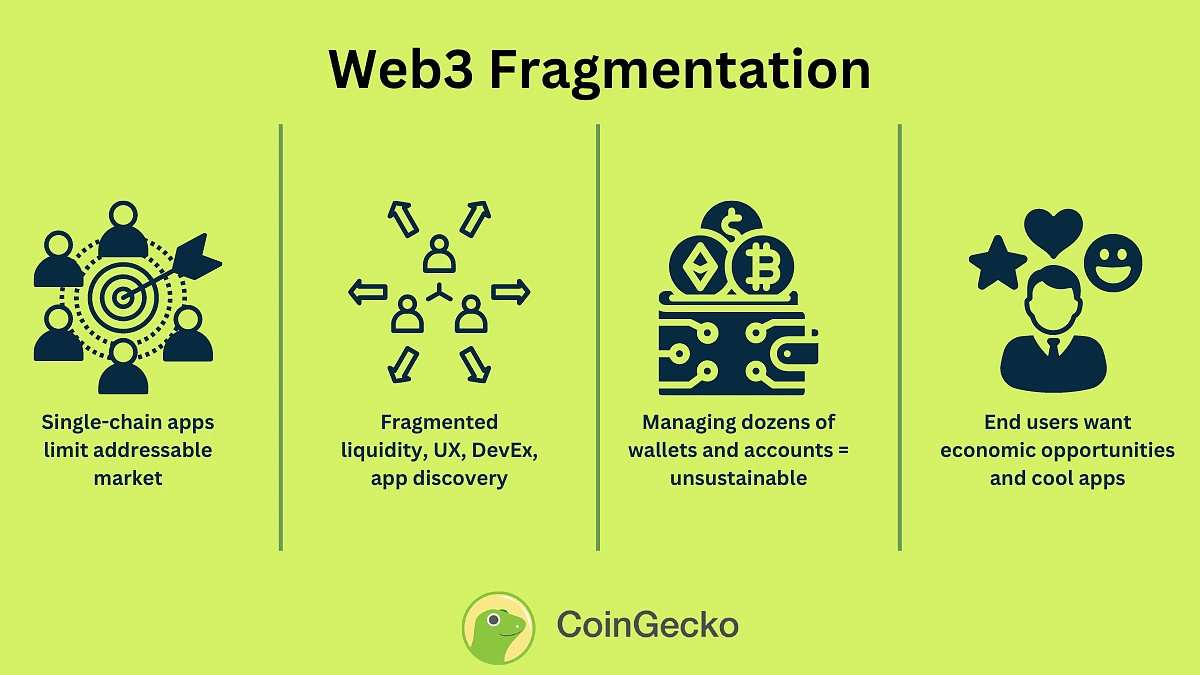
Chain abstraction is the design goal of making users interact with blockchain applications without ever picking, seeing, or thinking about which network they are using. In 2026, this is no longer a theoretical promise but a practical constraint: the technology must unify fragmented liquidity and intent-centric UX into a single interface that feels like a standard web app.
The core challenge is bridging the gap between the underlying complexity of multiple chains and the simplicity users expect. Early attempts often required manual bridging and wrapping of assets, which introduced significant friction and security risks. Today, the focus has shifted to intent-centric solutions where the user specifies what they want to achieve, and the backend handles the cross-chain logistics.
This shift redefines cross-chain interoperability. Instead of users navigating different ecosystems, the abstraction layer acts as a middleware that aggregates liquidity and executes trades across chains seamlessly. The result is a unified experience where the underlying chain becomes invisible, allowing developers to build applications that can access the entire crypto economy without managing the complexity of multiple networks.
| Feature | Traditional Cross-Chain | Chain Abstraction |
|---|---|---|
| User Experience | Manual bridging and wrapping | Single interface, no chain selection |
| Liquidity Access | Fragmented across isolated pools | Aggregated and unified |
| Security Model | High risk of bridge exploits | Intent-based execution, reduced attack surface |
Chain abstraction 2026 choices that change the plan
Chain abstraction promises a single interface for fragmented networks, but the 2026 landscape reveals significant tradeoffs between user convenience and operational reality. While the goal is to hide the "modular mess" from users, current implementations often leak underlying complexity. Developers and users must evaluate these tradeoffs carefully, as the abstraction layer introduces new points of failure and latency that did not exist in siloed chains.
Comparison of Abstraction Models
Different approaches to chain abstraction prioritize different aspects of the user experience and developer stack. The table below compares the most common models in 2026.
| Model | UX Complexity | Security Risk | Execution Cost |
|---|---|---|---|
| Unified Liquidity | Low | Medium (Bridge Risk) | Low |
| Intent-Centric | Low | High (Solver Risk) | Medium |
| Wrapped Assets | High | High | High |
| Cross-Chain DEX | Medium | Medium | Medium |
Key Tradeoffs to Evaluate
Security vs. Convenience Unified liquidity models reduce user friction but introduce bridge risks. If the abstraction layer relies on cross-chain bridges, a compromise in the bridge contract can drain funds. Intent-centric models shift this risk to solvers, who may fail to execute or act maliciously. Wrapped assets offer higher security but require users to manage multiple token versions, increasing complexity.
Latency vs. Finality Abstraction layers often introduce latency as they route transactions across chains. Intent-centric models can take longer to execute as they wait for solver competition. Unified liquidity models may offer faster swaps but rely on optimistic finality, which can be reversed in rare cases. Developers must choose between speed and guaranteed finality based on their application’s needs.
Cost Efficiency Execution costs vary significantly. Wrapped assets often incur multiple transaction fees and bridge costs. Intent-centric models bundle costs into a single fee but may include solver premiums. Unified liquidity models generally offer the lowest costs for simple swaps but can become expensive for complex multi-chain interactions.
Market Context
The value of chain abstraction solutions is closely tied to the broader crypto market. Understanding current asset performance helps contextualize the adoption of these technologies.
For a deeper technical analysis of the underlying assets driving these ecosystems, consider the following chart.
Decision Framework
Choose unified liquidity for high-frequency trading where cost and speed are paramount. Select intent-centric models for complex, multi-step transactions where user experience is critical. Avoid wrapped assets unless maximum security is required and user complexity is acceptable. Always audit the specific abstraction layer’s security record before integrating it into production.
Choose the next step
Chain Abstraction works best as a clear sequence: define the constraint, compare the realistic options, test the tradeoff, and choose the path with the fewest hidden costs. That order keeps the advice usable instead of decorative. After each step, pause long enough to check whether the recommendation still fits the reader's actual situation. If it depends on perfect timing, unusual access, or a best-case budget, include a simpler fallback.

Avoid the weak options
Use this section to make the Chain Abstraction decision easier to compare in real life, not just on paper. Start with the reader's actual constraint, then separate must-have requirements from details that are merely nice to have. A practical choice should survive normal use, maintenance, timing, and budget. If a recommendation only works in an ideal situation, call that out plainly and give the reader a fallback path.
The simplest way to use this section is to write down the must-have criteria first, then compare each option against those criteria before weighing nice-to-have features.
No comments yet. Be the first to share your thoughts!