
Why chain abstraction 2026 matters
The current crypto experience is fractured. Users must manually manage wallets, swap tokens across bridges, and pay gas fees in native currencies for every chain they touch. This fragmentation creates friction that keeps mainstream adoption at bay. Chain abstraction solves this by hiding the underlying infrastructure, allowing you to interact with a single interface regardless of where the data actually lives.
Consider a simple transaction: sending USDC from Ethereum to Solana. In a traditional setup, you would need to bridge assets, wrap tokens, and manage two different gas fees. With chain abstraction, you simply sign one intent. A solver in the background routes the liquidity, handles the bridging, and settles the transaction on the destination chain. You never see the bridge, and you rarely need to hold the destination chain’s native token for gas.
This shift is not just about convenience; it is about security and verification. Intent-based systems rely on robust verification layers to ensure that the solver executes your request correctly. By abstracting away the manual steps, you reduce the attack surface associated with interacting with multiple dApps and bridge contracts. The result is a seamless flow where the technology works in the background, leaving you to focus on the outcome rather than the mechanics of movement.
How intent-based execution works
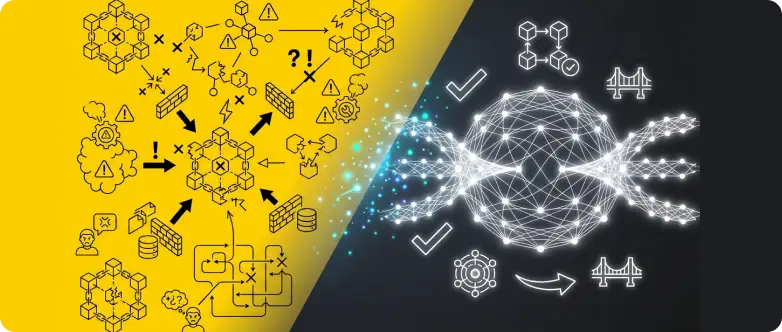
Chain abstraction replaces manual bridging with an automated execution layer. You state what you want to achieve, and the network figures out how to get it there securely. This intent-based architecture orchestrates interactions across disjointed blockchain networks without requiring you to manage liquidity or gas on every hop (src-serp-2).
The system relies on three distinct actors: you (the user), solvers (the competitors), and relayers (the executors). Here is the step-by-step sequence of how that transaction moves from your wallet to the destination chain.
Instead of approving multiple transactions for bridging and swapping, you sign a single cryptographic message. This "intent" specifies the final goal—such as sending USDC from Ethereum to a Solana wallet—along with the maximum fee you are willing to pay. The network receives this signed request but does not execute it immediately.
The intent is broadcast to a pool of solvers. These are specialized entities that compete to fulfill your request. Each solver calculates the most efficient route, factoring in gas costs, slippage, and liquidity availability across various chains. They submit bids back to the network, with the best offer (usually the lowest fee or fastest execution time) selected to execute your trade.
Once a solver wins the bid, a relayer takes over. The relayer handles the complex, multi-chain mechanics: bridging assets, swapping tokens on decentralized exchanges, and settling the final amount into your destination wallet. You only see the initial intent and the final result, while the relayer ensures the transaction is verified and finalized on both the source and destination chains.
This separation of concerns is what makes chain abstraction secure and efficient. By offloading the "how" to specialized solvers and relayers, you avoid the common pitfalls of manual bridging, such as getting stuck with stale liquidity or paying excessive fees for unnecessary hops. The system verifies that the solver has committed to the route before execution, ensuring that your assets are protected throughout the journey.
Before attempting any cross-chain operation, verify that the relayer you are using has a proven track record of successful settlements. Check their historical performance and security audits to ensure your funds are not exposed to unnecessary risk during the execution phase.
Account vs. Chain Abstraction
Users often confuse these terms because both promise a smoother experience, but they solve entirely different problems. Account Abstraction (AA) fixes the wallet. Chain Abstraction (CA) fixes the network routing.
Account Abstraction upgrades the interface you interact with daily. It allows smart contracts to act as wallets, enabling features like gas sponsorship and social recovery. You might use AA to pay transaction fees with USDC instead of ETH, or to approve a dApp session that lasts for a week without signing every single action. The complexity of signing and gas management is hidden, but the liquidity remains trapped on one chain.
Chain Abstraction handles the movement of value across those isolated networks. It provides a unified view of liquidity spread across Ethereum, Solana, and Layer 2s. When you send USDC from Ethereum to Solana, chain abstraction protocols automatically route the transaction, swap assets if necessary, and settle the intent on the destination chain. You see a single balance and one transaction receipt, regardless of how many bridges or DEXs operated in the background.
The distinction becomes critical for security. AA relies on the user's device and private key management. Chain abstraction relies on intent-based settlement and cross-chain verification. If the routing layer fails, your funds may be stuck in a bridge contract, even if your wallet signature was perfect.
| Feature | Account Abstraction | Chain Abstraction | Primary Goal |
|---|---|---|---|
| Gas Payment | Pay fees in any token | Gas paid on destination chain | Wallet UX |
| Liquidity View | Single chain only | Unified cross-chain balance | Routing |
| Security Model | Smart contract signatures | Intent verification | Cross-chain settlement |
| User Action | Approve sessions | Send to any chain | Interoperability |
Common cross-chain mistakes to avoid
Chain abstraction promises to hide the modular mess, but it trades visible complexity for hidden risks. When you send USDC from Ethereum to Solana, you expect the transaction to just work. Instead, you often hand off control to a centralized solver or a single intent aggregator. If that operator fails, your funds don’t just sit idle—they can be stolen or lost forever.
Overlooking solver centralization
Most current abstraction layers rely on a small set of centralized solvers to execute intents. You might not see the wallet address, but you are trusting a single entity to find liquidity across chains. If that solver goes offline or acts maliciously, there is no decentralized fallback. Always check if the abstraction protocol you are using has a decentralized solver network or a clear, audited operator list. Don’t assume the "seamless" experience means the infrastructure is trustless.
Falling for intent frontrunning
When you broadcast an intent—like "swap 1 ETH for USDC on Arbitrum""—that message travels through a public mempool before a solver picks it up. Sophisticated bots can see your intent, front-run it, and execute their own transaction first, leaving you with a worse rate. This is especially dangerous for large trades. Use protocols that offer private intent submission or encrypted mempools to hide your trade details from the public eye until execution.
Ignoring hidden fees in abstracted transactions
Abstraction hides the gas token switch, but it doesn’t always hide the cost. Solvers often add a slippage margin or a hidden fee on top of the network gas. You might pay 0.5% more than the actual market rate because the solver needs to cover their operational costs and profit. Always compare the final received amount against the spot price on the destination chain. If the difference is significant, you are subsidizing the abstraction layer’s inefficiency.
Top chain abstraction protocols in 2026
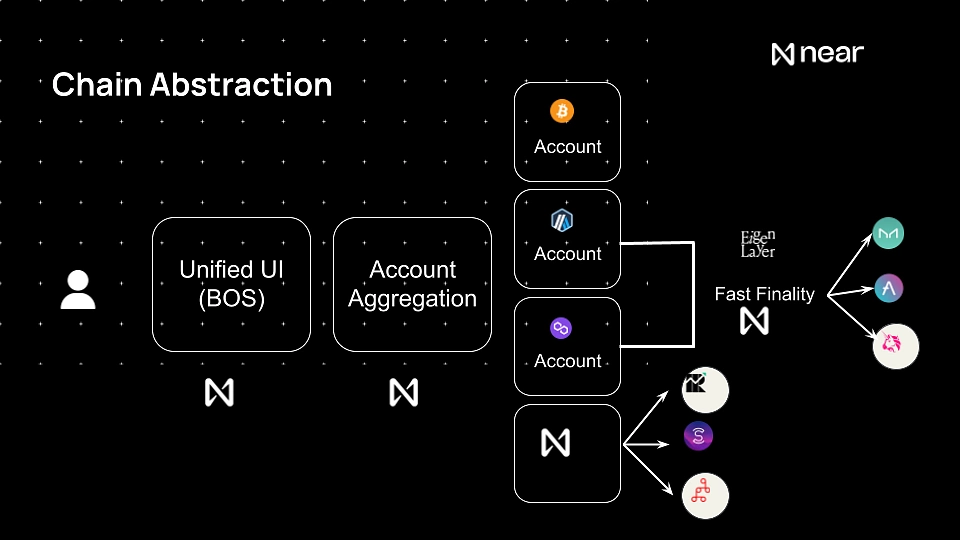
The infrastructure enabling seamless cross-chain UX relies on a few dominant protocols that handle the heavy lifting of verification and settlement. These providers act as the trust layer, allowing users to send assets like USDC from Ethereum to Solana without manually bridging or wrapping tokens.
LayerZero
LayerZero uses an omnichain interoperability protocol to verify messages between chains. Instead of relying on a single validator, it employs a decentralized network of oracles and relayers to ensure message integrity. This setup reduces the risk of bridge hacks by distributing trust rather than concentrating it in a single custodial entity.
Chainlink CCIP
Chainlink’s Cross-Chain Interoperability Protocol (CCIP) connects over 30 blockchains through a secure, decentralized network. It is particularly strong for institutional-grade transfers, offering strict security guarantees for high-value asset movements. Developers use CCIP to build applications that can safely move data and tokens across disparate networks without exposing users to complex gas fee management.
Solver Networks
Solver networks, such as those powering ZKsync’s native account abstraction, handle transaction execution in the background. When a user initiates a cross-chain swap, the solver signs the transaction on the destination chain and settles it on the source chain. This process is invisible to the user, who only sees a single confirmation screen, effectively masking the underlying complexity of intent-based settlement.
Chain Abstraction FAQs
Chain abstraction shifts the burden of complexity from the user to the protocol. Instead of manually bridging assets or managing multiple wallets, you interact with a single interface while the backend handles intent verification across chains. This section addresses common concerns about security, costs, and compatibility in the 2026 landscape.
No comments yet. Be the first to share your thoughts!