
Defining chain abstraction in 2026
Chain abstraction is a user experience framework that unifies fragmented blockchain networks into a single interface. It is not merely a technical protocol for cross-chain communication; it is a design goal focused on invisibility. The objective is to remove the friction of managing multiple chains, allowing users to interact with applications without ever picking, seeing, or thinking about the underlying infrastructure.
In 2026, the definition has shifted from developer convenience to consumer invisibility. As noted by Safe, chain abstraction is the process of making blockchains invisible to end-users. This means the complexity of bridging assets, switching networks, and managing gas tokens is handled entirely behind the scenes. The user sees only a single, cohesive application, regardless of how many chains are actually processing the transaction.
This approach treats the blockchain landscape as a utility rather than a destination. Just as you do not need to know which specific fiber optic cables carry your internet traffic, you should not need to deal with the complexities of Layer 2 rollups or sidechains to use a decentralized application. The focus is on the outcome—seamless interaction—rather than the mechanics of how liquidity is sourced or settled.
Why liquidity fragmentation hurts users
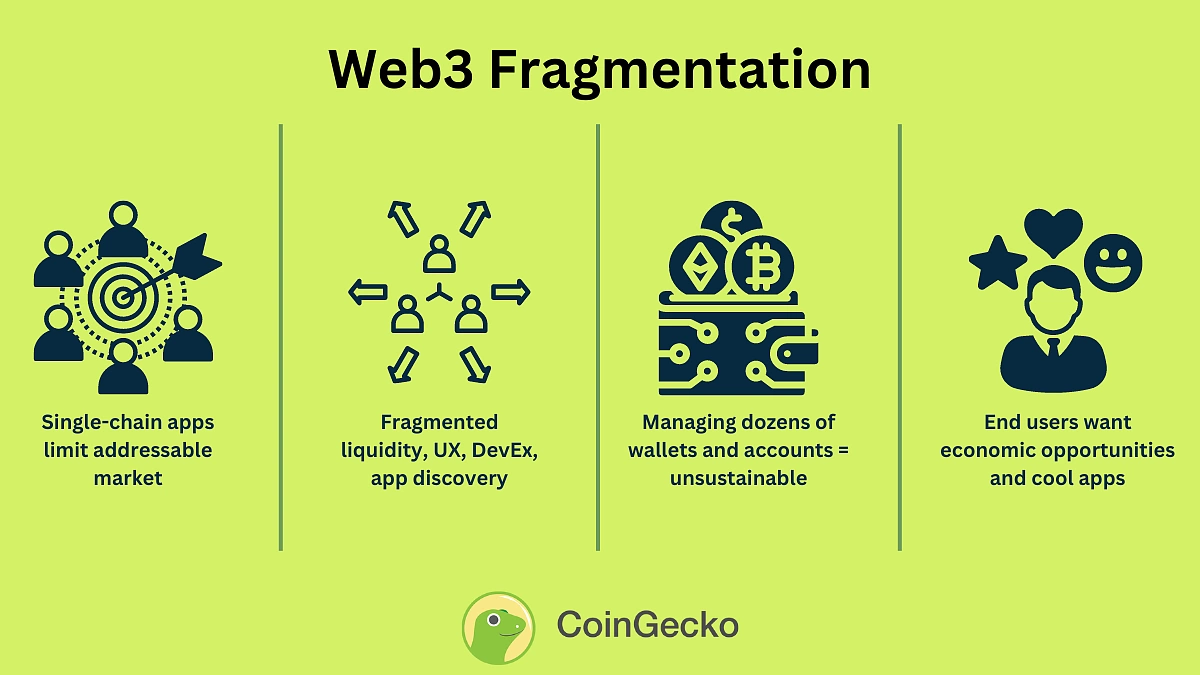
The current multi-chain landscape forces users through a maze of disconnected ecosystems. Liquidity is scattered across dozens of Layer 2s and sidechains, meaning capital that could be efficiently utilized is instead trapped in isolated pools. This fragmentation isn't just a backend inefficiency; it directly impacts the cost and speed of every transaction. When liquidity is thin on a specific chain, slippage increases, and users pay more to execute simple swaps.
Bridging assets between these chains introduces significant friction and risk. Users must manually move funds through bridge protocols, a process that is often slow, expensive, and prone to smart contract vulnerabilities. Each bridge hop adds a layer of complexity and potential failure points. Instead of interacting with an application, users spend their time managing cross-chain transfers, worrying about bridge security, and waiting for confirmations. This breaks the seamless flow that traditional finance offers.
The user experience suffers as a result. To interact with a dApp on a new chain, a user typically needs to hold that specific chain's native token for gas, manage multiple wallets, and understand which assets are available where. This cognitive load is a major barrier to adoption. Chain abstraction aims to solve this by unifying these fragmented networks into a single interface, allowing users to transact without worrying about the underlying infrastructure. By abstracting away the complexity of liquidity location and bridging, the technology can restore the simplicity that users expect from modern digital services.
How Unified Liquidity Mechanics Work
Chain abstraction replaces the fragmented reality of multi-chain trading with a single, unified liquidity layer. Instead of manually bridging assets or navigating separate interfaces for each network, intent-based systems aggregate liquidity from across the ecosystem. This allows users to execute trades or transfers as if they were on a single chain, while the underlying infrastructure handles the complexity of cross-chain settlement.
The core mechanism relies on a separation between user intent and execution. When a user submits a request—such as "swap Token A for Token B"—the system does not look for a direct pool on one chain. Instead, it routes the request through a network of liquidity providers and relayers who find the most efficient path across multiple chains. This eliminates the need for users to hold native tokens on every chain they interact with, significantly reducing friction and gas costs.
This architecture transforms liquidity from a siloed resource into a shared pool. Projects like Connext and NEAR Protocol demonstrate how this works in practice: developers build once, and the abstraction layer ensures the transaction settles correctly regardless of which chain the user started on. The result is a seamless experience where the underlying blockchain complexity is invisible to the end user.
Key Mechanics of Unified Liquidity
- Intent-Centric Design: Users specify the desired outcome, not the path. The network finds the optimal route automatically.
- Aggregated Liquidity: Pools from different chains are virtually combined, providing deeper liquidity and better prices.
- Automatic Settlement: Cross-chain transfers happen in the background, with the user receiving assets on their target chain without manual bridging steps.
This shift marks a move away from the "walled garden" model of individual blockchains toward a more interoperable future. As these systems mature, the distinction between "on-chain" and "off-chain" will blur, creating a unified financial layer that prioritizes user experience over technical constraints.
Comparing abstraction layers and protocols
Choosing the right chain abstraction solution requires evaluating how well it fits your specific use case, rather than relying on generic comparisons. A practical choice should survive normal use, maintenance, timing, and budget constraints. If a recommendation only works in an ideal situation, that limitation should be clearly stated along with a fallback path.
| Factor | What to check | Why it matters |
|---|---|---|
| Fit | Match the option to the primary use case. | A good deal still fails if it does not fit the job. |
| Condition | Verify age, wear, and service history. | Hidden condition issues erase upfront savings. |
| Cost | Compare purchase price with likely upkeep. | The cheapest option is not always the lowest-cost option. |
Security Risks and Adoption Barriers
Chain abstraction promises a unified experience, but it introduces complex attack surfaces that traditional single-chain dApps do not face. By layering abstraction protocols over multiple blockchains, developers must manage cross-chain messaging, liquidity routing, and state synchronization simultaneously. This complexity creates new vectors for exploits, particularly in the middleware that handles transaction relaying and asset bridging.
Smart contract risks are amplified when an abstraction layer becomes a single point of failure. If the central relayer or bridge contract is compromised, users across all connected chains may lose funds. Audits for these multi-layered systems are significantly more difficult than for isolated contracts, as every potential interaction path between chains must be verified. The recent rise in cross-chain bridge hacks underscores the necessity of rigorous, independent security reviews before any abstraction protocol handles significant value.
Centralization concerns also linger. Many current chain abstraction solutions rely on centralized relayers or multi-signature committees to finalize cross-chain transactions. This design choice trades some decentralization for speed and reliability, but it reintroduces the trust assumptions that blockchain was meant to eliminate. Users must trust these intermediaries not to censor transactions or collude with malicious actors.
Regulatory uncertainty adds another layer of friction. Because chain abstraction blurs the lines between distinct jurisdictions and asset types, it is unclear which regulatory bodies hold authority over these unified interfaces. This ambiguity may deter institutional adoption until clear guidelines emerge regarding liability and compliance for cross-chain service providers.
The path to mainstream adoption depends on resolving these technical and regulatory hurdles. Until security standards mature and regulatory frameworks clarify, users and institutions will remain cautious about locking capital in these experimental, multi-chain architectures.
FAQs on chain abstraction and liquidity
What is a chain abstraction?
Chain abstraction is a user experience framework that unifies fragmented blockchain networks into a single interface. Instead of managing multiple wallets, bridging assets across different chains, or paying gas fees in specific tokens, users interact with a seamless application layer. The underlying complexity of cross-chain communication is handled automatically, allowing the focus to remain on the core utility, such as browsing or trading, rather than the infrastructure.
What is NEAR chain abstraction?
NEAR implements chain abstraction by enabling developers to build applications that work seamlessly across multiple blockchains. Through its infrastructure, NEAR abstracts away the underlying complexity for both developers and end users. This means that while the application may leverage the security or speed of various chains, the user experience remains unified, eliminating the need for manual bridging or token swaps during interaction.
How does chain abstraction solve fragmented liquidity?
Fragmented liquidity occurs when capital is scattered across isolated chains, leading to poor pricing and high slippage. Chain abstraction solves this by pooling liquidity sources under a single user-facing interface. When a user executes a trade, the abstraction layer routes the transaction through the optimal path across multiple chains to find the best price. This effectively consolidates fragmented pools, improving depth and efficiency without requiring the user to understand which chain they are interacting with.
No comments yet. Be the first to share your thoughts!