
Chain abstraction 2026: Defining the unified liquidity layer
Chain abstraction 2026 represents a structural shift in how users interact with decentralized finance. The technology is designed to make blockchain applications accessible without the user ever selecting, seeing, or thinking about which specific chain an application runs on [src-serp-1]. This marks the end of the bridging era, where users manually managed assets across siloed networks, and the beginning of a developer-managed routing layer [src-serp-5].
In this model, the complexity of cross-chain liquidity is hidden from the interface. Users interact with a single application as if it were a single entity, while the underlying infrastructure handles the routing, settlement, and asset conversion in the background. This transition moves the burden of security and operational complexity from the user to the protocol layer.
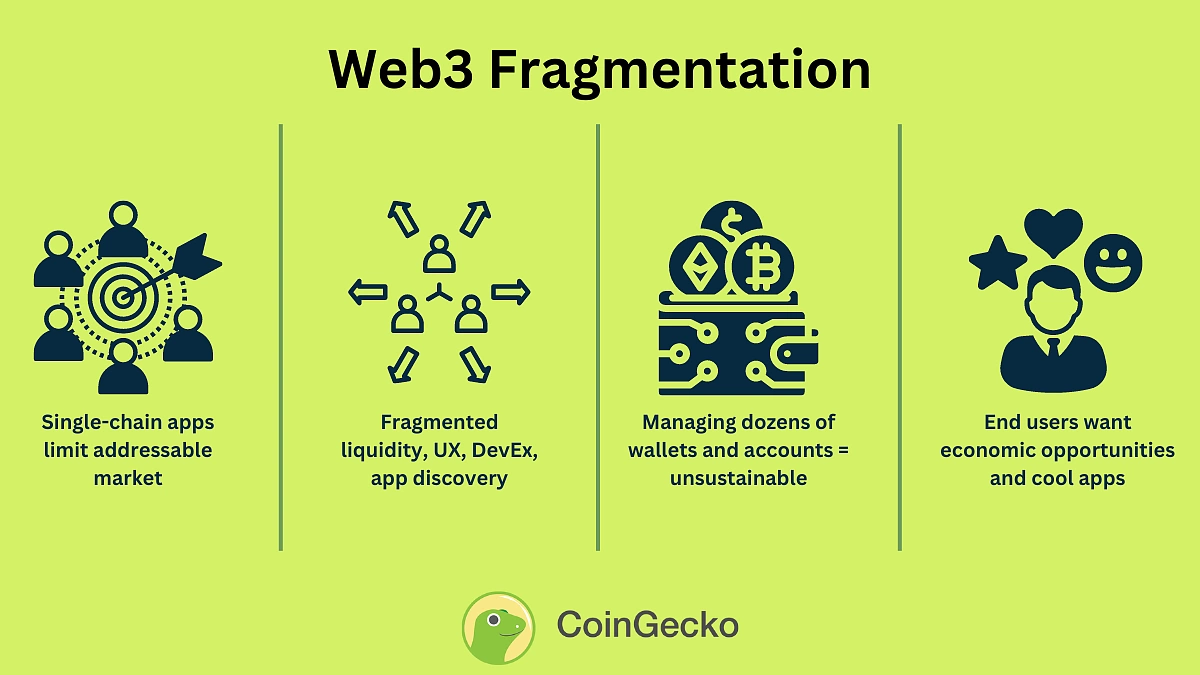
The primary driver for this architecture is the fragmentation of liquidity across hundreds of independent chains. By abstracting the underlying infrastructure, protocols can offer a unified liquidity pool, reducing slippage and improving capital efficiency. For investors, this means smoother entry and exit points, but it also introduces new risks related to smart contract complexity and cross-chain bridge security that must be carefully evaluated.
Intent-centric architecture explained
Intent-centric architecture represents a fundamental shift in how users interact with blockchain infrastructure. Instead of executing explicit transaction steps—selecting a specific chain, bridging assets, and swapping tokens—users submit an outcome-based request. The protocol’s off-chain solvers then determine the optimal path to fulfill that request, hiding the underlying complexity. This approach aims to make chain abstraction 2026 viable by removing the cognitive load that currently fragments liquidity across multiple networks.
In this model, the user’s intent is the primary unit of value. Solvers compete to find the most efficient route, potentially routing liquidity through multiple chains or using atomic swaps to achieve the desired result. While this reduces friction for the end user, it introduces significant complexity for developers and introduces new risk vectors. As one industry observer noted, current implementations often "trade user-visible complexity for developer-hidden complexity," meaning the modular mess remains, just obscured from the user interface.
The security implications are substantial. Because solvers handle the execution logic, users must trust the solver’s ability to find a valid path without exploiting the transaction. Liquidity fragmentation also persists; if no solver can find a cost-effective route, the intent fails, potentially leaving users with stranded assets or failed transactions. This architecture demands rigorous verification mechanisms to ensure that the promised outcome is delivered without compromising the integrity of the underlying assets.
Unified liquidity and aggregation layers
The shift toward chain abstraction in 2026 centers on eliminating manual asset bridging through unified liquidity pools and intent-centric aggregation layers. Instead of users executing separate swap and bridge transactions across disparate networks, aggregation protocols route intent through a shared liquidity mesh. This architecture reduces capital fragmentation and improves overall market efficiency by allowing assets to move fluidly without leaving their native chains.
Traditional bridging workflows require users to lock assets on a source chain, wait for confirmation, and unwrap on the destination chain. This process introduces significant latency and exposes capital to smart contract risks at multiple hops. In contrast, intent-based abstraction protocols use off-chain solvers to match liquidity needs directly. The user signs a single intent, and the solver handles the complex cross-chain settlement in the background, often settling instantly on the destination chain while balancing liquidity internally.
The following comparison highlights the structural differences between legacy bridging and modern aggregation layers. These metrics reflect current protocol behaviors as of early 2026, based on official documentation from major aggregation providers.
| Workflow | Estimated Cost | Settlement Time | User Steps |
|---|---|---|---|
| Traditional Bridge | High (2x fees + slippage) | 10–30 minutes | 3–5 steps |
| Intent-Based Abstraction | Low (Single gas + solver fee) | Seconds to 1 minute | 1 step |
While aggregation layers improve capital efficiency, they introduce new risk vectors. Solvers must manage cross-chain liquidity reserves, which can become imbalanced during high volatility. If a solver runs out of destination-chain liquidity, users may face delayed execution or higher fees. Additionally, the reliance on off-chain solvers means that trust is partially shifted from on-chain code to the solver’s operational integrity. Users must verify that the aggregation protocol’s security audits cover both the on-chain settlement contracts and the off-chain routing logic.
The table below provides a live view of the primary asset involved in these cross-chain flows. Monitoring real-time price action helps assess liquidity depth and potential slippage during peak trading hours.
Account vs. chain abstraction
The distinction between account abstraction and chain abstraction is often blurred in 2026 market discourse, yet they operate at fundamentally different layers of the blockchain stack. Account abstraction (ERC-4337) focuses on the wallet interface, replacing the private key with smart contract logic to enable features like social recovery, batch transactions, and sponsored gas fees. It improves the user experience of interacting with a single chain but does not hide the underlying network.
Chain abstraction, by contrast, operates at the infrastructure level. It decouples the user interface from the specific blockchain executing the transaction. As noted in the 2026 Chain Abstraction Guide, the goal is for users to interact with applications without seeing which blockchain is running. The protocol handles routing, bridging, and settlement in the background. This is not a wallet upgrade; it is a liquidity routing layer.
The risk profile differs significantly. Account abstraction shifts security concerns from key management to smart contract logic, introducing potential exploit vectors in the wallet contract itself. Chain abstraction introduces liquidity fragmentation risks. If the routing layer fails or the bridging mechanism is compromised, assets can be trapped across multiple chains. Investors must distinguish between a better wallet (account abstraction) and a unified liquidity market (chain abstraction 2026).
| Feature | Account Abstraction | Chain Abstraction |
|---|---|---|
| Primary Layer | Wallet / Smart Contract | Infrastructure / Routing |
| User Focus | Transaction UX, Gas, Recovery | Network Agnosticism, Unified Liquidity |
| Key Risk | Smart Contract Vulnerabilities | Bridging & Liquidity Fragmentation |
While account abstraction makes the wallet feel like a traditional app, chain abstraction makes the entire crypto ecosystem feel like a single database. The 2026 market will likely see these two technologies converge, but their underlying mechanics remain distinct.
Market leaders in 2026
The chain abstraction 2026 landscape is defined by infrastructure protocols that enable seamless cross-chain communication. These projects address the fragmentation of liquidity and the usability friction that has historically hindered mass adoption. By abstracting away the complexity of bridging and swapping, they provide a unified user experience across disparate networks.
ZetaChain stands out as a leading protocol in this space, offering an omnichain smart contract platform. It allows developers to build applications that interact with multiple blockchains simultaneously, reducing the need for users to manage multiple wallets or assets. This approach simplifies the interaction model and enhances liquidity aggregation.
Chainlink remains a critical component, providing the decentralized oracle networks necessary for secure cross-chain data transfer. Its Cross-Chain Interoperability Protocol (CCIP) enables trusted communication between chains, ensuring that asset transfers and data exchanges are reliable and secure. This infrastructure is essential for maintaining the integrity of abstraction layers.
Investors should note that while these protocols show promise, they carry significant risk. Liquidity fragmentation and smart contract vulnerabilities remain primary concerns. The market is still evolving, and regulatory uncertainty adds another layer of complexity. Due diligence is essential when evaluating exposure to chain abstraction assets.
Adoption challenges and risks
The promise of chain abstraction 2026 relies on hiding the modular mess from users, but this shift often displaces complexity rather than eliminating it. Developers must now manage the hidden orchestration of intent solvers, cross-chain messaging, and liquidity routing. This trade-off creates a fragile dependency on third-party infrastructure that users cannot directly verify.
Security risks are the primary constraint. As protocols aggregate assets across multiple chains, the attack surface expands. A vulnerability in an intent solver or a bridging contract can compromise the entire abstraction layer. Audits must cover not just the smart contracts, but the off-chain solvers and the economic incentives that drive them.
Liquidity fragmentation remains a persistent hurdle. While abstraction aims to create a unified pool, deep liquidity is rarely distributed evenly across all supported chains. During high volatility, slippage can spike as solvers struggle to find optimal routes, undermining the seamless experience the technology promises.
Checklist: Risk Factors
- Security Audits: Verify coverage of both on-chain contracts and off-chain solver infrastructure.
- Liquidity Depth: Assess available liquidity across all supported chains, not just the primary network.
- Solver Reliability: Evaluate the track record and decentralization of intent solvers.
- Exit Strategies: Understand the mechanisms for recovering funds if a solver fails or a bridge is compromised.
No comments yet. Be the first to share your thoughts!