
Define the abstraction layer
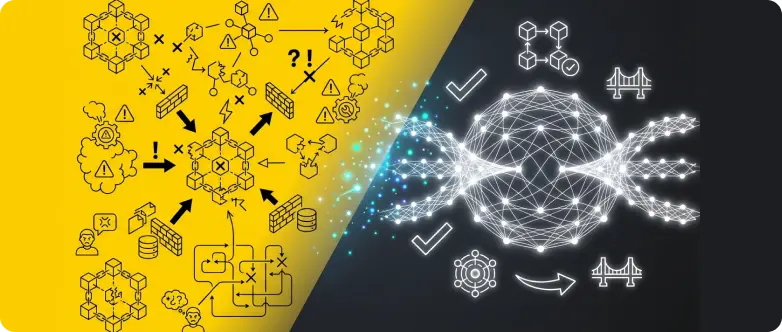
Chain abstraction is the design goal of making users interact with blockchain applications without ever picking, seeing, or thinking about which underlying chain they are using. It functions as a user experience framework that unifies fragmented networks into a single, cohesive interface. Instead of managing multiple wallets, bridging assets across different networks, and holding specific gas tokens for each chain, the user interacts with one seamless entry point. The complexity of cross-chain logic, liquidity routing, and transaction finality is handled entirely in the background.
This layer removes the primary friction points that have historically limited mass adoption. Users no longer need to understand the technical differences between Ethereum, Solana, or Layer 2 solutions. The abstraction layer acts as a translator, ensuring that actions like sending a payment or minting an NFT feel identical regardless of the backend infrastructure. By hiding the "plumbing" of the blockchain, the focus shifts from technical navigation to the actual utility of the application.
The result is an "invisible" Web3 experience. The technology becomes less about the chain itself and more about the outcome the user wants to achieve. This approach aligns with how traditional fintech works, where users do not need to know which bank or payment processor handles their transactions behind the scenes.
Select an intents-based protocol
Chain abstraction shifts the burden of cross-chain complexity from the user to the backend. Instead of forcing users to bridge assets manually or manage multiple wallets, intents-based protocols allow developers to declare what they want to happen, while the infrastructure handles the how. This declarative approach is the foundation of invisible Web3 experiences, enabling seamless interactions across fragmented networks.
When selecting a backend infrastructure, prioritize protocols that support native intent resolution. These systems use solvers or relayers to find the most efficient path for user requests, abstracting away gas payments, network switching, and transaction sequencing. Look for providers that offer robust SDKs and clear documentation for integrating these intent flows into your application.
To help you evaluate your options, here is a comparison of key chain abstraction providers based on their core capabilities:
| Provider | Supported Chains | Settlement Speed | Gas Abstraction |
|---|---|---|---|
| Connext | Multi-chain (EVM, SVM) | Near-instant | Yes (Stargate) |
| LayerZero | 50+ blockchains | Variable (Chain dependent) | Yes (via OmniCC) |
| Hyperlane | Configurable (Modular) | Depends on destination | Yes (via relayers) |
| Chainlink CCIP | 20+ networks | Finality-based | Yes (via Link) |
Connext, for example, allows dApps to execute logic from any chain without users switching networks or signing transactions on different chains Connext Chain Abstraction. LayerZero offers a similar unification layer but relies on its OwnChain protocol for cross-chain messaging. Hyperlane provides a modular approach, letting you configure your own interoperability layer. Chainlink CCIP leverages its existing oracle network for secure cross-chain data and token transfers.
Evaluate these options based on your specific use case. If you need broad EVM and SVM support with immediate settlement, Connext is a strong candidate. For maximum chain diversity, LayerZero or Chainlink CCIP may be more suitable. Hyperlane offers flexibility for custom architectures. Ensure the provider you choose aligns with your target chains and settlement requirements.
Integrate unified account logic
Chain abstraction removes the friction of managing multiple wallets and chains by creating a single, unified identity. This is achieved by combining Account Abstraction (ERC-4337) with cross-chain routing logic. The result is an account that can sign transactions and pay gas on any supported chain without the user knowing which underlying network is processing the request.
To build this, you need to implement a smart account contract that acts as the user's primary identity. This contract must support ERC-4337 entry point interactions, allowing for features like social recovery, session keys, and gas sponsorship. When a user initiates a transaction, the smart account handles the signature verification and pays the execution fee, abstracting away the complexity of native account management.
Begin by deploying an ERC-4337 compliant smart account, such as SafeWallet or Biconomy. These contracts serve as the foundation for your unified identity. Ensure the contract supports modular validation and execution, which allows you to add custom logic for cross-chain operations later. Deploy this contract on your primary target chain, typically Ethereum or a major L2 like Arbitrum or Base.

Next, integrate a cross-chain messaging protocol or a unified signature verification layer. This allows your smart account to recognize and validate signatures originating from different chains. For example, if a user signs a message on Polygon, your Ethereum-based smart account should be able to verify that signature without requiring the user to switch wallets or networks. This step effectively decouples the identity from a single chain.
Finally, implement gas sponsorship and intent routing logic. This allows users to pay transaction fees in any supported token, or have fees sponsored by the application itself. The routing layer interprets the user's intent (e.g., "swap ETH for USDC") and executes the necessary cross-chain swaps and transfers behind the scenes. The user sees only the final result, not the intermediate steps or chains involved.
By following these steps, you create a seamless experience where the underlying blockchain complexity is invisible to the end-user. The user interacts with a single account that works everywhere, focusing on the core experience rather than the mechanics of Web3.
Handle gas and token swaps
To make chain abstraction truly invisible, the backend must intercept the user’s transaction, cover the gas fees, and execute any necessary token conversions without requiring the user to manage multiple wallets or bridges. This process turns a complex multi-step interaction into a single, native-feeling action.
1. Intercept the user’s intent
When a user initiates a transaction (e.g., buying an NFT or swapping tokens), the application frontend sends the request to your backend or a specialized abstraction layer rather than directly to the target blockchain. The backend validates the transaction parameters and determines the required gas payment and token inputs.
2. Cover gas fees with a meta-transaction
Instead of forcing the user to hold the native token (like ETH or SOL) for gas, the backend uses a meta-transaction or paymaster model. The user signs a message authorizing the transaction, and your backend or a third-party gas sponsor submits the actual transaction to the network, paying the gas fees in the native currency. This allows users to interact with any chain using their preferred assets.
3. Execute automatic token swaps
If the user does not hold the exact token required for the target contract or the gas sponsor requires a specific payment token, the system automatically executes a swap. This happens atomically within the same transaction batch or via a pre-funded liquidity pool. The user sees only the final result—such as a received NFT—without seeing the intermediate swap steps.
By handling these mechanics server-side or through smart account abstractions, you remove the friction of token bridging and gas management, allowing the user to focus on the application’s core value rather than the underlying blockchain infrastructure.
Test cross-chain edge cases
Chain abstraction promises to hide the complexity of multiple blockchains, but the abstraction layer itself becomes the single point of failure. If the intent solver or liquidity bridge breaks, the user experience collapses regardless of how clean the UI is. You must validate these failure states before any public release.
Start by simulating failed intents. Trigger transactions where the target chain is congested or the liquidity pool is empty. Verify that the error messages are clear and that the user’s funds are never locked in limbo. Next, stress-test gas sponsorship limits. Ensure that relayer fees don’t exceed the estimated cost during network spikes, which could cause silent transaction failures. Finally, audit multi-chain balance displays. Discrepancies between the displayed balance and the actual on-chain state erode trust instantly.
-
Simulate failed intents with empty liquidity pools
-
Verify gas sponsorship covers network congestion spikes
-
Audit multi-chain balance display accuracy
-
Test transaction timeout and refund mechanisms
As noted in industry analyses, the core value of chain abstraction lies in removing UX friction, not in creating new technical debt Blockworks. Your testing protocol must prove that the "invisible" layer is actually robust.
No comments yet. Be the first to share your thoughts!