
The 2026 chain fragmentation reality
Use this section to make the Chain Abstraction decision easier to compare in real life, not just on paper. Start with the reader's actual constraint, then separate must-have requirements from details that are merely nice to have. A practical choice should survive normal use, maintenance, timing, and budget. If a recommendation only works in an ideal situation, call that out plainly and give the reader a fallback path.
The simplest way to use this section is to write down the must-have criteria first, then compare each option against those criteria before weighing nice-to-have features.
Account abstraction as the identity layer
The fragmentation of liquidity across hundreds of isolated chains creates a fundamental user experience barrier. Users currently face the friction of managing distinct wallets, bridging assets, and holding native gas tokens for every network they interact with. This siloed approach is unsustainable as the ecosystem moves toward thousands of rollups and heterogeneous chains. Account abstraction, primarily through ERC-4337, emerges as the critical identity layer that decouples the user from the underlying infrastructure.
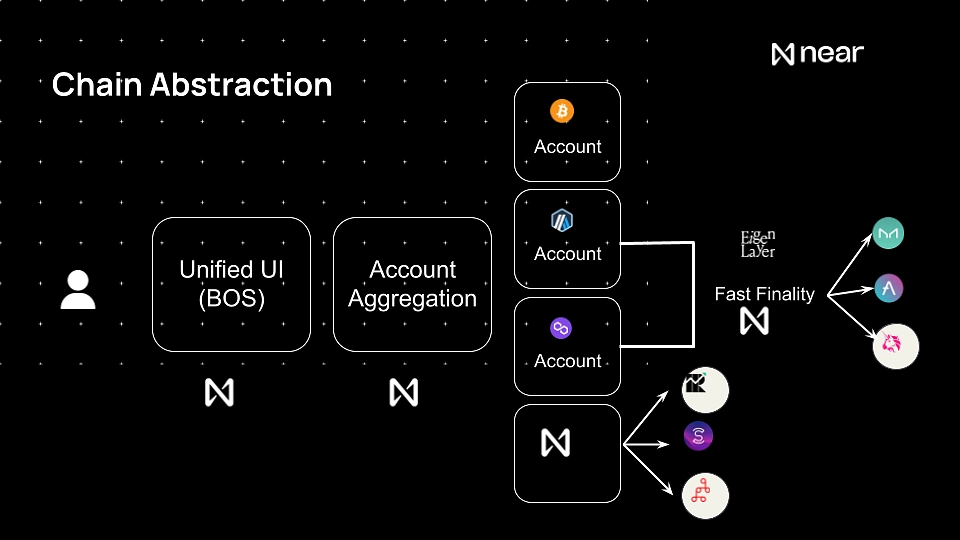
ERC-4337 introduces the concept of a smart contract wallet that acts as a universal entry point. Instead of a private key tied to a specific EVM chain, the user operates a single account interface that can validate transactions across multiple execution environments. This allows for session keys, social recovery, and paymaster-sponsored gas fees, effectively removing the need for separate wallets per network. The user no longer needs to understand which chain a dApp resides on; the abstraction layer handles the routing and settlement in the background.
The implications for liquidity are profound. When identity is unified, capital can flow more freely without the user manually bridging assets. A single transaction can trigger actions across different chains, settling on the most efficient route. This reduces the friction that currently stifles multi-chain adoption and aligns with the vision of "1 Account, 1000 Chains." The technology shifts the burden from the user to the protocol, enabling a seamless experience that mirrors the simplicity of traditional finance.
How intent-centric design routes liquidity
Chain abstraction shifts the burden of complexity from the user to the backend. Instead of manually selecting bridges, wrapping tokens, and monitoring gas on multiple networks, users declare what they want to achieve. The system handles the execution. This intent-centric architecture acts as a unified layer that orchestrates interactions across disjointed blockchain networks, effectively hiding the fragmentation that currently defines crypto.
The workflow begins with a simple declaration: "swap X for Y" or "transfer Z to address A." Off-chain solvers then compete to fulfill this intent at the best possible rate. These solvers aggregate liquidity from various sources, executing complex cross-chain routing strategies that would be impossible for a user to coordinate manually. The result is a seamless experience where the underlying mechanics of interoperability remain invisible to the end user.
To understand the operational difference, consider the contrast between traditional bridging and solver-based execution.
| Feature | Traditional Bridging | Intent-Centric Solver |
|---|---|---|
| User Action | Select bridge, wrap token, pay gas on each chain | Declare desired outcome (e.g., swap X for Y) |
| Routing Logic | Fixed path through specific bridge protocols | Dynamic aggregation across multiple liquidity sources |
| Failure Handling | Manual intervention or stuck funds | Solver retries or fails safely with refund |
| Liquidity Access | Limited to bridge-specific pools | Unified access to fragmented ecosystem liquidity |
This shift is critical for 2026 because liquidity remains fragmented across hundreds of ecosystems. By allowing solvers to find the most efficient path, intent-centric design ensures that capital is not stranded in isolated pools. It transforms interoperability from a user-managed chore into a background service, enabling true multi-chain utility without the associated friction.
Leading Infrastructure Providers
The market for chain abstraction has shifted from theoretical whitepapers to deployed infrastructure. In 2026, three protocols—Eco, Particle Network, and Abstract Chain—dominate the landscape by addressing different layers of the fragmentation problem. Each takes a distinct technical approach to hiding the underlying blockchain complexity from the end user.
Eco: Unified Account Abstraction
Eco focuses on simplifying the user experience through a unified account abstraction layer. Instead of managing multiple wallets and bridges, users interact with a single identity that abstracts away the underlying chain mechanics. This approach reduces friction for onboarding but requires significant coordination between participating networks to maintain liquidity consistency. Eco’s design prioritizes seamless transaction execution, making it a preferred choice for consumer-facing applications.
Particle Network: Cross-Chain Interoperability
Particle Network provides the infrastructure for cross-chain communication, enabling applications to operate across multiple blockchains without users needing to understand the underlying mechanics. Their technology allows for seamless asset transfers and data synchronization between disparate networks. This is critical for developers building multi-chain dApps, as it eliminates the need to build custom bridge integrations for every supported chain.
Abstract Chain: Native Abstraction
Abstract Chain takes a more fundamental approach by designing a new layer-1 network specifically for abstraction. Rather than layering abstraction on top of existing chains, Abstract Chain integrates these features natively into its protocol. This results in lower latency and higher security for cross-chain transactions, as the abstraction logic is enforced at the consensus level. It is particularly suited for high-frequency trading and complex financial instruments that require precise cross-chain settlement.
Where Abstraction Still Leaks
By 2026, chain abstraction has moved from theory to practice, yet the user experience remains fragmented. We are in what some observers call an "awkward phase" where the underlying abstractions exist but frequently leak complexity back to the user. Instead of a unified liquidity layer, users still encounter hidden gas fees, unexpected network switches, and confusing error messages that break the illusion of a single chain. This leakage undermines the core promise of abstraction: invisibility.
The technical infrastructure is not the only bottleneck; solver centralization poses a significant risk. Many current abstraction layers rely on a small number of centralized solvers to batch and execute transactions. If these solvers fail or act maliciously, the entire abstraction layer collapses, leaving users stranded with unexecuted intents and locked assets. This centralization point creates a single point of failure that contradicts the decentralized ethos of the ecosystem.
Additionally, user education on intent safety remains inadequate. Users often do not understand the trade-offs they are making when they sign an intent. They may unknowingly expose themselves to MEV (Maximal Extractable Value) attacks or front-running because the abstraction layer obscures the transaction path. Until safety mechanisms are transparent and intuitive, the "seamless" experience will remain a marketing term rather than a reality.
No comments yet. Be the first to share your thoughts!