
Chain abstraction 2026 defined
Chain abstraction 2026 represents the architectural shift from explicit cross-chain interactions to implicit, intent-based execution. Rather than forcing users to manually bridge assets or select specific networks for every transaction, this paradigm treats the underlying blockchain infrastructure as a unified, invisible layer. The user provides a single instruction—such as "send USDC to Bob"—and the system determines the optimal path across disjointed chains to fulfill it.
This model moves beyond simple interoperability bridges. While bridges move assets between isolated silos, chain abstraction orchestrates the entire transaction lifecycle. It handles routing, liquidity aggregation, and execution logic in the background, presenting a single interface to the end user. As noted in industry guides, the design goal is for users to interact with applications without ever picking, seeing, or thinking about the specific chain they are using [1].
For the finance market, this shift reduces friction and expands the addressable user base. It allows decentralized applications to function as if they are deployed on a single, monolithic chain, despite running on a modular or multi-chain stack. This is not merely a UX improvement; it is a fundamental rethinking of how value moves through the ecosystem.
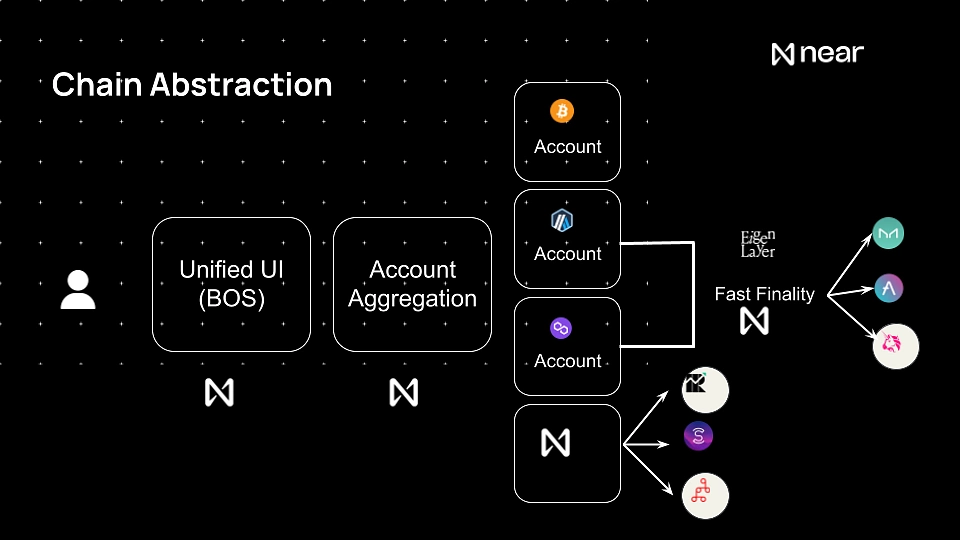
Chain abstraction hides the modular backend. Users interact with a single interface while the network handles routing, liquidity, and execution across disjointed chains.
The implications for 2026 are significant. As institutional adoption grows and regulation clarifies, the demand for seamless, compliant, and efficient transaction flows will outpace the capability of legacy bridging solutions. Chain abstraction positions itself as the standard for this new era, enabling AI agents and retail users alike to interact with assets across multiple chains as if they were a single system [3].
[1] https://eco.com/support/en/articles/11822744-what-is-chain-abstraction-2026-guide [3] https://www.near.org/chain-abstraction
Intent-based execution replaces bridges
Chain abstraction 2026 shifts the operational burden from the user to the network. Instead of manually bridging assets across separate ledgers, users submit intents—declarations of desired outcomes—to a decentralized marketplace of solvers. These specialized actors compete to fulfill requests by routing transactions through the most efficient paths available, abstracting away the underlying complexity.
This mechanism eliminates the traditional bridge model, which often relies on custodial lock-and-mint systems or liquidity pools vulnerable to exploits. By removing the need for users to hold native tokens on every destination chain, the attack surface shrinks significantly. Solvers handle the logistics of cross-chain settlement, ensuring that the user experience remains consistent regardless of where the underlying liquidity resides.
The result is a unified execution layer where interoperability is a background process rather than a manual hurdle. This approach not only reduces friction but also enhances security by replacing fragile, manual bridging steps with automated, solver-verified settlements.
Account vs. chain abstraction comparison
Account abstraction and chain abstraction solve different layers of the same problem. Account abstraction (ERC-4337) modernizes the wallet, turning it into a smart contract that can sponsor gas, batch transactions, and recover accounts via social contacts. Chain abstraction operates at the network level, routing liquidity and settling intents across multiple blockchains without the user ever selecting a destination chain.
The distinction matters for 2026 infrastructure. Account abstraction reduces friction at the point of entry. Chain abstraction removes friction from the journey between chains. When combined, they create a system where users interact with a single interface while the backend handles cross-chain complexity, gas sponsorship, and liquidity aggregation.
| Feature | Account Abstraction | Chain Abstraction |
|---|---|---|
| Primary Focus | Wallet UX & identity | Cross-chain routing & liquidity |
| Gas Handling | Sponsorship (pay in stablecoins) | Native chain gas management |
| User Action | Social recovery, session keys | Intent submission, no chain selection |
| Backend Role | Bundlers, Paymasters | Relayers, Intent Solvers |
| Interoperability | Limited to single chain | Multi-chain asset movement |
Account abstraction is the interface layer. Chain abstraction is the settlement layer. Both are required for a frictionless experience.
| Feature | Account Abstraction | Chain Abstraction |
|---|---|---|
| Primary Focus | Wallet UX & identity | Cross-chain routing & liquidity |
| Gas Handling | Sponsorship (pay in stablecoins) | Native chain gas management |
| User Action | Social recovery, session keys | Intent submission, no chain selection |
| Backend Role | Bundlers, Paymasters | Relayers, Intent Solvers |
| Interoperability | Limited to single chain | Multi-chain asset movement |
Native onboarding drives mass adoption
The primary barrier to crypto adoption in 2026 is not technological capability but usability friction. Chain abstraction 2026 resolves this by eliminating the need for users to select chains or manage bridging steps. This shift transforms complex multi-chain interactions into a single, seamless experience, allowing non-crypto natives to onboard without learning blockchain mechanics.
By abstracting away the underlying infrastructure, users interact with a single interface regardless of the asset's location. This reduces the cognitive load associated with managing multiple wallets and gas tokens. The result is a streamlined entry point that prioritizes user intent over technical navigation.
This approach mirrors the evolution of email, where users no longer need to understand SMTP protocols to send a message. Similarly, chain abstraction allows participants to focus on financial outcomes rather than the mechanics of settlement. As interoperability standards mature, this frictionless onboarding will become the baseline expectation for digital finance.
Choose the Right Chain Abstraction Layer
Selecting a chain abstraction protocol requires evaluating three non-negotiable pillars: security guarantees, liquidity depth, and user experience. In 2026, the leading chain abstraction 2026 solutions are no longer just about bridging assets; they are about hiding the modular mess from the end user while keeping the developer in control of the underlying risk. A protocol that trades visible complexity for hidden developer complexity is a liability, not a feature.
1. Evaluate Security Guarantees
The primary risk in cross-chain interactions is the attack surface introduced by bridges and relayers. Prioritize protocols that utilize minimal-trust architectures, such as optimistic verification or ZK-rollup-based settlement, rather than multi-sig or MPC-based bridges which rely on centralized validator sets. Check if the protocol has undergone formal verification and if the security model is transparent. A chain abstraction layer that obscures where the funds actually sit during a cross-chain transfer is a red flag.
2. Assess Liquidity Depth
User experience is directly tied to liquidity depth. If a protocol cannot guarantee deep liquidity pools for the target assets, users will face high slippage and failed transactions. Look for chain abstraction solutions that aggregate liquidity natively across multiple chains rather than relying on a single source. Deep liquidity ensures that intent-based settlements can be executed quickly and at fair market prices, which is critical for maintaining trust in the abstraction layer.
3. Verify User Experience
The ultimate test is whether the user feels like they are on a single chain. Evaluate if gas fees are abstracted, if wallet interactions are seamless, and if the transaction flow is intuitive. A true chain abstraction solution allows users to interact with dApps without managing multiple wallets or bridging assets manually. If the user has to understand the underlying chain mechanics to use the application, the abstraction is incomplete.
FAQ: Chain Abstraction 2026 and Market Reality
What is chain abstraction in crypto?
Chain abstraction provides a single interface for users and developers to interact with multiple blockchains without managing the complexities of individual networks. In 2026, this technology shifts the burden of cross-chain friction from the user to the protocol layer, allowing seamless asset and data flow across disparate ecosystems.
What are the blockchain trends in 2026?
The dominant trend is the acceleration of blockchain into mainstream finance through institutional adoption and clearer regulation. Key developments include expanding tokenization of real-world assets, maturing DeFi protocols, and the integration of AI with Web3 infrastructure, all supported by major advancements in interoperability and scalability.
What is near chain abstraction?
Near chain abstraction eliminates blockchain complexity, allowing AI agents and applications to interact with assets and services across multiple chains as if they were a single system. This approach focuses on abstracting the underlying modular infrastructure so that complex transaction routing happens invisibly in the background.
No comments yet. Be the first to share your thoughts!