
Get chain abstraction 2026 right
Chain abstraction aims to hide blockchain complexity behind a single interface, letting users interact with multiple networks without managing keys or bridges [src-serp-1][src-serp-2]. Before building or integrating, verify your technical and operational readiness.
Verify wallet compatibility
Ensure your solution supports EVM-compatible wallets and major non-EVM chains. Test cross-chain signing flows early. Most failures occur when the backend expects signatures the frontend cannot generate, particularly when integrating Solana or Cosmos-based wallets into EVM-centric abstraction layers. Implement strict type checking for signature payloads to prevent silent rejections during the intent submission phase.
Audit cross-chain messaging
Test intent routing with small amounts. Confirm that transaction states resolve correctly on both source and destination chains. Latency spikes during high network congestion can cause failed intents, leading to stuck funds if the solver does not have a robust timeout mechanism. Monitor the state channels between your application and the solver network to detect latency anomalies before they impact user experience.
Plan for gas and fees
Abstraction layers often subsidize gas or use meta-transactions. Define clear cost models. If users face unexpected fees, trust erodes quickly. Be transparent about who pays for the execution: the user, the dApp, or a third-party sponsor. Implement dynamic fee estimation that accounts for solver competition, as fees can fluctuate significantly based on network demand and solver availability.
Test error recovery
Simulate failed transactions. Ensure the system rolls back intents or offers clear retry paths. Silent failures are the biggest UX killer in cross-chain apps. Implement comprehensive logging for every step of the intent lifecycle, from submission to settlement, to diagnose whether failures originate from liquidity shortages, network outages, or smart contract reverts.
Work through the steps
Chain abstraction removes the need to manually select networks or bridge assets yourself. Instead, an intent-based architecture handles the routing in the background. Follow these steps to execute a cross-chain interaction using a modern abstraction layer.
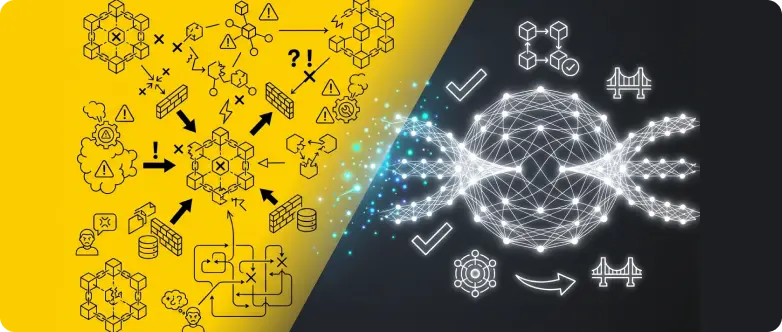
Open your web3 wallet and connect to the abstraction protocol’s interface. Unlike traditional bridges, you do not need to choose the source chain. The system detects your current holdings and automatically identifies the target network where your transaction will settle. This step relies on the wallet’s ability to sign messages that authorize the solver to act on your behalf.
Specify exactly what you want to achieve. For example, you might want to swap USDC for ETH on a specific decentralized exchange. The abstraction layer translates this high-level goal into a complex set of on-chain instructions, handling liquidity sourcing across multiple chains without requiring you to manage gas fees on the source network. This is the core value proposition: intent over execution.

Before signing, the protocol presents a clear summary of the execution path. Solvers compete to find the most efficient route, often splitting your transaction across different chains to minimize costs and slippage. Review the estimated time and fees, then approve the transaction in your wallet. The backend orchestrates the multi-step execution automatically, ensuring that the best price is secured before any assets move.
Once the solvers complete their work, your assets appear in your wallet on the destination chain. You can verify the transaction via a block explorer. The abstraction layer ensures that all intermediate steps were executed securely, providing a single point of truth for the completed action. This final verification step confirms that the intent was fulfilled according to the parameters set at the start.
-
Ensure you have native gas tokens for the destination chain if required.
-
Verify the abstraction protocol supports the specific token pair you are swapping.
-
Check solver fees against direct bridge costs for large transactions.
-
Confirm wallet connection matches the intended source network.
These questions highlight the shift from fragmented networks to unified user experiences. As the technology matures, the focus is moving from technical proof-of-concepts to practical, consumer-ready tools. Developers must prioritize robust error handling and transparent fee structures to succeed in this evolving landscape.
No comments yet. Be the first to share your thoughts!