
What chain abstraction means in 2026
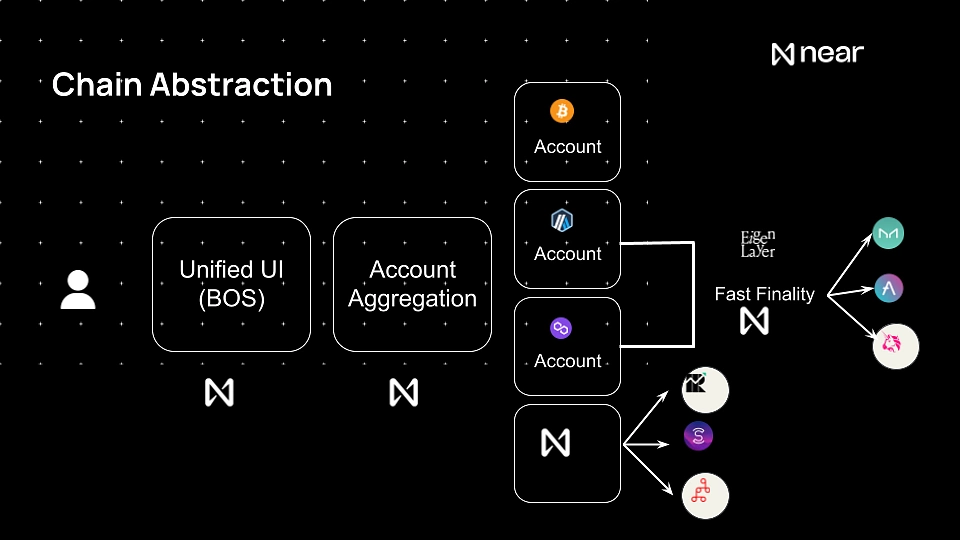
Chain abstraction is the design goal of making users interact with blockchain applications without ever picking, seeing, or thinking about the underlying network. It is an intent-based architecture deployed to orchestrate seamless user interactions across disjointed blockchain networks. Instead of managing multiple wallets, bridging assets manually, or checking gas fees on different chains, the user experiences a single, unified interface. This framework unifies fragmented blockchain networks into a single point of access, effectively hiding the complexity of the decentralized infrastructure.
In 2026, this shift is no longer theoretical. Major trends in interoperability and scalability have converged to make chain abstraction a practical reality for mainstream finance. The technology allows AI and automated agents to interact with assets, applications, and services across multiple chains as if they were a single system. For the end-user, this means the "blockchain" disappears, leaving only the application and the value it provides.
However, this experience comes with specific constraints. The abstraction layer must handle cross-chain routing, liquidity aggregation, and gas sponsorship without introducing significant latency or hidden costs. Users gain convenience but must trust the abstraction protocol to execute their intents correctly and securely. The tradeoff is clear: you surrender direct control over transaction details in exchange for a frictionless, app-like experience that works across any supported chain.
Chain abstraction 2026 choices that change the plan
Chain abstraction moves the complexity from the user to the backend. Instead of managing wallets, bridges, and gas tokens across five different networks, you click "Send" and the protocol handles the rest. This shift is the primary driver for mainstream adoption in 2026, but it introduces specific tradeoffs you must evaluate before building or investing.
The core tension lies in user-visible complexity vs. developer-hidden complexity. As noted by industry analysts, the modular mess isn't gone; it's just hidden behind a unified interface. This means you are trading direct control for convenience. Below, we break down the concrete factors that determine whether a chain abstraction solution is robust or fragile.
1. Abstraction Depth
Not all abstractions are created equal. Some solutions only abstract the transaction signing (account abstraction), while others abstract the entire execution environment (intent-based architectures). Deeper abstraction means a smoother user experience but requires more sophisticated backend orchestration. If the backend fails to resolve the intent correctly, the user sees a generic "transaction failed" error with no way to debug it.
2. Liquidity and Settlement Latency
When a transaction spans multiple chains, liquidity must be sourced from somewhere. Intent-based systems often rely on solvers who compete to fulfill requests. This can lead to variable settlement times. In high-volatility markets, the price of the asset might shift between the time the user clicks and the time the solver executes. Solutions that settle on a single chain or use pre-funded liquidity pools offer faster, more predictable finality.
3. Cost Transparency
True chain abstraction hides gas fees, charging users in their native token or a stablecoin. However, this convenience often comes with a markup. Solver fees, bridge costs, and gas overhead are bundled into a single price. While this is easier to understand than five separate fees, it can be more expensive than a user who manually bridges assets and pays minimal gas on a cheap L2. Always compare the total cost of a "one-click" transaction against a manual multi-step approach.
4. Security Surface Area
By centralizing the orchestration layer, chain abstraction creates a new point of failure. If the intent relay or solver network is compromised, user funds can be at risk. Additionally, smart contract risk increases as you introduce more complex routing logic. Evaluate the audit history of the abstraction layer and the decentralization of the solver network. A highly centralized solver network is faster but carries higher custodial risk.
| Factor | Benefit | Tradeoff |
|---|---|---|
| User Experience | Seamless, single-click transactions | Loss of debuggability if backend fails |
| Liquidity Sourcing | Access to deep pools across chains | Solver latency during high volatility |
| Cost Structure | Predictable, unified fee display | Hidden markups from solver fees |
| Security Model | Reduced user error | Centralized solver network risk |
Choose the next step
Chain Abstraction works best as a clear sequence: define the constraint, compare the realistic options, test the tradeoff, and choose the path with the fewest hidden costs. That order keeps the advice usable instead of decorative. After each step, pause long enough to check whether the recommendation still fits the reader's actual situation. If it depends on perfect timing, unusual access, or a best-case budget, include a simpler fallback.

Watch out for misleading claims
Chain abstraction promises a frictionless experience, but several common interpretations fall short of that goal. Understanding the difference between near-abstraction and true abstraction helps you spot weak options before committing resources.
Near abstraction hides chains, not complexity
Near chain abstraction, often associated with frameworks like NEAR, focuses on eliminating blockchain complexity so that AI and users can interact with assets across multiple chains as if they were a single system. While this simplifies the interface, it often leaves the underlying fragmentation intact. Users may still face hidden fees or delayed settlements if the abstraction layer relies on slow cross-chain bridges rather than native interoperability. This approach is useful for quick prototyping but lacks the robustness needed for high-stakes financial applications.
"Seamless" is often a marketing term
Many projects market themselves as providing "seamless" interactions by aggregating liquidity from various networks. However, this often masks significant trade-offs. For instance, intent-based architectures that orchestrate interactions across disjointed networks may introduce latency or centralization risks. If the relay nodes fail or are compromised, the entire transaction can stall. Always check how the abstraction layer handles failure states and whether it relies on trusted third parties for settlement.
Ignoring gas and account complexity
True chain abstraction should remove the need for users to pick chains, manage native tokens, or understand gas fees. If a product still requires you to hold ETH for gas while interacting with a Solana-based application, it is not fully abstracted. Look for solutions that offer account abstraction (ERC-4337) combined with meta-transactions, allowing users to pay fees in any token or even sponsor transactions entirely. Without this, the user experience remains fragmented, defeating the purpose of abstraction.
Chain abstraction 2026: what to check next
These questions address the core shift in 2026: the move from technical complexity to intuitive design. As chain abstraction matures, the focus is no longer just on speed or cost, but on hiding the modular mess from the end user.
No comments yet. Be the first to share your thoughts!