
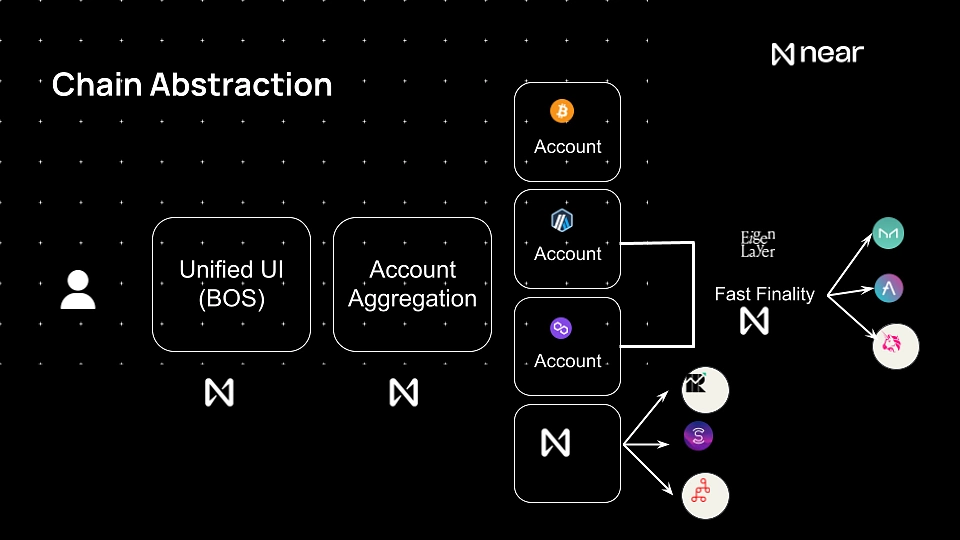
Chain abstraction 2026: limits and choices that change the plan
Chain abstraction aims to hide blockchain complexity, but the 2026 market is flooded with misleading options. Many projects claim "seamless" cross-chain swaps while relying on fragile, centralized bridges that introduce single points of failure. Before integrating any abstraction layer, you must verify the underlying settlement mechanism. If the protocol cannot prove finality across chains without trusting a centralized operator, it is not true abstraction—it is just a faster bridge with a pretty interface.
Key factors to evaluate
A practical choice should survive normal use, maintenance, timing, and budget. If a recommendation only works in an ideal situation, call that out plainly and give the reader a fallback path.
| Factor | What to check | Why it matters |
|---|---|---|
| Settlement Finality | Verify if the abstraction layer relies on centralized multisigs or decentralized proofs. | Centralized bridges are single points of failure; decentralized proofs offer true security. |
| Liquidity Depth | Check effective price impact on a standard $1,000 swap across target chains. | Aggregating thin order books can result in worse slippage than staying on one chain. |
| Latency | Compare intent-resolution times vs. transaction-based wrappers. | High-frequency trading requires speed; casual use may prioritize security over milliseconds. |
Technical architecture and risks
Understanding the underlying technology is critical for making informed decisions in 2026.
Spotting weak claims
The liquidity illusion
A common mistake is assuming abstraction solves liquidity fragmentation. It does not. Abstraction only routes liquidity; it does not create it. Projects that promise "deep liquidity everywhere" are often aggregating thin order books from multiple chains, resulting in worse slippage than staying on one chain. Always check the effective price impact on a standard $1,000 swap across your target chains. If the abstraction layer adds more than 10 basis points in hidden costs, the convenience is not worth the tradeoff.
Intent-based vs. transaction-based
Not all abstraction is equal. Intent-based architectures (like those using decentralized solvers) offer better privacy and flexibility but suffer from higher latency and potential solver centralization risks. Transaction-based wrappers are faster but lock you into specific chain pairs. For high-frequency trading, the latency of intent resolution is a dealbreaker. For casual users, the security guarantees of intent-based systems may outweigh the speed penalty. Choose based on your actual use case, not marketing slogans.
2026 Blockchain Trends and Strategic Implications
The landscape of blockchain infrastructure in 2026 is defined by a shift from speculative experimentation to institutional-grade reliability. As regulatory frameworks solidify in major markets like the EU and US, the demand for compliant, auditable cross-chain solutions has surged. This has accelerated the adoption of chain abstraction not just for consumer convenience, but for enterprise interoperability. Key trends include the maturation of zero-knowledge (ZK) proof systems, which now enable efficient, trust-minimized settlement across disparate chains, and the rise of account abstraction (ERC-4337) as a standard for user onboarding. These technologies reduce the friction of key management and gas fees, making multi-chain interactions seamless for non-technical users. Also, the tokenization of real-world assets (RWAs) is driving demand for stable, low-latency bridges that can handle high-volume settlements without compromising security. For developers and investors, the focus has shifted from building new chains to building robust abstraction layers that can navigate this fragmented but increasingly regulated environment.
Should You Learn Blockchain in 2026?
Yes, blockchain technology remains a major force in the tech industry. Developers who understand how to leverage it, particularly in areas like chain abstraction and cross-chain infrastructure, are positioned for rewarding careers. As the industry moves toward more user-friendly and integrated systems, the demand for skilled professionals who can build and secure these complex ecosystems continues to grow. Specializing in ZK-rollups, intent-based routing, and secure bridge architecture offers a competitive edge, as these are the foundational technologies enabling the next wave of mainstream adoption. Whether you are building DeFi protocols, enterprise supply chain solutions, or consumer-facing dApps, understanding the nuances of cross-chain communication is no longer optional—it is essential.
Decision Framework
When selecting a chain abstraction solution, prioritize security over speed unless your use case explicitly demands high-frequency trading. For most users, the slight latency increase of intent-based systems is a fair trade for the enhanced privacy and reduced risk of bridge hacks. Always conduct a small test transaction before committing significant capital. Verify the liquidity depth on your target pairs and calculate the total cost, including gas and slippage. If the abstraction layer does not offer a clear advantage in cost or user experience over native bridging, stick to the simpler, more proven path. The goal is not to use the most complex technology, but to achieve your financial or operational objectives with the lowest possible risk and cost.
No comments yet. Be the first to share your thoughts!