
What chain abstraction actually means
Chain abstraction is not a single protocol or a specific token. It is a user experience framework designed to unify fragmented blockchain networks into a single interface. The goal is simple: hide the underlying complexity of multiple chains from the end user, allowing them to interact with decentralized applications without worrying about which specific network they are using.
Think of it like email. When you send an email, you do not need to know whether the recipient is using Gmail, Yahoo, or Outlook, nor do you need to understand the SMTP protocols that route that message across different servers. The system handles the routing and compatibility behind the scenes. Chain abstraction applies this same logic to blockchain, removing the friction of bridging assets or switching wallets between networks.
This approach shifts the focus from infrastructure to interaction. Instead of managing cross-chain bridges and gas tokens for every transaction, users can interact with dApps as if they were using a centralized app, while still benefiting from the security and transparency of blockchain technology. The complexity is abstracted away, leaving only the utility.
The fragmentation problem in 2026
Multi-chain architecture was supposed to scale crypto, but it has instead fractured it. Users no longer see a unified financial network; they see a patchwork of isolated ecosystems. This fragmentation creates three distinct barriers: liquidity silos, wallet fatigue, and gas confusion. Until these are resolved, mass adoption remains out of reach.
Liquidity is trapped in silos. Capital that could flow freely across networks is instead locked within specific chains, reducing depth and increasing slippage. This fragmentation is the primary target of chain abstraction, a design goal that simplifies interaction by hiding the underlying complexity. As noted by CoinGecko, the goal is to address the fragmented nature of liquidity and user experience simultaneously.
Wallet fatigue is the user-facing symptom of this technical debt. A user must manage dozens of addresses and networks just to participate in the broader ecosystem. Eco’s 2026 guide describes chain abstraction as the effort to make users interact with applications "without ever picking, seeing, or thinking about" the specific chain. Without this, the experience is cumbersome and error-prone.
Gas fees and token mismatches add daily friction. Users must constantly buy native tokens for each new chain they visit, a process that is both expensive and confusing. This operational overhead drives users away from DeFi and Web3 applications. The market reflects this tension, with capital seeking efficiency over fragmentation.
The current reality is unsustainable. Users do not want to be network engineers. They want to send money, trade assets, and use applications without managing keys or switching networks. Chain abstraction is not just a technical upgrade; it is a necessary evolution to remove these barriers.
Three layers of the abstraction stack
Chain abstraction works by stacking three technical layers that handle the complexity hidden from the user. Each layer solves a specific friction point: identity, execution, and visibility.
Account Abstraction (Wallet Layer)
This layer replaces the traditional seed phrase with social login or biometric authentication. It allows wallets to handle transactions on behalf of the user, enabling features like gas sponsorship and session keys. The goal is to make the wallet feel like a standard app account rather than a cryptographic vault. This approach significantly lowers the barrier to entry for new users who are intimidated by managing private keys.
Intent-Based Routing (Transaction Layer)
Instead of manually selecting a blockchain and bridge, users state what they want to achieve (the intent). An off-chain solver network then finds the most efficient path across multiple chains to fulfill that request. This happens automatically in the background. The user signs a single message, and the system handles the cross-chain mechanics, ensuring the lowest cost and fastest execution without requiring the user to understand underlying protocols.
Unified Balances (Data Layer)
This layer aggregates assets from all connected chains into a single dashboard. Users see their total portfolio value regardless of which blockchain holds the tokens. This provides a clear view of wealth without requiring manual switching between different wallets or explorers. It transforms the fragmented multi-chain experience into a single, cohesive financial interface.
| Feature | Traditional Multi-Chain | Abstracted UX |
|---|---|---|
| Wallet Management | Multiple seed phrases and apps | Single login, one wallet |
| Transaction Execution | Manual bridging and gas payment | Intent-based, auto-routed |
| Asset Visibility | Fragmented across chains | Unified portfolio view |
Real-world chain abstraction examples
The theory of chain abstraction becomes tangible when major protocols deploy it to solve actual user friction. Instead of forcing users to manage multiple wallets, bridge assets, and guess gas tokens, these implementations provide a unified interface that handles the complexity in the background.
NEAR: Unified Account Abstraction
NEAR Protocol implements chain abstraction through its account model, allowing users to interact with applications across different chains using a single identity. This approach simplifies the onboarding process by removing the need for users to understand the underlying multi-chain mechanics. The user experience is streamlined, making it feel like a single network rather than a fragmented ecosystem.
Connext: Seamless Cross-Chain Interactions
Connext Network focuses on the application layer, enabling developers to build dApps that accept any token from any chain without the user ever leaving the interface. This eliminates the need for manual bridging or swapping before interacting with a protocol. By abstracting the liquidity routing, Connext allows for smoother transactions and a more cohesive user journey across disparate blockchains.
Particle Network: Account Layer Infrastructure
Particle Network provides the infrastructure for account abstraction, offering tools that allow developers to implement smart accounts and social login capabilities. This layer handles the complexities of key management and transaction signing, making blockchain interactions feel as simple as traditional web applications. Their work supports the broader goal of making chain abstraction accessible to mainstream users.
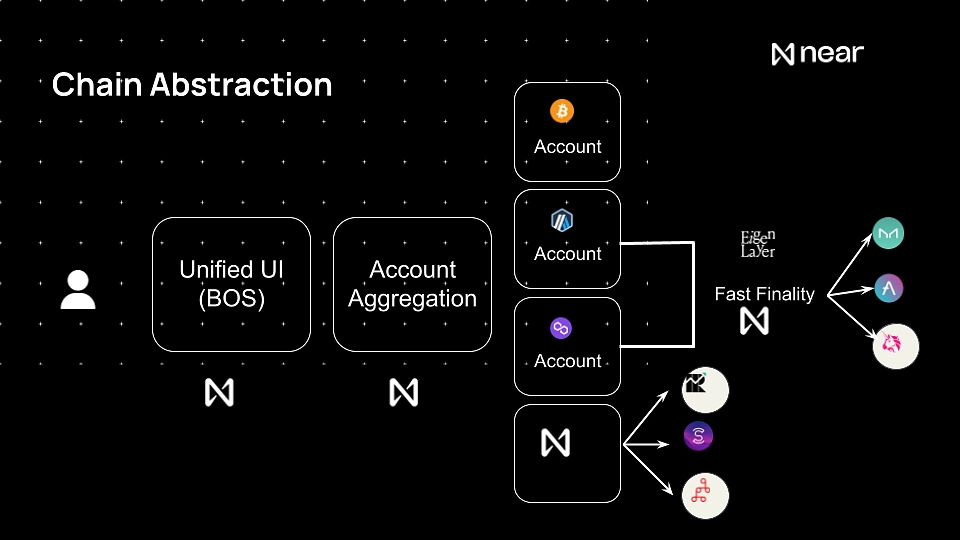
Chain abstraction versus traditional bridges
Traditional bridges function as manual movers. They lock assets on a source chain and mint wrapped equivalents on a destination chain, requiring users to actively select networks, manage multiple tokens, and monitor bridge security audits. This process is fragile; every bridge is a potential target, and history shows that centralized bridge failures can drain billions in user funds.
Chain abstraction shifts the focus from moving assets to moving intent. Instead of manually bridging USDC, you simply declare your goal—such as "send $100 to Alice on Base"—and the underlying protocol handles the routing, settlement, and conversion automatically. This approach reduces friction by eliminating the need to think about which chain holds your liquidity or which bridge has the best slippage.
The security model also changes. Bridges concentrate risk in a single contract or validator set. Abstraction layers distribute this risk across multiple execution environments and settlement layers. By decoupling the user interface from the underlying chain mechanics, abstraction makes the complexity of multi-chain infrastructure invisible to the end user, effectively treating disparate blockchains as a single, unified network.
| Feature | Traditional Bridges | Chain Abstraction |
|---|---|---|
| User Action | Lock and mint wrapped assets | Declare intent; system handles routing |
| Security Model | Centralized or multi-sig contract risks | Distributed across execution layers |
| User Experience | Manual network selection and token swaps | Single interface for all chains |
Frequently asked questions about chain abstraction
What is a chain abstraction?
Chain abstraction is a user experience framework that unifies fragmented blockchain networks into a single interface. It removes the need for users to manage separate wallets, bridge assets, or understand complex gas mechanics across different chains. Instead, the underlying infrastructure handles the routing and settlement, allowing the user to interact with a seamless application layer.
Is blockchain 100% safe?
Blockchain isn't 100% secure, but it is more resistant to fraud, tampering, and breaches than centralized systems. While the ledger itself is highly secure, smart contract vulnerabilities and user error remain risks. Organizations can mitigate these by integrating blockchain with financial workflows, accounting systems, and strict data protection strategies.
How does chain abstraction improve security?
By abstracting the complexity of multi-chain interactions, it reduces the attack surface for users. Instead of manually approving multiple transactions and bridging funds through various protocols, users interact with a single, audited interface. This minimizes the risk of interacting with malicious or buggy bridge contracts, which are common points of failure in traditional multi-chain workflows.
No comments yet. Be the first to share your thoughts!