
Stop asking users to bridge
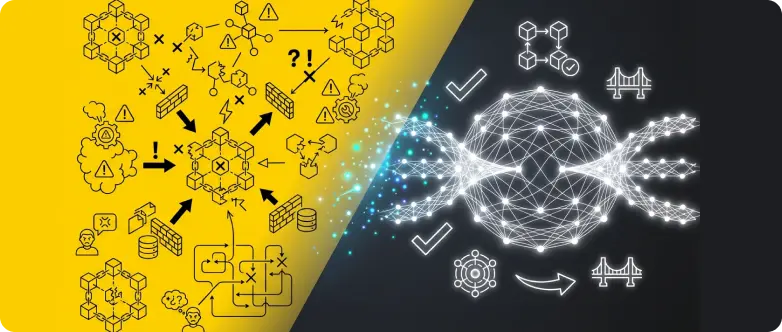
Chain abstraction 2026 shifts the burden of complexity from the user to the backend. In the legacy model, building a cross-chain application meant forcing users to manually select networks, approve transactions on multiple chains, and manage liquidity across disparate bridges. This fragmented workflow created high friction and significant security risks, as users were often left guessing which bridge was safe or whether their funds had arrived.
The modern approach replaces this manual orchestration with an "intent" primitive. Instead of prescribing the exact steps a user must take, the application accepts a high-level goal—such as "send USDC from Ethereum to Solana." A network of solvers and relayers then autonomously finds the most efficient path to execute that intent across the necessary chains. The user interacts with a single interface, unaware of the underlying cross-chain mechanics.
This intent-based architecture, as defined by industry leaders like Eco and Blockchain Hub, allows developers to build applications that feel native to a single chain while actually operating across a multi-chain ecosystem. The result is a seamless experience where the user never has to pick, see, or think about the specific blockchain they are interacting with. The focus returns to the utility of the application itself, rather than the logistics of moving assets.
How the Intent Flow Works
Chain abstraction replaces manual bridging with an intent-based architecture. Instead of moving assets across networks yourself, you declare what you want to achieve. The system then finds the most efficient path to execute that goal across disjointed blockchains.
This workflow relies on four distinct roles: the user, the solver, the relayer, and the execution layer. Understanding this sequence is essential for building applications that feel like single-chain experiences while leveraging the liquidity of multiple networks.
The process begins when a user submits a signed intent. Rather than broadcasting a transaction immediately, the user signs a message stating their desired outcome—for example, "Swap 1 ETH for USDC on Arbitrum." This intent is broadcast to the network but does not yet execute on-chain. The user pays a small fee to submit this request, which acts as a commitment to the solver.
Solvers are specialized entities that compete to fulfill user intents. They analyze available liquidity, gas costs, and cross-chain routes to find the most efficient execution path. A solver might determine that bridging via a specific liquidity pool or using a bundled transaction is cheaper and faster than direct bridging. Once a solver identifies a viable route, it submits a bid to fulfill the intent, ensuring the user receives their assets within the specified time and price constraints.
After a solver wins the bid, a relayer takes over the execution phase. The relayer is responsible for broadcasting the actual transaction to the source chain. In many implementations, the relayer pays the gas fees upfront, allowing the user to pay for the service in a different token or currency. This decoupling of payment and execution is a core benefit, as it removes the friction of holding native gas tokens on every chain.
Finally, the solver or relayer executes the corresponding transaction on the destination chain. The user receives their assets in the target wallet without ever manually connecting to a bridge or swapping tokens across networks. The entire process happens in the background, with the user only seeing the final result. This seamless experience is the primary goal of chain abstraction, making multi-chain interactions indistinguishable from single-chain ones.
This intent flow shifts the complexity from the user to the infrastructure layer. By offloading the routing and bridging logic to solvers and relayers, developers can build applications that prioritize user experience over network mechanics. The result is a more efficient and accessible decentralized ecosystem.
Choose your abstraction layer
To build cross-chain apps without bridging, you must pick the right abstraction layer. The choice determines where complexity lives: in the user's wallet or in the network's routing logic.
Account abstraction shifts complexity to the wallet. It allows users to sign transactions with smart contract wallets, enabling features like gas sponsorship and social recovery. The user interacts with a single interface, but the backend still requires managing multiple chain states and liquidity pools.
Chain abstraction shifts complexity to the network. Intent-based protocols allow users to submit a single goal, such as "swap USDC for ETH," and an off-chain solver finds the best path across chains. The user sees one transaction, while the network handles the bridging, swapping, and settlement behind the scenes.
| Feature | Account Abstraction | Chain Abstraction |
|---|---|---|
| Primary Focus | User Experience (Wallet) | Liquidity & Routing |
| Complexity Location | Wallet Implementation | Network Infrastructure |
| User Action | Sign Smart Contract TX | Submit Intent |
| Cross-Chain Logic | Explicit Bridging | Implicit Solver Routing |
| Gas Payment | Pay in Native Token | Pay in Any Supported Token |
Account abstraction is ideal if your primary goal is improving wallet usability and recovery. Chain abstraction is better if your goal is seamless cross-chain liquidity without the user ever managing bridges.
| Feature | Account Abstraction | Chain Abstraction |
|---|---|---|
| Primary Focus | User Experience (Wallet) | Liquidity & Routing |
| Complexity Location | Wallet Implementation | Network Infrastructure |
| User Action | Sign Smart Contract TX | Submit Intent |
| Cross-Chain Logic | Explicit Bridging | Implicit Solver Routing |
| Gas Payment | Pay in Native Token | Pay in Any Supported Token |
Avoid solver centralization traps
Chain abstraction works by hiding the underlying complexity of multiple blockchains, but the current architecture often trades user-visible friction for developer-hidden complexity. When your application relies on a single, centralized solver to route transactions and settle intents, you reintroduce the exact trust assumptions you are trying to eliminate. The solver becomes a single point of failure and a potential censorship vector.
To build truly decentralized cross-chain applications, you must design for a competitive solver market rather than a monolithic backend. This means structuring your smart contracts to allow multiple solvers to compete for intents based on price, speed, and reliability. By decoupling the intent submission from the execution, you ensure that no single entity controls the final state transition.
Implementing this requires a clear incentive structure. Solvers should be rewarded only upon successful, on-chain verification of the cross-chain state. This aligns their interests with the protocol's security and ensures that the abstraction layer remains robust against individual solver outages or malicious behavior. The goal is to make the solver layer invisible to the user while remaining decentralized and auditable.
Test cross-chain flows locally
Before pushing to mainnet, verify that your abstraction layer handles intent signing, solver latency, relayer gas, and fallbacks across different chains. This checklist ensures your cross-chain app works reliably before real users are exposed to the system.
-
Intent Signing: Confirm that user intents are correctly signed and verified on the source chain before being passed to the solver.
-
Solver Latency: Measure the time it takes for a solver to find and execute a path across chains under various network conditions.
-
Relayer Gas Handling: Verify that the relayer has sufficient gas on the destination chain to complete the transaction without failing.
-
Fallback Mechanisms: Test that the system gracefully handles failures, such as reverting transactions or alerting operators, when a path is unavailable.
Cross-chain abstraction is technology that lets you use any blockchain application without worrying about which blockchain it runs on. It handles all the complexity of bridging and messaging behind the scenes, so you can focus on building the user experience rather than managing multiple chains What Is Chain Abstraction? The End of Bridging (2026) - DEXTools.
No comments yet. Be the first to share your thoughts!