
What chain abstraction means in 2026
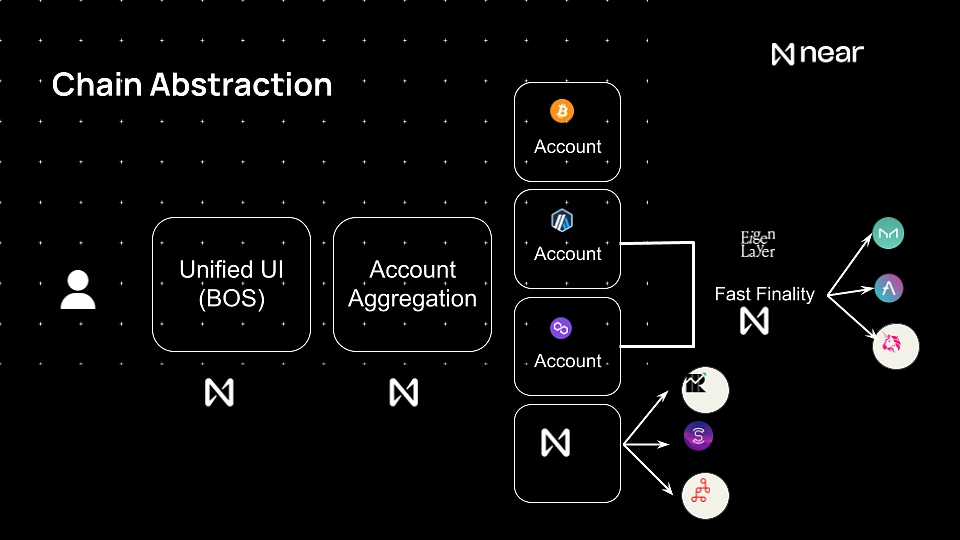
Chain abstraction is the design goal of making users interact with blockchain applications without ever picking, seeing, or thinking about which network they are on. In 2026, this concept has moved beyond simple user experience wrappers to become the foundational infrastructure for unified liquidity. The shift is no longer about creating a single frontend that looks like one app; it is about routing intent-based execution across fragmented ledgers so the user never touches a bridge.
The term distinguishes itself from previous iterations of cross-chain messaging. Earlier solutions required users to manually approve transactions on Source A, wait for a relay, and then approve a transaction on Destination B. Chain abstraction removes this friction. The user submits an intent—such as "send USDC from Ethereum to Solana"—and an off-chain or on-chain solver network handles the complex routing, asset swapping, and settlement automatically. The complexity is hidden, much like how TCP/IP handles packet routing without the user needing to understand the physical network topology.
This shift fundamentally changes how liquidity is accessed. Instead of capital being trapped in isolated silos, liquidity becomes fluid and intent-driven. As noted by Chainlink in their analysis of the ecosystem, chain abstraction serves as the framework that unifies these fragmented networks into a single, coherent interface. This allows for a seamless flow of value where the underlying chain is irrelevant to the end-user, provided the solver can execute the trade efficiently.
The implications for market structure are significant. By removing the manual overhead of bridging, capital efficiency improves across the board. Users are no longer penalized for choosing the "wrong" chain for a specific DApp, as the abstraction layer can route their assets from wherever they reside. This creates a more liquid, responsive market where the barrier to entry is reduced to a single signature, aligning with the broader goal of mainstream crypto adoption.
The liquidity fragmentation problem
Right now, capital in the modular blockchain era is trapped behind invisible walls. Users don't just face different user interfaces; they face fundamentally disjointed liquidity pools that refuse to talk to each other. This fragmentation isn't merely an inconvenience—it's a structural tax on the entire ecosystem, reducing capital efficiency and increasing the cost of every transaction.
When liquidity is siloed, each chain becomes an island with its own shallow pools. A token might have deep depth on Ethereum but negligible volume on a competing Layer 2. This forces traders to choose between accepting worse prices due to low depth or paying exorbitant bridge fees to move assets. The result is market slippage that is significantly higher than it needs to be, as capital cannot flow freely to where it is most needed.
This inefficiency stems from the friction of bridging. Every time a user moves assets between chains, they are exposed to technical risk, time delays, and intermediate fees. For institutional capital and high-frequency traders, this friction is unacceptable. They require unified depth, not a patchwork of fragmented venues. Until liquidity is abstracted away, the promise of multi-chain interoperability remains largely theoretical for anyone outside the inner circle of crypto natives.
The current state of the market reflects this tension. While total value locked across chains is growing, the effective liquidity available to any single user is shrinking relative to the complexity required to access it. This is the core problem chain abstraction aims to solve: hiding the modular mess so users can access unified liquidity without managing the underlying complexity.
The fragmentation isn't just a user experience issue; it's a market structure problem. It prevents price discovery from occurring efficiently across the ecosystem. A unified liquidity layer would allow capital to act as a single, cohesive force rather than a collection of isolated fragments. This is the shift from 2024's "multi-chain" hype to 2026's "abstraction" reality—where the infrastructure handles the complexity, and the user sees only one market.
How unified liquidity solves fragmentation
Fragmented liquidity forces users to manually bridge assets, wrap tokens, and navigate isolated liquidity pools across dozens of chains. This friction creates slippage, exposes users to bridge exploits, and fragments order books. Unified liquidity removes these barriers by decoupling the user experience from the underlying network topology. The result is a single, deep liquidity layer that serves all connected chains.
Intents and Off-Chain Settlement
The core mechanism enabling this unity is the intent-based architecture. Instead of executing atomic, on-chain swaps that require immediate settlement on the destination chain, users submit an intent—a signed request to move value from point A to point B. Solvers, specialized off-chain agents, compete to fulfill these intents by sourcing the best liquidity across the entire ecosystem.
This approach shifts the heavy lifting off the user’s wallet. Solvers aggregate liquidity from centralized exchanges, decentralized protocols, and other liquidity providers to find the optimal path. They handle the complex cross-chain messaging and settlement logic, presenting the user with a single, best-price quote. The user signs once, and the solver manages the rest, often settling on the most efficient chain regardless of where the user initiated the transaction.
Cross-Chain Messaging and Liquidity Layers
Behind the scenes, advanced cross-chain messaging protocols facilitate the transfer of state and value between isolated networks. These protocols act as the nervous system, ensuring that when an intent is fulfilled, the corresponding asset movement is verified and recorded on the appropriate ledgers. This allows for atomic cross-chain swaps where the user never actually holds the intermediate asset on the destination chain, reducing counterparty risk.
Also, liquidity is no longer siloed. Protocols like Eco and others are building universal liquidity layers that allow assets to remain liquid across chains without traditional bridging. This creates a deep, shared pool of capital that benefits all users by reducing slippage on large trades. The fragmentation that once defined multi-chain crypto is being replaced by a unified market where liquidity flows freely.
Market Context and Volatility
The transition to unified liquidity occurs within a highly volatile market environment. Understanding the baseline price action of major assets like Ethereum remains critical for traders navigating these new cross-chain efficiencies.
Account Abstraction vs. Chain Abstraction
The terms are often conflated, but they solve different problems. Account abstraction (ERC-4337) fixes the wallet. Chain abstraction fixes the network. One simplifies how you sign and pay; the other hides the fact that you are interacting with multiple blockchains entirely.
Account abstraction replaces the private key with smart contract wallets. Users can sponsor gas fees, batch transactions, and recover accounts without seed phrases. The experience feels smoother, but the underlying fragmentation remains. A user still sees a different balance, gas token, and liquidity pool for every chain they touch. The wallet is smarter, but the market is still split.
Chain abstraction targets the liquidity layer. It aggregates order books, bridges, and liquidity pools across disparate networks into a single unified interface. The user deposits USDC once and trades across Ethereum, Solana, or Arbitrum without manually bridging assets. The complexity of cross-chain settlement is pushed to the infrastructure layer, not the user interface.
The distinction matters for 2026. Account abstraction reduces friction at the entry point. Chain abstraction removes the friction of movement. Both are necessary for a unified market, but they operate at different levels of the stack.
| Dimension | Account Abstraction | Chain Abstraction | Primary Impact |
|---|---|---|---|
| Scope | Wallet-level (ERC-4337) | Network-level (Liquidity aggregation) | Simplifies signing and payment |
| User Benefit | Gas sponsorship, session keys | Single liquidity pool across chains | Hides cross-chain complexity |
| Technical Layer | Smart contract wallets | Cross-chain messaging and routing | Unifies fragmented liquidity |
| Market Effect | Better UX, same fragmentation | Unified depth, reduced slippage | Ends manual bridging |
Leading chain abstraction protocols
The infrastructure landscape is shifting from experimental testnets to production-grade networks. By 2026, the dominant user experience is no longer about managing bridges, but about interacting with a single logical account that spans multiple chains. Several protocols have emerged to handle the underlying complexity of liquidity aggregation and cross-chain messaging.
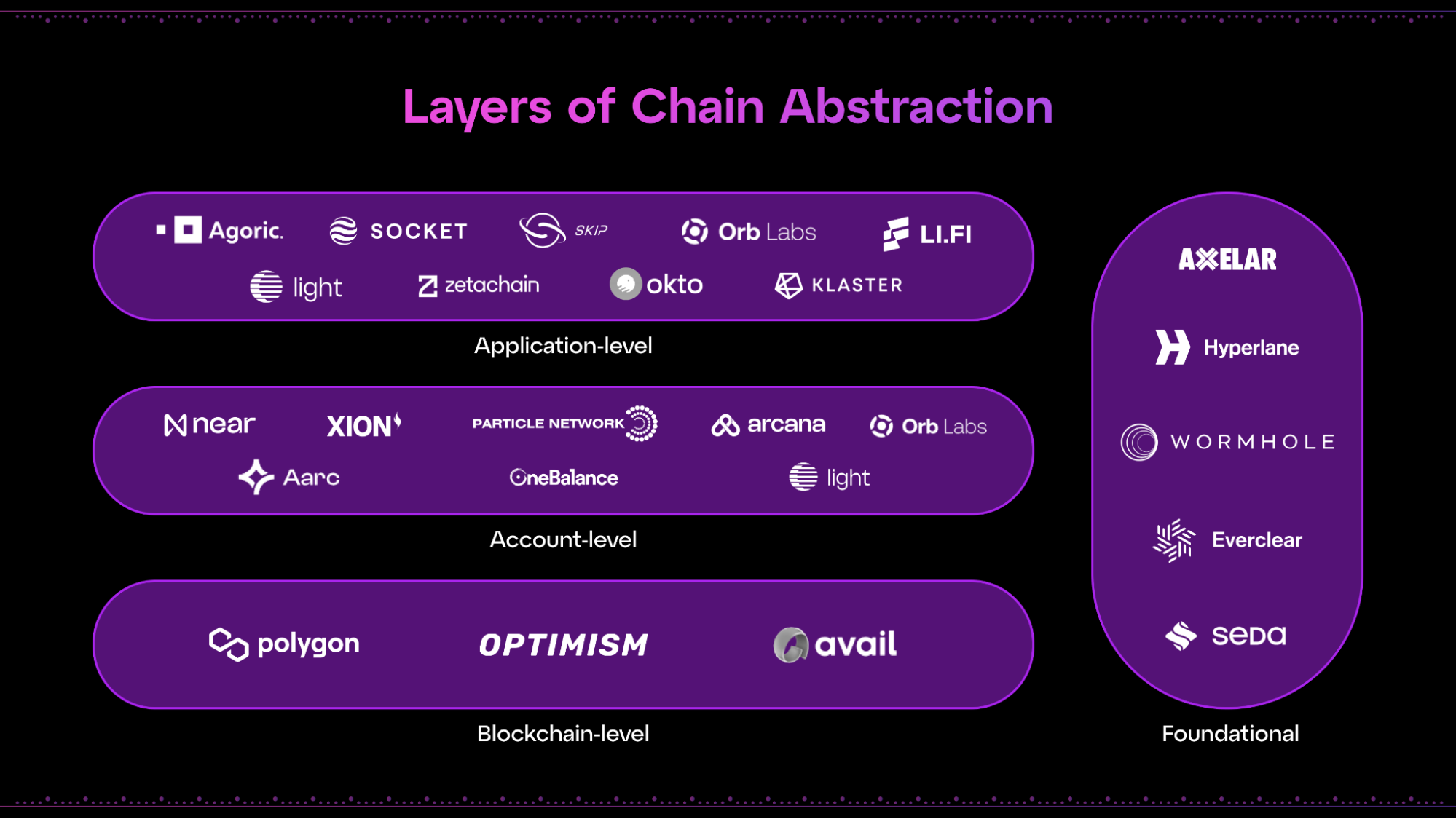
Particle Network has built a modular infrastructure that abstracts the wallet and chain selection layers. Their approach focuses on providing a unified account framework that allows developers to deploy applications without worrying about the underlying chain mechanics. This reduces the friction for users who previously had to manually swap tokens or manage multiple gas wallets.
LayerZero provides the communication layer that enables these abstractions to function. By offering an omnichain interoperability protocol, it allows dApps to send messages and assets between chains without requiring centralized bridges. This foundational layer is critical for protocols that need to verify state across different blockchains securely.
Zama takes a different approach by integrating privacy directly into the abstraction layer. Their confidential smart contracts allow users to transact across chains while keeping their data encrypted. This is particularly important for institutional users who require compliance with data privacy regulations while still benefiting from cross-chain liquidity.
How to evaluate chain abstraction solutions
Before committing capital, treat every chain abstraction protocol like a counterparty. The goal is unified liquidity, but the risk is fragmented settlement. Use this checklist to determine if a solution is viable for your use case in 2026.
Unified liquidity means nothing if it is trapped in silos. Check if the protocol aggregates depth from multiple chains or if it simply routes to a single source. Shallow pools increase slippage significantly during volatile markets. Look for real-time depth charts rather than static APY claims.
Abstraction should hide the complexity of bridging, not the latency. Verify the average time from user action to final settlement. If the protocol relies on optimistic bridges, understand the withdrawal window. Fast finality is non-negotiable for high-stakes trading.

Who holds the keys? Review the audit reports from reputable firms like Trail of Bits or OpenZeppelin. Pay attention to the scope: does the audit cover the intent solver or just the smart contracts? Unaudited solvers are a single point of failure.
No comments yet. Be the first to share your thoughts!