
What chain abstraction actually means
Chain abstraction is a user experience framework that unifies fragmented blockchain networks into a single interface. It refers to the removal of UX frictions typically associated with managing multiple blockchains, effectively distancing end users from the underlying infrastructure. The goal is to make blockchains invisible to the end-user, allowing them to transact without understanding which specific ledger is processing their order.
This concept is distinct from account abstraction, which focuses on wallet functionality, and simple bridging, which moves assets between chains. Chain abstraction operates at a higher level, handling the complexity of cross-chain communication, asset conversion, and gas payment automatically. It transforms the multi-chain landscape from a maze of disparate networks into a coherent, single-chain-like experience.
By abstracting away the technical details of consensus mechanisms and network protocols, this framework allows applications to scale across multiple chains without requiring users to manage multiple wallets or pay gas fees in native tokens. This is the next evolution in making blockchain technology accessible to mainstream finance.
The liquidity fragmentation crisis
The current multi-chain landscape operates like a fragmented archipelago of isolated liquidity pools. Instead of a unified market, capital is trapped within specific networks, creating artificial scarcity and inefficiency. Users seeking to move assets must navigate a complex web of bridges, wrapped tokens, and cross-chain messaging protocols. This friction is not merely an inconvenience; it is a structural flaw that undermines the utility of blockchain technology.
For the average user, this fragmentation manifests as high slippage and unpredictable transaction costs. When liquidity is thin on a target chain, even small trades can result in significant price impact. The necessity of manually selecting chains and managing multiple wallet balances increases the cognitive load and the risk of user error. The status quo forces users to act as their own liquidity managers, a task that is both time-consuming and prone to failure.
This disconnection is unsustainable for mass adoption. Chain abstraction aims to solve this by treating the entire multi-chain ecosystem as a single, liquid layer. By abstracting away the underlying complexity, users can interact with applications as if they were on a single chain, while the infrastructure handles the routing and settlement across networks. Until this abstraction is realized, the market will remain inefficient, with capital stuck in silos and users bearing the cost of fragmentation.
How abstraction layers work in practice
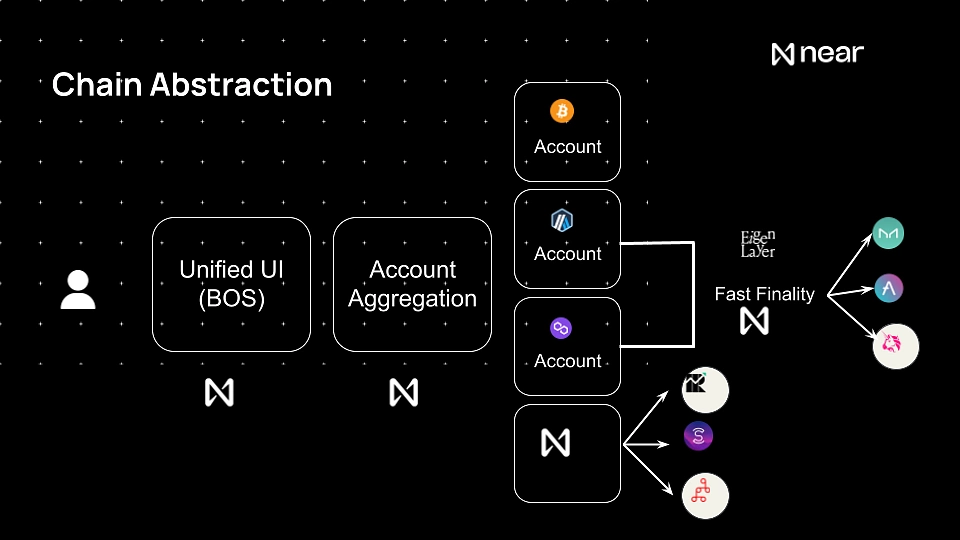
Chain abstraction functions as a routing layer that decouples user intent from execution mechanics. Instead of forcing users to manually bridge assets, select networks, and sign multiple transactions, the system aggregates these steps into a single request. The user interacts with one interface, while the backend infrastructure handles the complexity of moving value across L1s and L2s. As noted in documentation from NEAR, this allows users to focus on the core experience—such as browsing or trading—while the blockchain complexity is managed invisibly in the background.
The technical engine relies on two primary mechanisms: intent-based systems and account abstraction integration. Intent-based architectures allow users to submit a desired outcome (e.g., "swap Token A for Token B at the best rate") rather than a specific transaction path. The backend then finds the most efficient route, potentially splitting the trade across multiple chains to minimize cost and slippage. This is distinct from traditional bridging, which often requires locking assets on one chain and minting wrapped versions on another.
Account abstraction (ERC-4337) complements this by allowing smart contract wallets to handle transaction validation and execution logic. This enables features like social recovery, batched transactions, and gas sponsorship, which are essential for a seamless abstraction layer. When a user initiates a cross-chain action, the smart contract wallet signs the intent, and the bundler relays it to the appropriate chains. The result is a unified experience where the underlying fragmentation of the multi-chain landscape is hidden from the end user.
This architecture significantly impacts market liquidity and user adoption by reducing friction. By eliminating the need for users to understand network selection or gas token management, chain abstraction lowers the barrier to entry for complex DeFi operations. The following chart illustrates the market activity that these protocols facilitate, highlighting the volume of transactions that rely on efficient cross-chain routing.
Comparing chain abstraction approaches
Chain abstraction is not a single protocol but a set of architectural strategies designed to hide multi-chain complexity from the end user. While the goal remains consistent—seamless interoperability—the underlying mechanisms vary significantly in their security models, user experience, and execution speed. Understanding these trade-offs is essential for evaluating which abstraction layer best suits specific financial or application use cases.
The three dominant models are account-based abstraction, intent-based systems, and bridge-native solutions. Each approach solves the fragmentation problem differently, introducing distinct risks and performance characteristics.
Risks and Security Trade-offs
Chain abstraction introduces a new attack surface by centralizing critical routing and settlement logic. When users interact with an abstraction layer, they are effectively trusting a single point of failure to manage cross-chain state transitions. This concentration of risk means that a vulnerability in the abstraction protocol can compromise assets across multiple underlying blockchains simultaneously.
The primary concern lies in smart contract vulnerabilities within these intermediary layers. Unlike native chain interactions, abstraction protocols must handle complex state mappings, fee relaying, and signature verification across disparate environments. If the code governing these mappings is flawed, attackers can exploit discrepancies between chains to drain liquidity or freeze user funds. The complexity of bridging different consensus mechanisms amplifies the difficulty of formal verification, making audits more critical than ever.
Mitigating these risks requires rigorous, continuous auditing from official and primary sources. Users should prioritize abstraction layers that have undergone extensive security reviews by reputable firms and maintain transparent bug bounty programs. Relying on unaudited or poorly documented protocols exposes capital to preventable exploits. As the ecosystem matures, the security of chain abstraction will depend less on theoretical interoperability and more on the proven resilience of its core smart contracts.
Choosing the right chain abstraction layer
Selecting a chain abstraction solution requires matching technical architecture to your specific operational needs. The landscape splits into three primary use cases: DeFi yield optimization, NFT liquidity management, and seamless payment rails. Each demands different trade-offs between security guarantees, gas efficiency, and user experience.
For high-value DeFi interactions, prioritize abstractions with deep liquidity pools and minimal cross-chain slippage. Look for protocols that support atomic swaps and offer insured bridging mechanisms. Security audits from firms like OpenZeppelin or Trail of Bits are non-negotiable for capital preservation.
NFT markets require abstractions that preserve metadata integrity and support complex royalty structures. Ensure the layer supports cross-chain marketplace aggregation without fragmenting liquidity. Test the abstraction’s ability to handle large batches of metadata updates efficiently.
Payment-focused applications need finality within seconds and near-zero transaction fees. Choose abstractions built on high-throughput L2s or sidechains with robust validator sets. Verify that the abstraction supports recurring billing and subscription models without manual intervention.
| Use Case | Primary Priority | Key Metric |
|---|---|---|
| DeFi | Security & Liquidity | Slippage Rate |
| NFTs | Metadata Integrity | Royalty Support |
| Payments | Speed & Cost | Finality Time |
Common questions about chain abstraction
Chain abstraction solves the friction of multi-chain fragmentation by hiding network complexity from the user. It allows transactions to settle across different layers without requiring the user to manage bridges or native tokens.
How does chain abstraction differ from bridging?
Bridging is a manual process where users lock assets on one chain and claim wrapped versions on another. Chain abstraction automates this process invisibly. Users interact with a single interface, and the underlying infrastructure handles the routing, settlement, and asset conversion across chains without the user needing to initiate separate bridge transactions.
What are the main security risks of chain abstraction?
The primary risk is the centralization of routing logic. If the abstraction layer’s smart contracts are compromised, assets across multiple chains can be at risk. Additionally, intent-based systems rely on off-chain solvers, which introduces counterparty risk if the solver acts maliciously or fails to execute the best route. Rigorous auditing and transparent bug bounty programs are essential mitigations.
Which blockchains are most commonly supported by chain abstraction protocols?
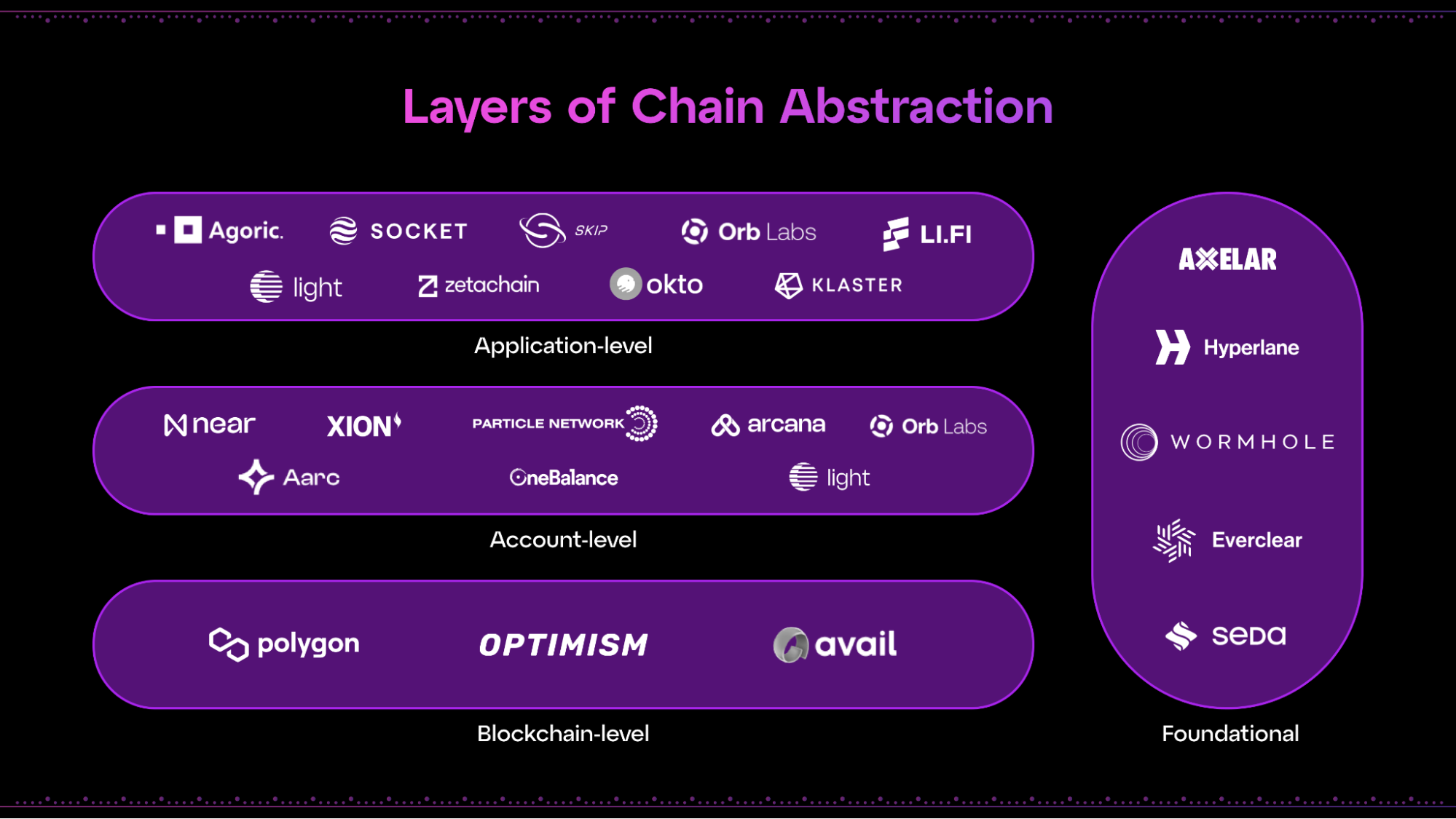
Most current chain abstraction protocols prioritize high-liquidity Layer 1s like Ethereum and Solana, along with major Layer 2s such as Arbitrum, Optimism, and Base. These networks offer the deepest liquidity pools and most robust developer ecosystems, making them the primary targets for cross-chain routing and settlement.
| Network | Type | Primary Use |
|---|---|---|
| Ethereum | L1 | Smart contracts & DeFi |
| Arbitrum | L2 | High-speed trading |
| Base | L2 | Consumer apps |
| Solana | L1 | High-throughput transactions |
| Avalanche | L1 | Subnet customization |
No comments yet. Be the first to share your thoughts!