

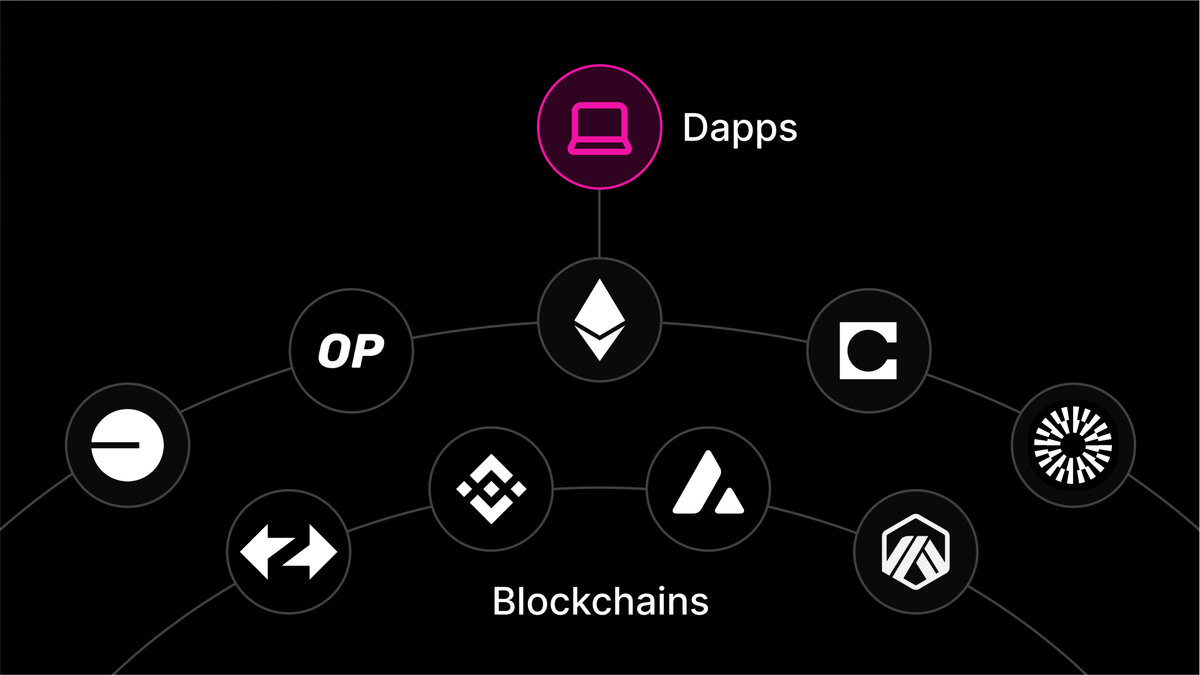
The fragmented nature of blockchain ecosystems has long posed a fundamental challenge for decentralized finance (DeFi) users and developers. Each chain operates with its own protocols, liquidity pools, and user interfaces, creating friction at every step of cross-chain interaction. Chain abstraction is emerging as the solution to this fragmentation, enabling seamless cross-chain DeFi without the need for traditional bridges or manual network switching.
Why Traditional Bridges Are No Longer Enough
Historically, moving assets between blockchains required bridges - purpose-built protocols that lock tokens on one chain and mint representations on another. While effective in theory, these bridges have repeatedly proven to be security liabilities. In 2022 alone, over $1 billion was lost to bridge exploits due to vulnerabilities in smart contracts and centralized validator sets. Beyond security risks, bridges introduce latency and significant UX hurdles: users must manually select networks, approve transactions multiple times, and manage separate wallets or accounts for each ecosystem.
Chain abstraction eliminates these pain points by providing a unified interface that abstracts away the underlying complexity of cross-chain operations. Instead of interacting directly with bridges or managing multiple wallets, users experience DeFi as if it were a single network - while liquidity and computation are routed across chains behind the scenes.
The Mechanics of Chain Abstraction: Unified Accounts and Intent-Based Routing
The foundation of chain abstraction lies in two core innovations: unified smart accounts and intent-based transaction routing. Platforms like Heima Protocol and zkCross Network exemplify this approach by combining account abstraction with AI-driven routing algorithms.
- Unified Smart Accounts: Users interact with a single account layer that spans all supported blockchains. This means no more juggling seed phrases or private keys for different networks. The account can initiate actions on any connected chain while maintaining consistent permissions and identity.
- Intent-Based Routing: Rather than specifying each step of a transaction (e. g. , swap token A on Ethereum for token B on Arbitrum), users simply express their intent ("swap token A for token B at best price"). The protocol determines the optimal route across chains - aggregating liquidity from various sources while minimizing fees and slippage.
This architecture is fundamentally different from bridging because it does not require asset wrapping or manual intervention. Instead, it leverages interoperability protocols at Layer-0 (the network connectivity layer) to coordinate execution across chains in real time.
User Experience: Making Multi-Chain Operations Invisible
The most immediate benefit of chain abstraction is a radically improved user experience. According to recent research by Safe Global and NEAR Protocol, users can now manage assets across Ethereum, Avalanche, Solana, Cosmos, and other networks through a single dashboard. There’s no need to switch RPC endpoints or worry about gas tokens unique to each chain; everything is handled automatically under the hood.
This "invisible multi-chain" paradigm is particularly powerful for DeFi traders who demand speed and efficiency. For example, platforms implementing chain abstraction can offer one-click swaps across chains without exposing users to bridge delays or security risks. Developers also benefit as they no longer need to build custom integrations for each blockchain - instead focusing on application logic while relying on the abstraction layer for interoperability.
If you want an in-depth look at how this technology makes cross-chain swaps as simple as single-chain transactions, see our guide: How Chain Abstraction Makes Cross-Chain Swaps as Simple as Single-Chain Transactions.
Chain abstraction also fundamentally changes how liquidity is sourced and managed. By aggregating order flow and capital across multiple chains, DeFi protocols can offer deeper liquidity pools and tighter spreads. This reduces slippage for large trades and improves price discovery, two factors that have historically limited the efficiency of cross-chain DeFi. In practice, this means a user swapping tokens on one chain can tap into liquidity from another without even realizing it, all orchestrated seamlessly by the abstraction layer.
Security is another critical advantage. Traditional bridges often serve as honeypots for attackers because they require custody of assets or rely on centralized validator sets. Chain abstraction protocols sidestep these risks by eliminating the need to lock or wrap tokens in intermediary contracts. Instead, advanced cryptographic techniques, such as zero-knowledge proofs and multi-party computation, allow transactions to be executed atomically across chains without exposing assets to unnecessary risk. As highlighted by recent exploits, minimizing attack surfaces is essential for scaling cross-chain DeFi securely.
Ecosystem Impact: From Developers to Enterprises
The implications of chain abstraction extend well beyond individual users. For developers, it unlocks the ability to build truly cross-chain applications with a single codebase, eliminating redundant infrastructure and reducing time-to-market. Protocols like Heima and Biconomy are already demonstrating how intent-based routing and unified accounts enable new application paradigms, from cross-chain lending markets to NFT platforms that span multiple networks natively.
Enterprises stand to benefit as well. As detailed in QuickNode’s research, abstracting away chain-specific compliance checks and liquidity fragmentation paves the way for institutional adoption of DeFi services. Unified compliance layers can enforce KYC/AML policies across all connected chains while maintaining a seamless user experience, a requirement for onboarding traditional finance players into the crypto ecosystem.
Looking ahead, we expect chain abstraction to become the default UX paradigm for decentralized finance as more projects adopt Layer-0 interoperability standards. The future state is one where users interact with dApps and manage portfolios without ever needing to consider which blockchain they are using, delivering on crypto’s promise of permissionless access at global scale.
Next Steps: Exploring Seamless Cross-Chain UX
If you’re interested in practical steps toward implementing or using chain abstraction today, check out our deep dive on how chain abstraction enables seamless cross-chain UX for DeFi traders. This guide covers real-world workflows, supported wallets, and integration tips for both end-users and developers.
Ultimately, by removing friction points such as bridges, fragmented wallets, and manual network switching, chain abstraction delivers a unified experience that is both secure and capital-efficient. As this technology matures through 2025 and beyond, expect rapid growth in both user adoption and protocol innovation across the entire cross-chain DeFi landscape.



No comments yet. Be the first to share your thoughts!