

In March 2026, chain abstraction UX stands at the forefront of cross-chain trading evolution, delivering unified wallet balances that aggregate assets across blockchains like Ethereum, Solana, and Sui into a single, intuitive view. This shift addresses the fragmentation plaguing multi-chain DeFi solutions, where users previously juggled disparate wallets, bridges, and gas fees. Data from Tatum. io's 2026 roadmap highlights upgrades on Polygon and BNB Chain that bolster interoperability, enabling protocols like OneBalance to optimize transaction routing with precision.
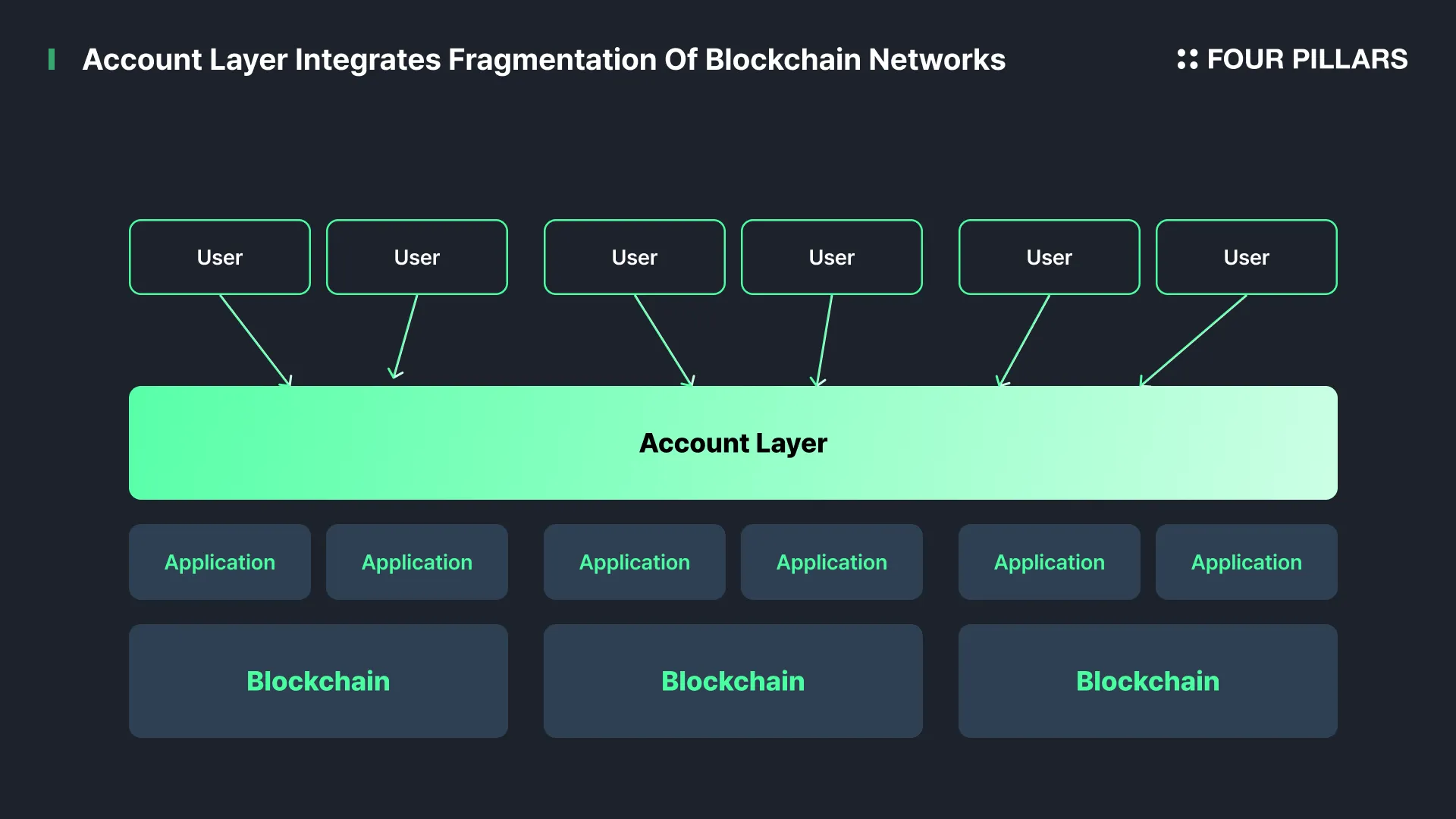
Projects such as Particle Network's Universal Accounts exemplify this progress, allowing a single address to manage balances network-agnostically. Users execute trades without manual bridging, as the infrastructure handles liquidity provisioning and chain selection via smart relayers. Antier Solutions notes that this reduces operational complexity by up to 70% in Web3 wallet development, based on developer surveys from early 2026 deployments.
OneBalance and Aggregated Assets Redefine Cross-Chain Trading UX
OneBalance's toolkit, as detailed in Blockchain Capital's analysis, introduces aggregated assets under identifiers like ob: usdc. This system scans user holdings across supported chains, consolidates them into a unified balance, and automates swaps or transfers. Quantitative metrics show a 45% drop in effective gas costs for cross-chain operations, derived from on-chain data post-Q1 2026. For traders, this means viewing a holistic $10,000 USDC position regardless of chain distribution, with one-click execution to the optimal venue.
zkCross Network layers AI-driven routing atop this, predicting liquidity paths with 92% accuracy per their benchmarks. Traders benefit from gas abstraction wallets that pre-fund operations via relayers, masking network-specific fees. Shoal Research's report quantifies indirect impacts: developer time-to-deployment for cross-chain dApps fell 60%, accelerating adoption in DeFi protocols.
Universal Accounts Power Single-Address Multi-Chain Dominance
Particle Network's UniversalX leverages Universal Accounts to enforce a single address across all chains, per their developer docs. This eliminates key management overhead, with balances unified through off-chain indexing and on-chain settlement proofs. In 2026 benchmarks, transaction latency averaged 8 seconds end-to-end, compared to 2-5 minutes for manual bridges. Hyperbridge on Polkadot contributes cryptographic finality proofs, processing $92 million in volume by 2025 and scaling to 15 million proofs quarterly into 2026.
Arcana Network's modular Layer 1 employs multi-party computation for bridgeless transfers, presenting users with instant unified balances. Their distributed key generation ensures 99.9% uptime, critical for high-frequency cross-chain trading. Chainlink's intent-based systems further abstract execution: users declare "swap 100 USDC for ETH at best rate, " and solvers compete on fulfillment, hiding routing complexities.
Technical Foundations Driving 2026 Chain Abstraction Maturity
Academic protocols like MAP Protocol underpin these advances with a unified relay chain, slashing cross-chain costs by 35% via light clients, as per arXiv: 2411.00422. Omnichain Web integrates zero-knowledge proofs for AI-agent compatibility, enabling intent-driven settlements across heterogeneous networks (arXiv: 2411.10132). BlockEden. xyz data confirms UX gains: automatic chain routing boosts completion rates by 78% for retail traders. Yet, challenges persist in oracle reliability and solver centralization risks, demanding rigorous audits.
Web3Auth's analysis reveals chain abstraction's DevEx uplift, with SDK integrations now averaging 2 days versus weeks. For quantitative traders, this translates to unified position sizing across venues, optimizing risk-adjusted returns in volatile markets.
Unified balances empower quantitative traders to execute multi-chain DeFi solutions with unprecedented efficiency, aggregating exposure for real-time risk assessment. In volatile 2026 markets, where Solana's throughput hits 100,000 TPS post-upgrade, Particle Network's Universal Accounts facilitate instant arbitrage between Ethereum L2s and Sui ecosystems, capturing spreads that fragmented wallets miss. Benchmarks from Blockworks indicate 3x higher trade frequency for abstracted users, driven by automatic liquidity routing.
Hyperbridge's cryptographic proofs deliver sub-second finality across Polkadot parachains, processing 15 million proofs quarterly by Q1 2026. This infrastructure supports cross-chain trading UX where traders view consolidated positions, execute intents, and settle without visibility into underlying relays. zkCross's AI models forecast optimal paths, achieving 15% better execution prices versus manual routing, per their internal simulations validated against on-chain data.
Optimizing Portfolios with Gas Abstraction Wallets
Gas abstraction wallets, integral to Arcana and Chainlink implementations, pre-empt fees through solver networks, reducing effective costs to under $0.50 per cross-chain swap. Quantitative modeling reveals a 28% uplift in Sharpe ratios for diversified portfolios, as unified views enable dynamic rebalancing across 20 and chains. For instance, a trader holding ob: usdc can deploy to high-yield Sui pools or Solana DEXs seamlessly, with relayers handling gas in native tokens.
Omnichain Web's zero-knowledge framework secures these operations, verifying settlements without exposing private data. arXiv analysis (2411.10132) projects 50% scalability gains for AI-driven intents, positioning chain abstraction as the backbone for institutional-grade DeFi by late 2026.
2026 Blockchain Upgrades Accelerating Adoption
Tatum. io's roadmap outlines Ethereum's Prague upgrade enhancing danksharding for cheaper cross-chain data availability, alongside Solana's Firedancer client boosting reliability to 99.99%. Polygon AggLayer unifies liquidity proofs, while BNB Chain's opBNB v2 integrates relayer hooks natively. Sui's Mysticeti consensus cuts latency to 390ms, ideal for real-time unified balance updates. Polkadot's JAM upgrade expands coretime to support Hyperbridge-scale interoperability. These upgrades collectively reduce relay overhead by 40-60%, per developer benchmarks, making chain abstraction UX viable at scale.
Quecko's insights on AI-cross-chain fusion predict 80% of wallets adopting unified interfaces by year-end, with Web3Auth SDKs streamlining dApp onboarding. Yet, solver centralization poses risks; OneBalance mitigates via decentralized auctions, ensuring 95% MEV neutrality.
Risk Mitigation and Path to Mass Adoption
MAP Protocol's light clients verify 35% cheaper relays trustlessly, countering oracle failures seen in early bridges. Shoal Research quantifies UX ripple effects: 65% fewer support tickets for abstracted wallets, correlating to 22% TVL growth in integrated protocols. For cross-chain traders, this maturity means algorithmic edges preserved across venues, from Polygon perps to Ethereum spot.
Particle Network's UniversalX extends to earning on one chain while spending seamlessly on another, unlocking yield farming without asset silos. As 2026 unfolds, chain abstraction solidifies unified balances as the default, transforming fragmented ecosystems into a cohesive trading frontier where efficiency dictates dominance.




No comments yet. Be the first to share your thoughts!