
Chain abstraction limits to account for
Use this section to make the Chain Abstraction decision easier to compare in real life, not just on paper. Start with the reader's actual constraint, then separate must-have requirements from details that are merely nice to have. A practical choice should survive normal use, maintenance, timing, and budget. If a recommendation only works in an ideal situation, call that out plainly and give the reader a fallback path.
The simplest way to use this section is to write down the must-have criteria first, then compare each option against those criteria before weighing nice-to-have features.
Chain abstraction choices that change the plan
Chain abstraction simplifies the user experience by unifying fragmented blockchain networks into a single interface, but it introduces specific operational tradeoffs that users must evaluate. While the primary benefit is the removal of UX frictions—such as managing multiple wallets or bridging assets manually—this convenience comes at the cost of increased infrastructure complexity and potential centralization points.
When evaluating chain abstraction, readers should consider how different architectures handle security, speed, and cost. The following comparison breaks down the concrete factors involved in choosing an abstraction layer.
| Factor | Account Abstraction | Cross-Chain Messaging | Liquidity Bridging |
|---|---|---|---|
| Primary Focus | Simplifies wallet interactions and signing | Moves assets between different blockchains | Aggregates liquidity from multiple sources |
| Security Model | Relies on smart contract logic and key management | Depends on validator sets or light clients | Subject to bridge exploit risks and smart contract bugs |
| User Experience | Seamless gasless transactions and social logins | Requires manual bridging or automated swaps | Best execution prices but may involve multiple hops |
| Complexity Risk | Low for end-users, high for developers | High due to cross-chain verification delays | Medium due to slippage and routing complexity |
Security and Centralization
The most significant tradeoff in chain abstraction is the balance between convenience and security. By abstracting away the underlying blockchain complexity, users no longer need to worry about gas fees or wallet compatibility. However, this convenience often relies on centralized relayers or multi-signature schemes that introduce single points of failure. If the abstraction layer’s smart contracts are compromised, user funds are at risk, unlike native blockchain interactions where security is decentralized.
Speed and Finality
Chain abstraction can improve perceived speed by hiding the latency of cross-chain transactions. Instead of waiting for multiple blockchain confirmations, users see a single, unified transaction. However, the actual settlement time depends on the underlying networks and the messaging protocol used. In some cases, the abstraction layer may introduce additional delays due to the need for cross-chain verification, which can impact time-sensitive transactions.
Cost Efficiency
While chain abstraction eliminates the need for users to hold native tokens for gas fees, the abstraction layer itself charges fees for its services. These fees can be higher than direct on-chain transactions, especially during periods of high network congestion. Users should compare the total cost of using an abstraction layer against the cost of manual bridging and gas payments to determine the most economical option.
How to choose a chain abstraction strategy
Chain abstraction removes the friction of managing multiple blockchains, letting users focus on the core experience rather than bridging assets or switching networks. For developers and product teams, the choice of abstraction layer determines how much complexity is hidden from the user versus kept visible for control.
The decision framework below breaks down the three primary approaches available in 2026, moving from full user isolation to native interoperability.
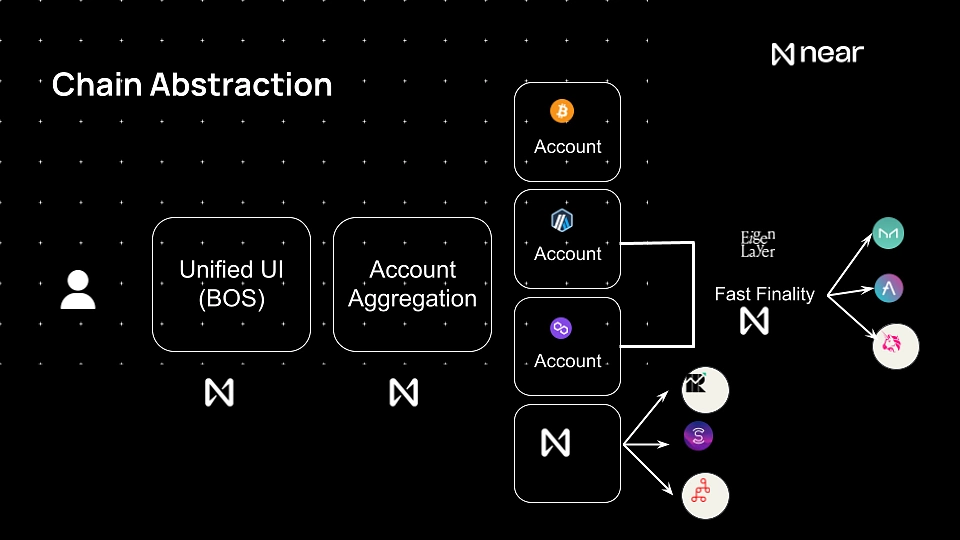
If your target audience includes retail users or non-crypto natives, prioritize full abstraction. This approach hides gas fees, chain selection, and wallet connections entirely. Users interact with a single interface, while the backend routes transactions across the most efficient liquidity pools. This is the standard for consumer-focused applications like art marketplaces or social platforms where the blockchain should be invisible.
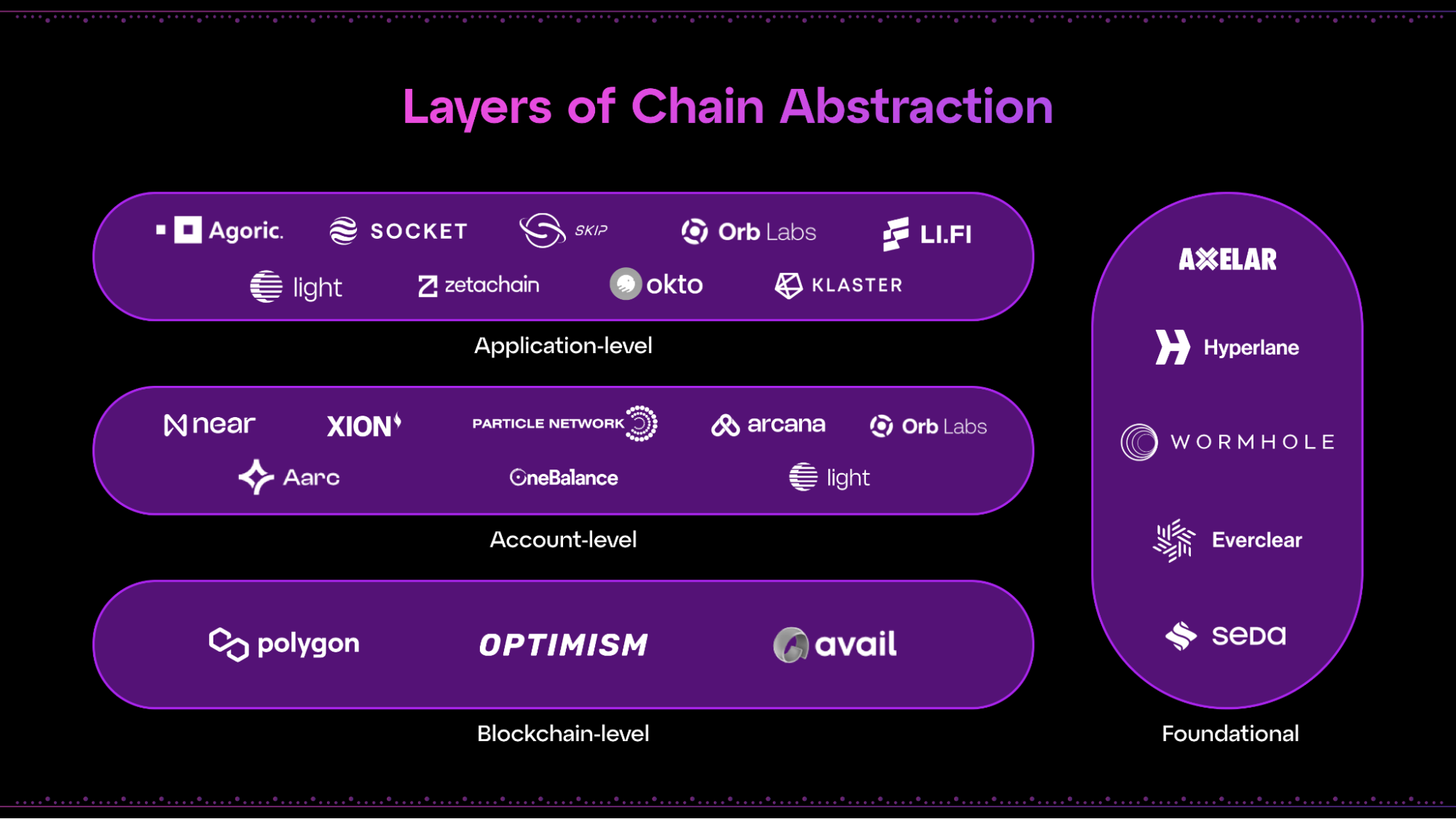
For regulated industries or high-stakes finance, choose a semi-abstraction model. This keeps the underlying chain visible for audit trails and compliance checks while abstracting the user experience. You maintain transparency for regulators and institutional partners without forcing end-users to manage multiple wallets or understand cross-chain mechanics. This is essential for DeFi protocols serving institutional capital.

Finally, choose the technical layer that powers the abstraction. Options range from cross-chain messaging protocols like LayerZero to liquidity aggregation networks like Rango. Evaluate these based on finality times, gas costs, and supported chains. The best protocol minimizes the "trust gap" by using non-custodial solutions that give users full control over their assets while still providing a seamless experience.
| Approach | User Experience | Dev Control | Best For |
|---|---|---|---|
| Native Interoperability | Multi-chain native | High | Advanced DeFi, DAOs |
The right choice depends on your tradeoff between ease of use and technical transparency. Full abstraction drives adoption by removing friction, while semi-abstraction builds trust through visibility. Evaluate your specific use case against these criteria to determine the optimal path forward.
Watch out for misleading claims and weak options
Chain abstraction promises a single interface for fragmented networks, but the reality is often more complex. Many projects market themselves as "abstraction" when they are simply wrapped bridges or custodial wrappers. This section identifies the weak options and common mistakes in the current market.
Beware of custodial wrappers masquerading as abstraction
True chain abstraction removes the need for users to manage multiple wallets or chains. However, many "unified" wallets are just custodial wrappers. They hold your assets in a single custodial account and issue IOUs on a backend database. This defeats the purpose of self-custody and introduces single-point-of-failure risks. If you cannot prove ownership of the underlying on-chain assets without the platform's API, it is not true abstraction. It is just a centralized ledger with a fancy UI.
Distinguish between UX abstraction and protocol-level abstraction
A common mistake is confusing user experience improvements with actual chain abstraction. A better wallet UI is not chain abstraction. True abstraction happens at the protocol level, where transactions are routed across chains without user intervention. Look for projects that use intent-centric architectures or account abstraction (ERC-4337) standards. If the solution requires you to manually bridge assets or sign multiple transactions, it is not solving the fragmentation problem. It is just adding another step to the process.
Check for hidden fees and slippage
Abstraction layers often hide the true cost of cross-chain transactions. While the UX is seamless, the fees can be opaque. You might pay a premium for liquidity routing or suffer from high slippage on less liquid pairs. Always compare the total cost of a direct bridge versus the abstraction layer. If the abstraction layer charges a flat fee that exceeds the direct bridge cost for large transactions, it is not providing value. It is just extracting rent from convenience.
Avoid projects with unclear audit trails
Chain abstraction introduces new attack vectors. Smart contracts that route transactions across multiple chains are complex and prone to bugs. If a project does not publish regular, third-party audits of its abstraction layer, avoid it. Even if the underlying chains are secure, the abstraction layer can be hacked. Look for projects with a clear track record of security disclosures and bug bounties. If the code is not open-source or audited, it is a significant risk.
Decision: Choose proven solutions
When evaluating chain abstraction solutions, prioritize those with a proven track record of security and transparency. Avoid projects that promise too much too quickly or lack clear audit trails. The best abstraction solutions are those that work quietly in the background, improving UX without compromising security or decentralization.
Faq: chain abstraction: what to check next
What is a chain abstraction?
Chain abstraction refers to technologies that hide the complexity of interacting with multiple blockchains from the end user. Instead of managing different wallets, bridging assets manually, or paying gas fees in specific native tokens, users interact with a single interface. The abstraction layer handles the routing, settlement, and fee payment in the background, making cross-chain interactions feel like a single-chain experience.
What exactly does chainalysis do?
Chainalysis is a blockchain analytics firm that provides tools for tracking cryptocurrency transactions, identifying illicit activity, and ensuring regulatory compliance. It does not provide chain abstraction services. Instead, it offers data and software to law enforcement, exchanges, and financial institutions to monitor on-chain behavior and mitigate risks associated with money laundering and fraud.
What is bitcoin chain abstraction?
Bitcoin chain abstraction involves making Bitcoin interact seamlessly with other blockchains without requiring users to understand the underlying mechanics. This often includes technologies like Liquid Networks, RGB, or Ordinals, which allow Bitcoin to be used in smart contracts or transferred across chains while maintaining its security model. The goal is to enable Bitcoin holders to participate in DeFi or other ecosystems without leaving the Bitcoin security environment or using complex bridging protocols.
Is blockchain 100% safe?
No blockchain is 100% safe. While the underlying cryptographic principles are robust, smart contracts can have bugs, bridges can be exploited, and centralized components (like relayers in chain abstraction) can be compromised. Users must always conduct due diligence, use audited protocols, and understand the specific risks associated with the abstraction layer they are using. Security is a continuous process, not a guaranteed state.
No comments yet. Be the first to share your thoughts!