
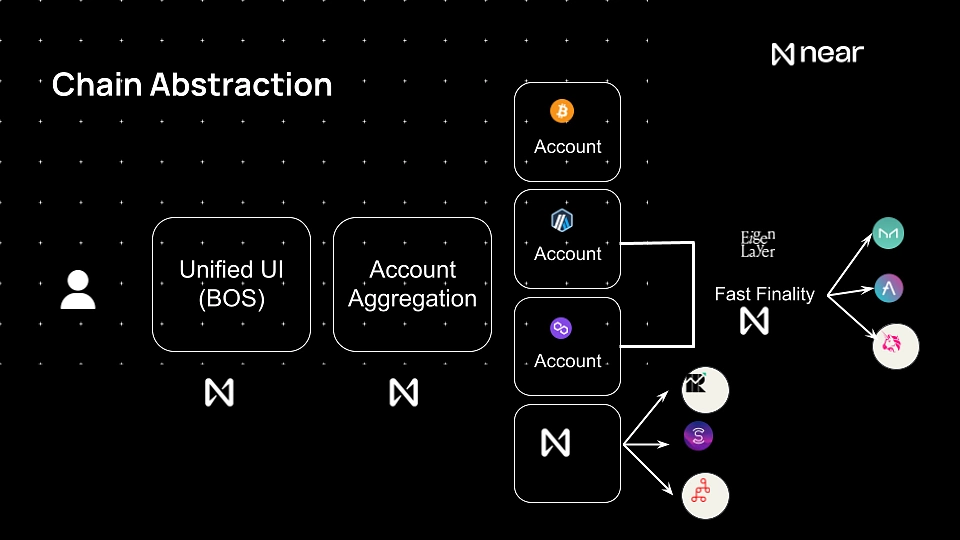
Chain abstraction 2026 limits to account for
Chain abstraction is technology that lets you use any blockchain application without worrying about which blockchain it runs on. In a perfect world, you would simply sign a transaction and the system would handle the routing, bridging, and gas payments across the underlying networks. However, 2026 is not that perfect world. We are currently in an awkward phase where the abstractions exist but frequently leak.
The dominant UX pattern is expected to solidify by 2028, but today's infrastructure is still grappling with the modular mess. Users often encounter unexpected friction, such as needing to hold native tokens for gas on multiple chains or facing delays due to bridge finality times. The "leakage" means that while the front end feels unified, the back end still exposes the complexity of cross-chain communication.
This constraint is most visible in intent-centric architectures. While intents promise to hide the mechanics of execution, the settlement layer still requires trust assumptions and latency buffers. For now, chain abstraction serves more as a convenient wrapper than a complete removal of blockchain complexity. Users must remain aware that their assets are still moving through distinct, heterogeneous networks.
By 2028, chain abstraction is projected to become the standard UX pattern. In 2026, expect abstractions to leak, requiring users to manage native tokens and bridge delays.
The goal for 2026 is to minimize these leaks. Developers are focusing on unified liquidity pools and intent-centric designs to reduce the cognitive load on users. Until the underlying settlement layers become truly interoperable, chain abstraction remains a necessary compromise between user experience and technical reality.
Chain abstraction 2026 choices that change the plan
Use this section to make the Chain Abstraction decision easier to compare in real life, not just on paper. Start with the reader's actual constraint, then separate must-have requirements from details that are merely nice to have. A practical choice should survive normal use, maintenance, timing, and budget. If a recommendation only works in an ideal situation, call that out plainly and give the reader a fallback path.
How to Evaluate Chain Abstraction Projects
Chain abstraction promises to hide the modular mess, but in 2026, the abstractions still leak. You need a practical framework to separate real infrastructure from marketing. Use these three checks to decide if a project is ready for your portfolio.
Look for projects that execute intents rather than just routing transactions. Intent-centric architectures allow users to state what they want (e.g., "swap USDC for ETH at the best rate") without managing the complex cross-chain steps. Reliable intent solvers handle the routing, bridging, and gas payment in the background. If the user still has to manually select chains or approve multiple bridges, the abstraction is incomplete.
True abstraction aggregates liquidity across multiple chains into a single view. When you connect your wallet, you should see your total balance and available assets regardless of which chain they reside on. Projects that merely display balances but force you to bridge assets to trade are failing the unified liquidity test. Look for protocols that enable atomic swaps without requiring you to move funds first.
The best abstractions pay gas fees for you or allow payment in any stablecoin. If you still need to hold the native token of every chain you interact with, the user experience is fragmented. Evaluate whether the protocol uses account abstraction (ERC-4337) or similar standards to batch transactions and cover costs. This reduces friction and makes the cross-chain experience feel like a single, seamless application.
By focusing on intent execution, unified liquidity, and gas abstraction, you can cut through the noise. These three pillars determine whether a project is actually solving the fragmentation problem or just adding another layer of complexity.
Spotting the Weak Links in Chain Abstraction
By 2026, chain abstraction promises to hide the modular mess from users, but the reality is often leaky. The dominant UX pattern is still maturing, and many projects overpromise seamless cross-chain interactions while leaving critical security gaps exposed.
A common mistake is assuming that intent-centric architectures automatically solve liquidity fragmentation. They don’t. Unified liquidity requires deep integration across multiple layers, and many solutions rely on fragile bridges that are prone to exploits. Always check the underlying infrastructure: does the abstraction route through a trusted bridge or a more secure atomic swap mechanism?
Another weak option is the lack of transparency in gas fee abstraction. Users may see a single transaction, but the backend costs are often hidden or unpredictable. This can lead to unexpected expenses, especially during network congestion. Look for solutions that provide clear gas estimations and fallback mechanisms.
Finally, be wary of projects that claim "end of bridging" without offering concrete alternatives. Bridging is not dead; it is evolving. True chain abstraction should complement, not replace, secure bridging protocols. Evaluate each solution based on its actual security audits and real-world performance, not just its marketing claims.
Chain abstraction 2026: what to check next
Before committing capital to intent-centric or unified liquidity protocols, it helps to separate the marketing from the mechanics. Chain abstraction is not a single protocol but a layer of infrastructure designed to hide cross-chain complexity. The goal is a single user experience across heterogeneous networks, but the underlying reality in 2026 remains modular and fragmented.
Below are the most common practical questions about how this technology works, its limitations, and its relationship to broader blockchain concepts.
The key takeaway is that chain abstraction is a utility layer, not a magic fix. It reduces friction but introduces new risks around intent fulfillment and liquidity routing. Always verify which chains are supported and how fees are calculated before interacting with any unified liquidity protocol.
No comments yet. Be the first to share your thoughts!