
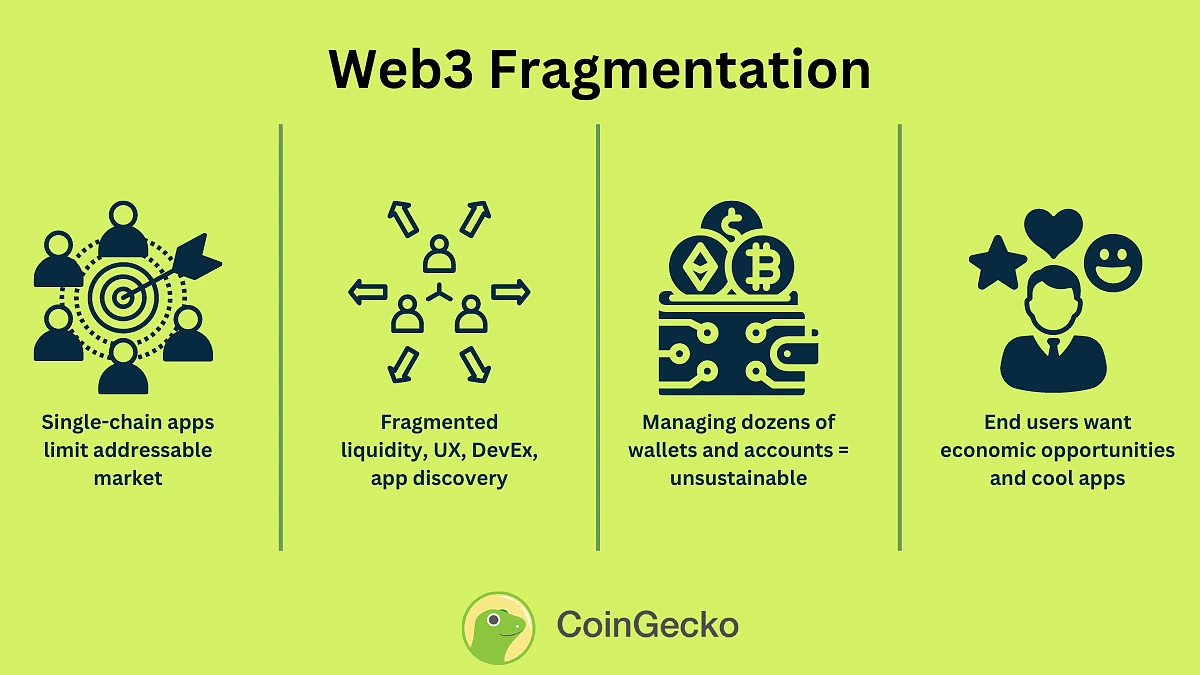
What chain abstraction means for 2026
Chain abstraction shifts the user experience from manual bridging to intent-based execution. In 2026, the goal is simple: users interact with decentralized applications without ever picking, seeing, or thinking about which blockchain it runs on. The technology handles the complexity behind the scenes, removing the friction that has historically slowed mass adoption.
Think of it like the evolution of the web browser. Early internet users had to understand IP addresses and FTP protocols to access content. Today, we simply type a URL and expect the page to load, regardless of where the server is located. Chain abstraction applies this same logic to crypto. Instead of manually moving assets from Ethereum to Arbitrum, then to Base, and swapping tokens at each step, a user signs a single transaction. The protocol—powered by tools like Particle Network, Eco, or Abstract—executes the necessary cross-chain moves in the background.
This shift matters because it removes the technical barriers that exclude most consumers. You no longer need to hold a specific gas token for every chain you want to use, nor do you need to navigate complex bridge interfaces that carry high failure rates. The focus moves from infrastructure management to actual utility. You want to play a game, trade an asset, or mint a token; the chain abstraction layer ensures you can do it using the wallet and currency you already have, without breaking the flow.


As an Amazon Associate, we may earn from qualifying purchases.
By abstracting away the "plumbing" of blockchain technology, platforms like Eco and Particle are creating a unified DeFi access layer. This allows developers to build once and deploy across multiple chains, while users experience a single, cohesive ecosystem. The result is a smoother, faster, and more intuitive interaction with the decentralized web.
Leading chain abstraction platforms
The modular blockchain landscape has shifted from theoretical promises to tangible infrastructure. By 2026, the most effective chain abstraction platforms are no longer just routing transactions; they are providing unified accounts and intent-based solvers that hide the underlying complexity of gas fees, bridging, and chain selection from the end user.
The current market leaders—Particle Network, Eco, and Abstract—each take a distinct approach to solving the fragmentation problem. Particle Network focuses on developer-friendly infrastructure, Eco prioritizes social recovery and user experience, and Abstract leverages intent-centric architectures to simplify complex DeFi interactions. Understanding their specific utility props helps determine which platform best fits a given application’s needs.
Particle Network
Particle Network operates as a foundational layer for chain abstraction, offering a "Unified Account" standard that allows developers to abstract away the complexities of multi-chain interactions. Instead of managing separate wallets for Ethereum, Solana, or Layer 2s, users interact with a single account that handles cross-chain settlements in the background.
The platform’s strength lies in its "Chain Abstraction Coalition," a consortium of major Web3 ecosystems collaborating to standardize interoperability. For developers, this means reducing the engineering burden of building cross-chain functionality. Particle’s infrastructure is particularly suited for applications that require seamless asset movement without forcing users to understand the mechanics of liquidity bridges or wrapped assets.
Eco
Eco takes a different approach by focusing heavily on the user experience side of chain abstraction. Its core innovation is the "social recovery" account model, which replaces complex seed phrases with familiar social contacts for wallet recovery. This significantly lowers the barrier to entry for non-technical users who might otherwise lose access to their funds.
Beyond account recovery, Eco provides a unified interface that aggregates assets across multiple chains. This allows users to view their entire portfolio in one place, regardless of the underlying blockchain. The platform’s emphasis on simplicity and security makes it a strong candidate for consumer-facing DeFi applications aiming to onboard mainstream users.
Abstract
Abstract distinguishes itself through an intent-centric architecture. Rather than forcing users to manually construct and sign transactions for every step of a DeFi interaction, Abstract allows users to declare their desired outcome (e.g., "swap ETH for USDC at the best rate"). Solvers then execute the necessary steps across different chains to fulfill that intent.
This model simplifies complex multi-chain swaps and arbitrage opportunities, which would otherwise require users to navigate multiple bridges and exchanges. By abstracting the execution layer, Abstract reduces the risk of user error and gas waste, making sophisticated DeFi strategies accessible to a broader audience. The platform’s focus on intent resolution positions it as a key player in the evolution of user-friendly blockchain interactions.
Platform Comparison
The following table compares the core features of these leading chain abstraction platforms, highlighting their unique value propositions for developers and users.
| Platform | Account Model | Primary Focus |
|---|---|---|
| Particle Network | Unified Account | Developer Infrastructure |
| Eco | Social Recovery | User Experience |
| Abstract | Intent-Centric | Complex DeFi Simplification |
Related Hardware
Securing multi-chain assets requires robust physical protection. The following hardware wallets are commonly recommended for users engaging with chain abstraction platforms.


As an Amazon Associate, we may earn from qualifying purchases.
How intent-centric architecture works
Chain abstraction replaces the manual work of moving funds between networks with a system where you declare what you want to do, and a network of "solvers" figures out how to do it. Instead of bridging assets to a specific chain before making a transaction, you simply submit an intent—such as "swap USDC for ETH"—and let the infrastructure handle the routing.
This mechanism relies on relayers and solvers. Relayers take your signed intent and broadcast it to the network. Solvers are specialized nodes that compete to fulfill these intents. They check liquidity across multiple chains, calculate the optimal routing path, and execute the necessary swaps or transfers. The result is that you interact with a single interface, but the transaction might span three or four different blockchains behind the scenes.
Particle Network, Eco, and Abstract use this model to hide the complexity of multi-chain environments. For example, Particle Network’s chain abstraction layer allows developers to build applications where users can pay gas fees in any token, regardless of the target chain. Eco focuses on "intent-centric" design, allowing users to set preferences for price slippage and execution time, letting solvers find the best deal. Abstract takes a similar approach, prioritizing user experience by ensuring that the underlying chain choice is irrelevant to the end user.
This shift from "how" to "what" is the core technical advantage of chain abstraction. It removes the need for users to understand which chain a dApp runs on or how to bridge assets. The solver network acts as a backend logistics coordinator, ensuring that your intent is fulfilled efficiently and securely across the fragmented crypto landscape.


As an Amazon Associate, we may earn from qualifying purchases.
Choosing the right abstraction layer
Selecting a chain abstraction tool is less about finding a single "best" platform and more about matching the infrastructure to your specific DeFi workflow. In 2026, the modular landscape has settled into distinct categories: unified balance aggregators, intent-based execution layers, and cross-chain communication protocols. Each serves a different primary need, and confusing them leads to poor user experiences or unnecessary gas costs.
If your primary goal is simplifying portfolio tracking and initial onboarding, look for tools like Particle Network or Eco that specialize in unified balance aggregation. These platforms abstract away the fragmentation of assets across L2s and L3s, presenting a single, coherent view of user wealth. This is ideal for consumer-facing applications where clarity trumps complex execution logic. The focus here is on visibility and ease of entry, reducing the friction that typically causes users to abandon multi-chain dApps.
For advanced DeFi interactions—such as complex swaps, lending, or yield farming across disparate chains—intent-based execution layers are the superior choice. Solutions like Abstract allow users to declare what they want to achieve (e.g., "maximize yield on USDC") rather than specifying the exact transaction steps. The solver network then finds the optimal routing path across chains. This approach is critical for high-frequency traders or sophisticated users who prioritize execution quality and gas optimization over simple balance visibility.
Hardware considerations for DeFi access
While software abstraction handles the logic, secure access remains a physical constraint. For users managing significant value across abstracted chains, hardware wallets provide the necessary security layer. The following devices are commonly paired with DeFi dashboards to sign transactions securely.


As an Amazon Associate, we may earn from qualifying purchases.
When evaluating these tools, consider the integration depth with your chosen abstraction layer. Some wallets offer native support for intent-based signing, while others require manual transaction construction. Always verify that your hardware device supports the specific chain IDs and token standards used by your abstraction provider to avoid signing errors or failed transactions.
Frequently asked questions about chain abstraction
Is chain abstraction safe?
Security depends on the specific implementation. While these protocols remove the user-facing friction of bridges, they introduce new smart contract risks. Particle Network uses modular infrastructure to separate execution from settlement, reducing the attack surface compared to traditional cross-chain bridges. Always verify the audit status of the specific abstraction layer you are using.
How does it differ from traditional bridging?
Traditional bridging requires you to lock assets on Chain A and claim wrapped tokens on Chain B, a multi-step process prone to delays and high fees. Chain abstraction treats multiple chains as a single liquidity pool. You sign one transaction in your wallet, and the protocol routes the asset behind the scenes. It’s the difference between booking separate flights for each leg versus a single through-ticket.
What are the main risks?
The primary risk is smart contract complexity. Because the abstraction layer manages routing, gas payments, and liquidity across chains, a bug in the router can impact funds. Additionally, you lose direct visibility into the exact chain your asset is resting on at any given second. Abstract and similar tools mitigate this by using intent-centric architectures, but the complexity remains higher than a simple native swap.


As an Amazon Associate, we may earn from qualifying purchases.
No comments yet. Be the first to share your thoughts!