
The end of bridging friction
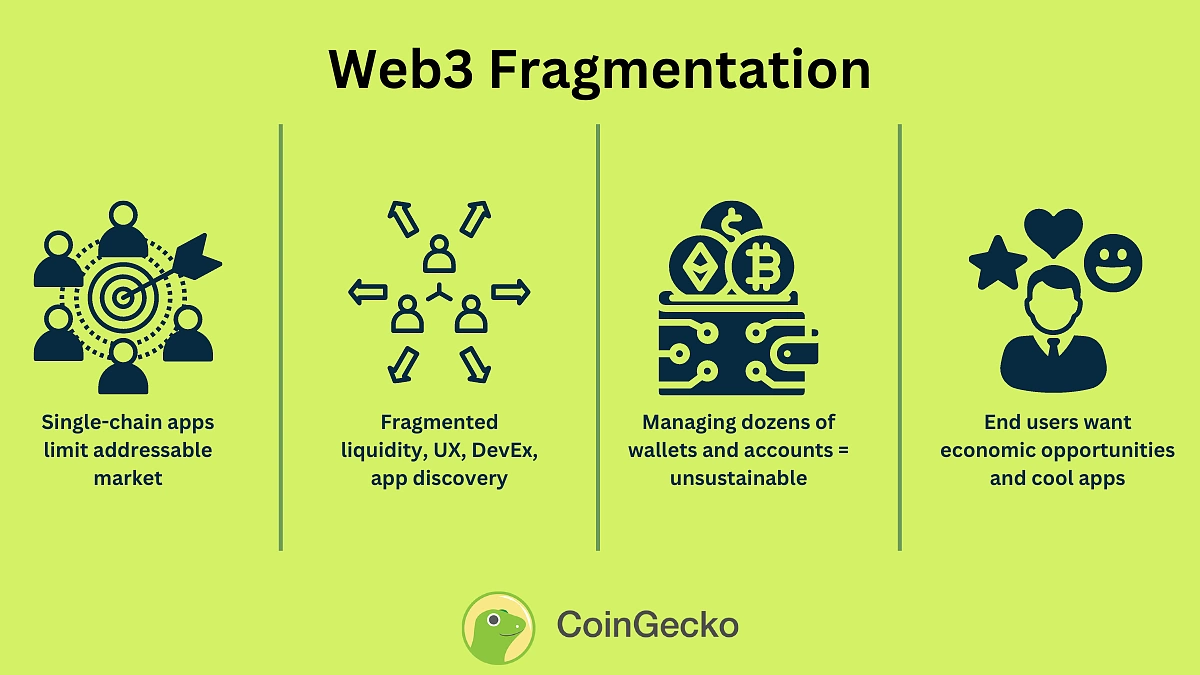
For years, cross-chain interactions have been defined by a repetitive cycle of friction. Users must manually bridge assets between networks, manage disparate wallets, and track gas fees across incompatible ledgers. This fragmentation forces enterprises and individual users to navigate a complex maze of liquidity pools and transaction hashes just to execute simple actions. The result is a high-risk environment where operational errors and security vulnerabilities are common, stifling broader adoption.
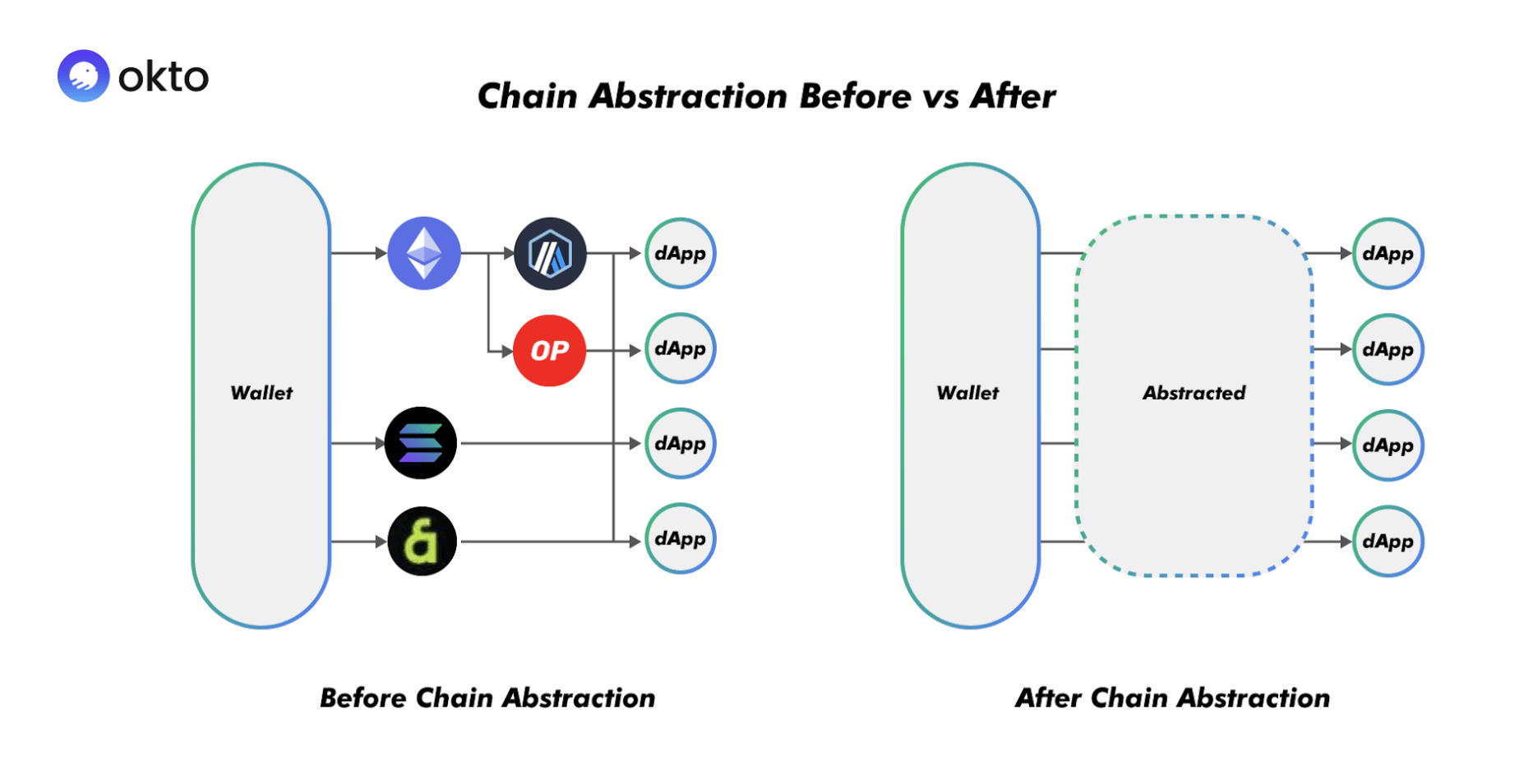
Chain abstraction 2026 addresses this by shifting the complexity from the user to the backend. Instead of forcing users to understand the underlying infrastructure, these solutions provide a single interface that handles cross-chain routing, liquidity aggregation, and transaction execution invisibly. The user interacts with one application; the system ensures the asset moves from the correct source chain to the destination without the user ever seeing the bridge.
This architectural change is critical for enterprise finance. In 2026, the goal is not just to connect chains, but to make the concept of "which chain" irrelevant to the end-user. By abstracting away the need for manual bridging, organizations can deploy applications that feel as seamless as traditional web services, while retaining the security and transparency of distributed ledger technology. The focus moves from managing liquidity silos to delivering utility.
How intents replace manual bridging
Chain abstraction in 2026 shifts the operational burden from the user to a network of solvers. Instead of manually wrapping tokens, paying gas on multiple chains, and signing separate transactions, users submit a single "intent"—a declaration of what they want to achieve. The underlying infrastructure handles the complex routing, settlement, and verification across disparate ledgers. This mechanism forms the foundation of a unified multi-chain user experience, where the blockchain is treated as a utility layer rather than a series of friction points.
1. Intent Submission
The process begins when a user submits an intent to a relayer. This is not a traditional transaction but a high-level request, such as "send 100 USDC from Ethereum to Solana." The user signs this intent with their private key, authorizing the solver network to execute it on their behalf. The relayer then broadcasts this intent to the solver network, where competing agents vie to fulfill the request efficiently. This decouples the user's action from the execution details, allowing for a seamless interaction regardless of the destination chain.
2. Solver Competition and Routing
Solvers are specialized nodes that monitor the intent pool and compete to fulfill requests. They analyze cross-chain liquidity, gas costs, and settlement times to determine the optimal path. For example, a solver might route the transaction through a bridging protocol, use a liquidity pool on a different chain, or leverage a native bridge, depending on current market conditions. This competition drives down costs and improves speed, as solvers aim to minimize their own operational expenses while guaranteeing the user's outcome. The result is a dynamic, market-driven execution layer that adapts in real-time.
3. Execution and Settlement
Once a solver wins the bid, it executes the transaction across the relevant chains. This may involve locking assets on the source chain, minting wrapped assets on the destination, or using a finality gadget to ensure security. The solver bears the risk of execution failure, incentivizing them to use reliable infrastructure and robust error handling. The user receives the assets on the destination chain without ever interacting with the intermediate steps. This invisible settlement process is critical for enterprise adoption, where reliability and predictability are paramount.
4. Verification and Finality
After execution, the solver submits proof of completion to a verification layer. This step ensures that the intent was fulfilled correctly and that the user's assets are securely transferred. Verification mechanisms vary by architecture, ranging from optimistic rollups to zero-knowledge proofs, but the goal is always to provide cryptographic assurance of the outcome. Once verified, the user's balance is updated, and the transaction is considered final. This end-to-end abstraction allows users to interact with multi-chain applications as if they were using a single, unified ledger.
Enterprise adoption drivers in 2026
Enterprises are shifting from experimental pilots to structured deployment of chain abstraction 2026 infrastructure. The primary catalyst is the operational cost of managing fragmented liquidity and disparate user identities across multiple networks. By consolidating these layers, organizations can reduce support overhead and improve capital efficiency.
Unified balances and simplified compliance
The most immediate benefit for financial institutions is the ability to present a single, aggregated view of assets regardless of their underlying chain. This eliminates the need for users to navigate complex bridging protocols or manage multiple wallet signatures. For compliance teams, this consolidation simplifies audit trails and reporting, as transactions can be monitored through a unified interface rather than scattered across independent ledgers.
Reduced support tickets and friction
A unified multi-chain user experience directly correlates with lower customer support volumes. When users no longer need to understand gas fees, network selection, or token wrapping, the friction that typically leads to abandoned transactions or confused support requests disappears. This streamlined interaction model is critical for mass adoption, where ease of use outweighs technical transparency.
Market context
The urgency to adopt these solutions is reflected in broader market movements. As institutional capital seeks efficient entry points into digital assets, the infrastructure that minimizes operational complexity becomes the preferred vehicle for deployment. The following widget tracks the underlying asset liquidity that these abstraction layers often aggregate.
Leading chain abstraction protocols
The current landscape of chain abstraction 2026 is defined by a divergence in architectural philosophy. While the goal remains a unified multi-chain user experience, protocols differ significantly in how they manage the underlying complexity. Some solutions prioritize a developer-centric SDK approach, while others focus on providing a fully managed, centralized operating system for blockchain infrastructure.
Particle Network
Particle Network positions itself as a blockchain operating system, offering a comprehensive SDK that handles account abstraction, liquidity, and identity across multiple chains. By centralizing key infrastructure components, it allows enterprises to deploy applications without managing individual chain integrations. This approach reduces developer friction but introduces a dependency on Particle’s centralized coordination layer. Their Chain Abstraction Coalition aims to standardize these interactions, though it remains an ecosystem-specific initiative rather than a universal protocol standard.
Abstract Chain
Abstract Chain takes a different route by focusing on the user’s perception of a single, unified blockchain. It utilizes advanced cryptographic proofs to aggregate state across various networks, presenting a seamless interface to the end user. This method shifts complexity from the application layer to the consensus layer, potentially offering higher security guarantees but requiring significant computational overhead. For enterprises, this means trading off some flexibility for a more robust, standardized user experience that hides the underlying modular mess.
Comparative Infrastructure Analysis
The following table outlines the core distinctions between leading protocols, focusing on their target audience and technical maturity.
| Protocol | Primary Approach | Target Audience | Current Maturity |
|---|---|---|---|
| Particle Network | Centralized SDK/OS | Developers & Enterprises | Production-Ready |
| Abstract Chain | Cryptographic Aggregation | End Users & dApps | Beta/Early Adoption |
| LayerZero | Interoperability Messaging | Cross-Chain dApps | Established |
| Chainlink CCIP | Secure Messaging Standard | Enterprise Finance | Production-Ready |
Each protocol offers a distinct path to achieving a unified multi-chain user experience. Enterprises must evaluate whether they prioritize the ease of SDK integration or the security of decentralized aggregation when selecting their chain abstraction 2026 infrastructure.
Remaining hurdles for mass adoption
Use this section to make the Chain Abstraction decision easier to compare in real life, not just on paper. Start with the reader's actual constraint, then separate must-have requirements from details that are merely nice to have. A practical choice should survive normal use, maintenance, timing, and budget. If a recommendation only works in an ideal situation, call that out plainly and give the reader a fallback path.
The simplest way to use this section is to write down the must-have criteria first, then compare each option against those criteria before weighing nice-to-have features.
Checklist for evaluating abstraction layers
Enterprise adoption of chain abstraction 2026 solutions requires rigorous vendor assessment. A unified multi-chain user experience that fails under load or exposes security vulnerabilities is unacceptable for financial infrastructure. Use this structured evaluation to determine if a provider’s abstraction layer meets institutional standards.
Evaluate the provider’s solver network. Solvers must guarantee transaction finality across heterogeneous chains with minimal latency. Request historical data on solver uptime and failure rates, specifically during high-volume market conditions. Unreliable solvers break the abstraction promise by leaving users with pending transactions.
Ensure the abstraction layer has undergone independent security audits covering both the smart contract interfaces and the off-chain solver infrastructure. Look for certifications from reputable firms that specialize in cross-chain bridge security. Standard audits are insufficient; the solution must prove resilience against replay attacks and bridge exploits.
A unified multi-chain user experience must remain seamless. Test the provider’s SDK to verify that wallet creation, gas sponsorship, and cross-chain transfers happen without user intervention. The goal is to hide the modular complexity while maintaining full compliance and audit trails for enterprise regulators.
Common questions on chain abstraction
Chain abstraction 2026 aims to deliver a unified multi-chain user experience where the underlying infrastructure remains invisible to the end user. By routing transactions through unified interfaces, these protocols handle cross-chain settlements, gas fees, and asset bridging behind the scenes. This approach eliminates the friction of manual wallet switching and reduces the cognitive load on enterprise clients managing complex liquidity pools.
The technology works by abstracting the complexity of multiple blockchains into a single, coherent interface. Users interact with one application while the backend orchestrates the necessary cross-chain movements. This is distinct from traditional bridges, which require explicit user action to lock and mint assets. Instead, abstraction protocols often use liquidity networks or intent-based solvers to execute transfers seamlessly, ensuring that the user sees only the final result rather than the intermediate steps.
No comments yet. Be the first to share your thoughts!