

In the volatile world of DeFi, managing assets across multiple blockchains often feels like navigating a minefield. Traditional cross-chain bridges, while innovative, expose users to cross-chain bridging risks that have led to billions in losses. Chain abstraction UX emerges as the antidote, promising seamless DeFi transactions without the peril of manual bridging. As a risk management specialist, I've seen firsthand how these vulnerabilities erode trust; now, abstraction layers empower users to focus on opportunities, not pitfalls.
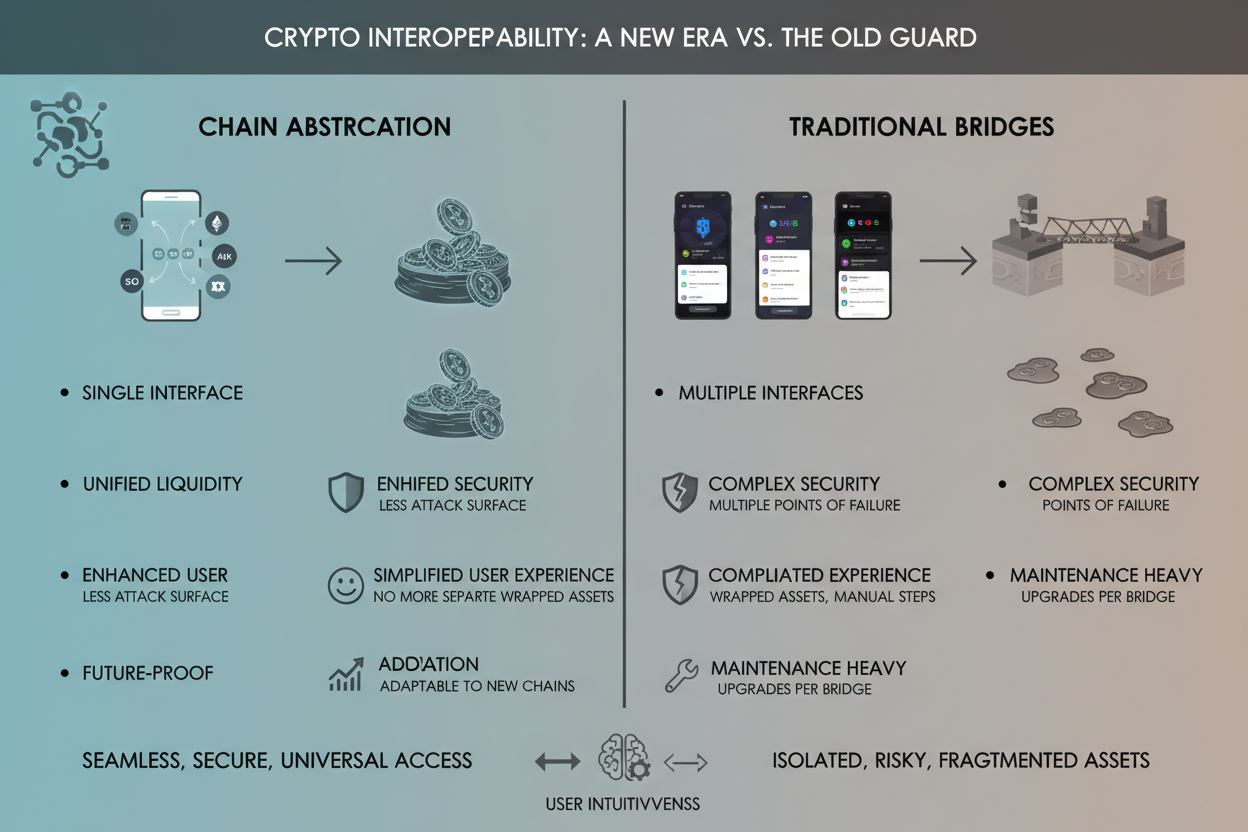
Consider the mechanics: users today must approve transactions, wrap assets, and monitor bridge statuses across chains like Ethereum, Solana, and Layer 2s. One misstep invites exploits, from liquidity drains to sandwich attacks. Chain abstraction UX flips this script by creating a unified interface where backend complexities vanish. Users issue intents, what they want to achieve, and solvers handle the rest, batching transactions invisibly.
The Perils of Traditional Cross-Chain Bridging Exposed
Cross-chain bridges have been DeFi's Achilles' heel. Recent analyses reveal they account for a disproportionate share of hacks, with vulnerabilities like reentrancy and oracle manipulations draining funds. In one stark example, attackers exploited liquidity exhaustion, siphoning assets mid-transfer. These aren't isolated incidents; they're systemic flaws in designs that require custodied pools and multi-step verifications.
Bridge abstraction is the idea that users should never have to think about where their assets are or how they move between chains.
From my FRM vantage, the math is clear: each bridge introduces failure points proportional to the number of chains involved. Multiply that by user error rates, and cross-chain bridging risks skyrocket. Protocols like Across mitigate this through intents, where solvers front capital and settle later, but true abstraction goes further, no bridges at all.
Traditional Cross-Chain Bridging vs. Across Protocol Intents
| Aspect | Traditional Cross-Chain Bridging | Across Protocol Intents |
|---|---|---|
| Speed | Slow (minutes to hours due to confirmation times and liquidity waits) | Fast (seconds via intent solvers using their capital for quick fills) ⏱️ |
| Cost | High (bridging fees + gas + potential slippage) | Low (cheap fills as solvers compete for optimal execution) 💰 |
| Risks | High (frequent hacks, exploits like sandwich attacks; billions lost) | Lower (solvers at risk with capital; intents reduce user exposure to bridge vulnerabilities) 🛡️ |
| UX Improvements | Complex (multiple approvals, bridging steps, claiming assets) | Seamless (one-click intents; users unaware of bridging, invisible bridge abstraction) ✨ |
Chain Abstraction UX: Redefining No-Bridge Cross-Chain Assets
At its core, chain abstraction UX unifies disparate chains into a single, intuitive experience. Imagine swapping USDC on Arbitrum for liquidity on Base without ever leaving your wallet. This isn't hype; it's live in intent-based solvers from projects like OmnichainUX, enabling one-click cross-Layer 2 swaps sans approvals.
Unified wallet chain abstraction takes it further. Wallets now integrate cross-chain messaging and gas abstraction SDKs, letting you pay fees in any asset. Mitosis exemplifies this, abstracting gas so users bypass native token hassles. River's stablecoin systems eliminate wrapping altogether, fostering fluid liquidity without fragmentation.

These innovations aren't theoretical. They batch backend operations, shielding users from chain-specific quirks. For developers, SDKs simplify integration; for investors like you, they mean empowered control over no bridge cross-chain assets. Yet caution prevails: while abstraction reduces exposure, robust audits remain non-negotiable against emerging threats like cross-chain sandwiches.
Intent-Based Solvers: The Engine of Seamless DeFi Transactions
Intent solvers represent chain abstraction's powerhouse. Users declare outcomes provides "swap 1 ETH for USDT on Optimism": and a marketplace of solvers competes to deliver, often using their capital for speed. This slashes latency and costs, turning multi-step ordeals into single interactions.
OmnichainUX's routers exemplify this for Layer 2s, while broader protocols like those from Mitosis handle gas seamlessly. The result? Seamless DeFi transactions that feel native to one chain, minus the risks. From enterprise liquidity unification to everyday swaps, this tech stack abstracts away the blockchain babel, positioning Web3 for mass adoption.
Empowering yourself starts with understanding these shifts. By prioritizing abstraction-enabled tools, you sidestep bridge pitfalls and unlock cross-chain potential safely. Dive deeper into how chain abstraction enables seamless cross-chain DeFi without bridges to fortify your strategy.
Security remains paramount in this evolution. While chain abstraction minimizes cross-chain bridging risks, it doesn't eliminate them entirely. Recent research underscores threats like cross-chain sandwich attacks, where adversaries manipulate transaction ordering across chains, and liquidity exhaustion, which starves bridges of necessary funds. My frameworks emphasize multi-layered defenses: intent verification, solver reputation scoring, and zero-knowledge proofs for private executions.
Fortifying Positions with Proven Chain Abstraction Protocols
Protocols lead the charge. OmnichainUX's intent-based solvers enable one-click cross-Layer 2 swaps, sidestepping manual bridges by letting solvers compete on execution. This market-driven approach optimizes routes, often undercutting traditional fees by 50% or more. Similarly, Mitosis pioneers gas abstraction, allowing payments in stablecoins or any token, erasing the native gas token barrier that frustrates newcomers.
Traditional Bridges vs. Chain Abstraction: Key Comparison
| Method | Risks | UX Friction | Security Features |
|---|---|---|---|
| Traditional Bridges | High: Hacks, cross-chain sandwich attacks, liquidity exhaustion ❌💥 | High: Manual bridging, multiple approvals, chain switching 🔄⏳ | Multisig/validators, but vulnerable to exploits ⚠️ |
| Chain Abstraction | Low: Intent solvers mitigate risks, no direct bridging ✅🛡️ | Low: One-click swaps, unified wallets, gas abstraction 🌐✨ | Intent-based solvers, cross-chain messaging, robust protocols 🔒🚀 |
River's stablecoin innovations stand out, deploying chain-abstraction to bypass wrapping and bridging altogether. Assets flow natively via omni-CDP mechanisms, unifying liquidity pools across ecosystems. These tools don't just abstract; they rearchitect DeFi for resilience, letting you manage no bridge cross-chain assets with confidence.
Unified wallets amplify this power. Integrating cross-chain messaging and SDKs, they present a single pane for Ethereum, Solana, and L2s. No more chain-switching or token hunts; transact fluidly, with gas handled invisibly. From my experience auditing derivatives, this unification cuts operational risks by orders of magnitude, empowering retail and institutions alike.
Yet, adoption hinges on vigilance. Bridges still lure attackers, claiming billions historically. Chain abstraction shifts the battlefield to solvers and aggregators, demanding rigorous audits and insurance wrappers. I advocate for diversified exposure: allocate across abstracted protocols while monitoring solver performance metrics.
Future-Proofing Your DeFi Portfolio in the Abstraction Era
Looking ahead, chain abstraction UX heralds enterprise-grade DeFi. QuickNode highlights its role in unifying liquidity and compliance, unlocking institutional inflows. The Defiant notes batched transactions streamlining UX, while Across Protocol's invisible bridges ensure users stay oblivious to mechanics.
For developers, frameworks like those from Taikai and Web3Auth lower barriers, fostering interoperable dApps. Everyday users gain most: seamless DeFi transactions via one interface, no PhD required. My advice? Vet wallets for abstraction support, start small with intents, and layer on hardware security.
Explore how chain abstraction enables one-click cross-chain swaps and unified wallet UX to integrate these today. By embracing this paradigm, you transform multi-chain chaos into orchestrated efficiency, safeguarding assets while capturing alpha across ecosystems. The future of DeFi isn't bridged; it's abstracted, secure, and yours to command.




No comments yet. Be the first to share your thoughts!