

In 2025, as chain abstraction wallets mature, multi-chain wallet developers face a clear mandate: deliver seamless cross-chain UX that masks the chaos of Ethereum, Solana, and Base. Users no longer tolerate manual bridging or chain-hopping; they expect unified interfaces where DeFi flows effortlessly across ecosystems. Drawing from trends like those highlighted by Altius Labs and Particle Network, the path forward lies in six prioritized strategies tailored for multi-chain wallet development. These approaches, grounded in real-world 2025 advancements, prioritize developer efficiency and user intuition in cross-chain DeFi UX.
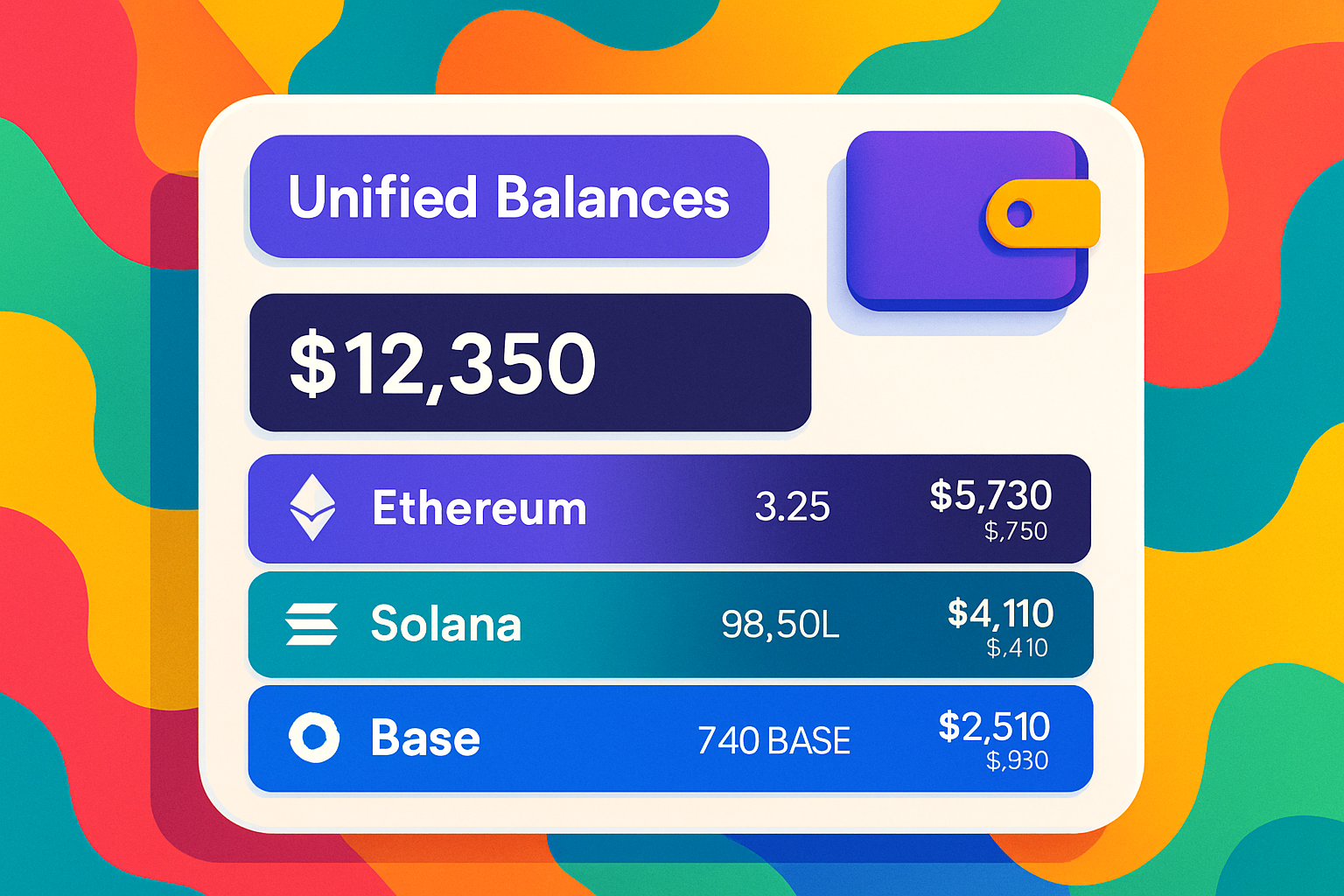
Unified Balance Aggregation Across Chains
Aggregating balances from disparate chains into a single view isn’t just convenient; it’s table stakes for chain abstraction wallets. Imagine a developer building on Ethereum’s L1 scalability pivot, Solana’s speed, and Base’s low-cost ops. Users see total USDC holdings at $1,250 split as $800 ETH, $300 Solana, $150 Base, without tab-switching. This unification, as Sequence’s Sam Barberie notes, eliminates fragmentation, fostering mainstream adoption.
Practically, leverage indexers like The Graph or SubQuery for real-time data pulls. Normalize token metadata via standards like ERC-20 extensions across EVM and non-EVM chains. Halaska Studio’s insights underscore how this consolidated dashboard builds trust, reducing cognitive load in volatile DeFi environments. For wallets targeting enterprises, Quicknode’s cross-chain abstraction bridges liquidity silos, making unified views compliant and scalable.
Intent-Based Transaction Architecture
Shift from rigid transaction models to intent-based systems, where users declare outcomes like “swap 1 ETH for SOL on Base” and the wallet orchestrates the rest. Particle Network’s multi-level abstraction empowers devs to handle these intents natively, abstracting gas, routing, and execution. In 2025, with Ethereum Foundation prioritizing UX, this architecture shines for unified wallet interoperability.
Implementation involves bundlers and solvers akin to Anoma or SUAVE, evaluating user intents against liquidity pools across chains. Opinion: this isn’t hype; it’s pragmatic evolution from 2024’s solver auctions. Developers gain flexibility, users get reliability. Keyless Wallets’ DeFi abstraction layers AI into this, predicting optimal paths, but start simple: integrate open intent protocols to future-proof against Solana’s SVM dominance.
Challenges persist, like solver centralization risks, but mitigated via decentralized networks. This strategy transforms clunky multi-sig ops into fluid experiences, vital for DeFi power users juggling yield farms on Base and perps on Solana.
Automated Cross-Chain Bridging and Swaps
Manual bridges are relics; automate them with intent-following engines that detect opportunities and execute swaps seamlessly. Wealthstrategyexperts. com spotlights automatic asset swaps as core to 2025 wallet evolution, enabling users to move value from Ethereum to Solana without prompts. For devs, embed routers like LI. FI or Socket, scanning for best rates across 20 and chains.
In practice, trigger automation on low-liquidity detections or user thresholds, previewing fees and ETAs. This aligns with Onchain’s vision of UI-unified ecosystems, slashing UX friction. A nuanced take: while Axelar or LayerZero handle messaging, pair with oracles for real-time pricing to avoid slippage in volatile markets. Antier Solutions’ trends affirm AI augmentation here, but pure automation suffices for 80% use cases.
Read more on innovations at how cross-chain wallets eliminate network switching. The payoff? Users focus on strategy, not plumbing, boosting retention in competitive cross-chain DeFi UX.
Gas fees remain a persistent barrier in multi-chain environments, but account abstraction flips the script, enabling gasless operations that span Ethereum, Solana, and Base without users footing the bill upfront. Developers can deploy smart contract wallets via ERC-4337 standards, extended to non-EVM chains through adapters, allowing paymasters to sponsor transactions. This isn’t theoretical; 2025’s wallet trends from Antier Solutions and the Ethereum Foundation’s UX pivot make it standard for chain abstraction wallets.
Account Abstraction for Gasless Multi-Chain Ops
Picture a user dApp-ing on Solana’s high-throughput but approving a Base yield farm gaslessly; the wallet batches user ops, relaying them via bundlers that abstract chain-specific nuances. My take as a portfolio manager: this levels the playing field for retail in DeFi, where micro-transactions across chains compound costs. Integrate with Sequence or Particle Network’s abstractions for plug-and-play support, ensuring session keys for repeated gasless actions without endless signatures.
Security demands nuance; rotate paymasters and enforce spending limits to curb exploits. For Solana compatibility, mirror via SPL token extensions. The result? Frictionless UX that rivals Web2, drawing in commodities traders eyeing tokenized assets on multiple L1s.
ERC-4337 Bundler for Gasless Cross-Chain Ops with Solana Adapter
To enable gasless cross-chain UserOperations, extend an ERC-4337 bundler with a Solana adapter. This handles bundling on Ethereum or Base while adapting payloads for Solana programs, sponsored by a paymaster for zero user gas costs. The code below uses the Account Abstraction SDK:
const { Bundler } = require('@account-abstraction/sdk');
const { ethers } = require('ethers');

// Hypothetical Solana adapter for cross-chain calls
const SolanaAdapter = require('./solana-adapter');

class CrossChainBundler {
  constructor(bundlerUrl, entryPointAddress, chains = ['ethereum', 'base'], solanaRpc) {
    this.bundler = new Bundler(bundlerUrl, entryPointAddress);
    this.entryPoint = new ethers.Contract(entryPointAddress, /* EP ABI */, provider);
    this.solanaAdapter = new SolanaAdapter(solanaRpc);
    this.supportedChains = new Set(chains);
  }

  async bundleGaslessUserOp(userOp, targetChain) {
    // Validate chain support
    if (!this.supportedChains.has(targetChain) && targetChain !== 'solana') {
      throw new Error('Unsupported chain');
    }

    // Adapt callData for Solana cross-chain ops
    if (targetChain === 'solana') {
      const adaptedData = await this.solanaAdapter.adaptUserOp(userOp.callData, userOp.sender);
      userOp.callData = adaptedData;
    }

    // Sponsor gas via paymaster (e.g., integrate Pimlico or custom)
    const paymasterData = await this.getPaymasterSponsorship(userOp);
    userOp.paymasterAndData = paymasterData;

    // Simulate and bundle
    const opHash = await this.bundler.sendUserOperation(userOp, null, {
      dryRunVerification: true
    });

    console.log(`Bundled gasless UserOp: ${opHash}`);
    return opHash;
  }

  async getPaymasterSponsorship(userOp) {
    // Placeholder: Call your paymaster service
    // In practice, verify user eligibility and return paymasterAndData
    return '0x0101010101010101010101010101010101010101010101010101010101010101';
  }
}

// Usage example:
// const bundler = new CrossChainBundler('https://bundler.base.org/rpc', '0x5FF137D4b0FDCD49DcA30c7CF57E578a026d2789');
// await bundler.bundleGaslessUserOp(userOp, 'solana');
This bundler class ensures reliable simulation and submission. Customize the SolanaAdapter for your bridge or intent solver (e.g., via Wormhole or LayerZero). Test thoroughly on testnets like Base Sepolia and Solana Devnet to verify cross-chain execution.
Challenges like bundler liveness are real, yet decentralized alternatives mitigate them. Prioritizing this strategy future-proofs wallets against Base’s growth and Solana’s edge in speed.
Cross-Chain Messaging with LayerZero or Axelar
Reliable messaging underpins true interoperability; LayerZero’s omnichain or Axelar’s satellite networks deliver verifiable packets between Ethereum, Solana, and Base, powering atomic swaps and shared state. Developers embed these protocols to notify chains of events, like locking ETH collateral triggering Solana mints, all abstracted from users. Quicknode’s enterprise focus highlights how this unifies liquidity, a boon for diversified portfolios navigating DeFi silos.
Implementation favors LayerZero for its endpoint simplicity: deploy modules, verify via oracles and relayers. Axelar excels in programmable transfers, ideal for complex intents. Opinion: LayerZero edges for speed on Solana links, but Axelar wins on compliance for institutional flows. Test with DVNs to avoid 2024-style hacks. This backbone enables the other strategies, turning fragmented chains into a cohesive unified wallet interoperability layer.
Explore related solutions in how unified wallet solutions simplify cross-chain transactions in DeFi.
AI-Powered Route Optimization and Predictions
Capping the stack, AI elevates seamless cross-chain UX by dynamically routing transactions and forecasting outcomes. Keyless Wallets’ autonomous agents exemplify this: ML models scan liquidity via APIs from LI. FI or 1inch, predicting slippage on ETH-to-SOL swaps amid volatility. For multi-chain wallet development, embed lightweight models like those in Antier’s trends, optimizing paths across 20 and chains in milliseconds.
Pragmatically, start with rule-based heuristics evolving to neural nets trained on historical DEX data. Users get previews: “Optimal route: ETH leads to Base USDC (0.5% fee, 2min ETA, 99% success). ” My balanced view: AI isn’t magic; it shines in predictions for yield optimization, like spotting Base arb ops from Solana signals. Pair with user overrides for trust. In 2025’s landscape, this differentiates wallets, blending human intuition with machine precision for resilient DeFi strategies.
Integrating these six strategies, unified balances, intents, automation, abstraction, messaging, and AI, equips developers to craft wallets that don’t just function across Ethereum, Solana, and Base but thrive there. Users gain efficiency without complexity, enterprises find compliance, and portfolios weather volatility. The multi-chain era demands nothing less; deliver it, and watch adoption surge.
About the Author