

In the sprawling multiverse of blockchains, users wrestle with a fractured experience: juggling wallets, bridging assets, and paying gas in native tokens across Ethereum, Solana, and beyond. Chain abstraction emerges as the antidote, powering universal accounts that deliver seamless multichain dApp UX. Imagine one balance, one login, any chain – no more chain-hopping chaos.
Decoding Chain Abstraction Fundamentals
Chain abstraction strips away blockchain-specific hurdles, creating a unified layer where users interact with dApps oblivious to underlying networks. Drawing from recent insights, such as Particle Network’s overview, it unifies account management, cross-chain transactions, and even gas payments. Users pay fees with any token, sidestepping the need for ETH on Ethereum or SOL on Solana.
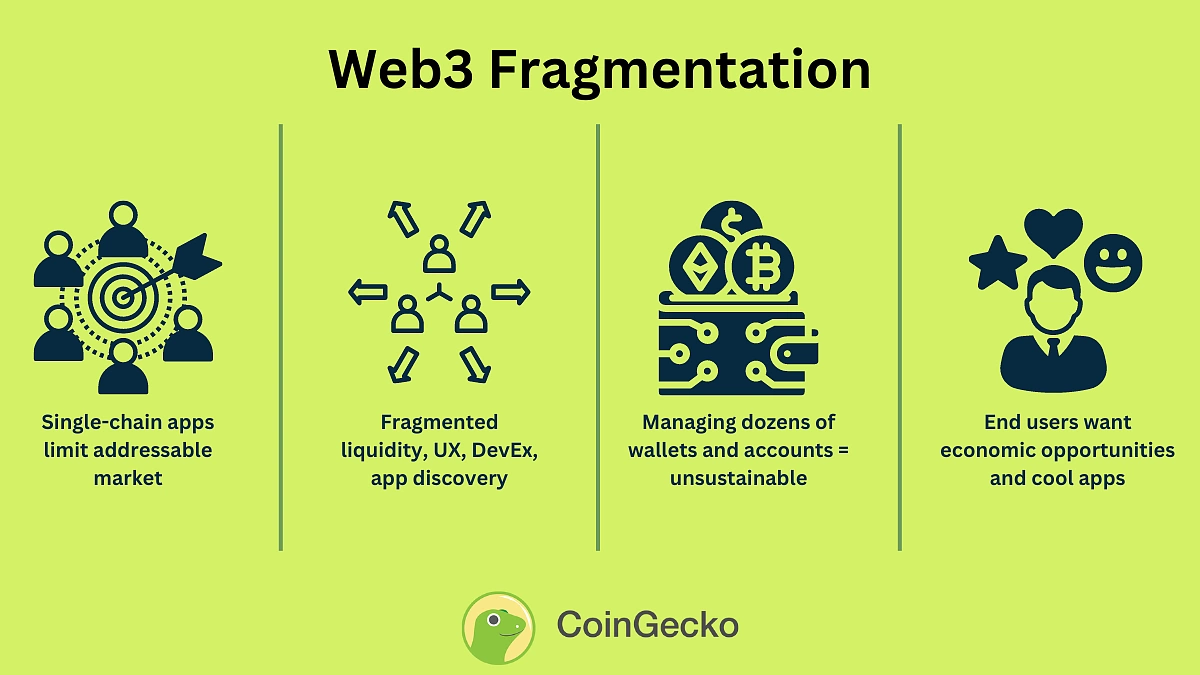
This isn’t mere hype. Protocols like Connext’s Chain Abstraction Toolkit enable dApps to execute logic anywhere, abstracting liquidity fragmentation and UX pain points highlighted in CoinGecko’s analysis. Research from Alchemy University underscores how chain abstraction universal accounts let developers build once and deploy everywhere, echoing Etherspot’s take on unified interfaces.
Universal Accounts in Action
At the heart of this shift are universal accounts, exemplified by Particle Network’s implementation: one account, one balance, across all chains. No manual bridging; transactions flow natively. UXLink docs detail how this supports seamless cross-chain transactions, where a swap on Arbitrum uses USDC from Base without friction.
Consider the mechanics. Smart accounts leverage account abstraction (ERC-4337) for programmable permissions, multichain ECDSA validators for deployment ease – as noted in Distributed Lab’s landscape. Biconomy’s PREP Accounts and Alchemy’s smart wallets push this further, molding authentication for Web2-like flows: face ID logins, intent-based execution.
“Account-Level Chain Abstraction – One Account, One Balance, Any Chain. ” – Chain Abstraction Educate
Transforming Multichain dApp Development
For developers, chain abstraction means liberation from multichain infrastructure nightmares. Integrate once via toolkits like Connext, and users from any chain engage your dApp without wallet switches. Push Protocol blogs emphasize how this abstraction boosts adoption by mirroring familiar apps.
AggLayer concepts from YouTube educations hint at future scalability, where liquidity pools unify across rollups. Gate. com’s tour reveals Web2 parity: social logins, gasless txns. Yet, challenges persist – validator centralization risks, oracle dependencies – demanding rigorous audits for long-term viability.
This foundation sets the stage for dApps thriving in a unified crypto accounts 2025 landscape, where cross-chain wallet solutions drive mass onboarding.
Developers gain a competitive edge by focusing on core logic rather than plumbing bridges or managing chain-specific SDKs. Particle Network’s Universal Accounts, for instance, let you deploy dApps that tap liquidity from Ethereum L2s to Solana without custom integrations, fostering seamless blockchain interoperability. This mirrors Connext’s toolkit, where intent-centric execution handles the rest.
Picture swapping BTC on Bitcoin for USDT on Optimism via a single dApp interface – that’s the promise. AggLayer visions extend this to infinite scalability, pooling liquidity ecosystem-wide. Yet, execution demands precision; sloppy implementations risk funds, underscoring the need for battle-tested protocols.
Overcoming Hurdles in the Multichain Maze
Despite the momentum, pitfalls loom. Centralization in multichain validators could mirror oracle failures we’ve seen before, while session key management invites replay attacks if not fortified. Distributed Lab’s account abstraction landscape flags these, advocating hybrid ECDSA modules for resilient setups. Solution? Layered security: zero-knowledge proofs for privacy, intents for user sovereignty. Account Abstraction Community talks at DevCon SEA stress streamlined contracts to mitigate these.
Regulatory fog adds another layer. As universal accounts blur chain boundaries, KYC mandates might fragment the dream. Still, projects like Alchemy’s smart auth mold compliance into UX, proving innovation can coexist with caution. My take: prioritize protocols with open audits and modular designs – longevity favors the paranoid.
Real-world traction builds confidence. Particle Network’s rollout powers dApps with true one-account ubiquity, while Connext executes cross-chain intents at scale. Alchemy University’s tutorials demystify integration, arming devs for 2025’s boom. Etherspot’s unified interfaces hint at social dApps thriving multichain, from gaming guilds to yield farms unbound by L1 constraints.
Charting the Unified Future
By 2025, multichain dApp UX will define winners. Chain abstraction isn’t a buzzword; it’s infrastructure for the next billion users, rendering bridges obsolete relics. Developers embedding universal accounts today position for exponential growth, as one-click cross-chain swaps normalize. Investors eye protocols solving these pain points, where tokenomics align with UX primitives.
Gate. com’s whirlwind tour nails it: Web2 familiarity via abstracted chains accelerates onboarding. Pair this with push notifications for intent fulfillment, and dApps feel proactive, not reactive. Challenges remain, but the trajectory is clear – a cohesive Web3 where chains serve users, not vice versa. Dive into these tools, build accordingly, and lead the abstraction era.
About the Author