


In the fragmented world of DeFi, users wrestle with a maze of bridges, gas fees, and wallet switches that turn simple swaps into ordeals. Cross-chain intents UX flips this script, letting you declare what you want – like swapping ETH for SOL – while solvers handle the rest across chains. No bridges, no friction, just results. This empowers you to navigate Web3 with confidence, sidestepping vulnerabilities that plague traditional methods.

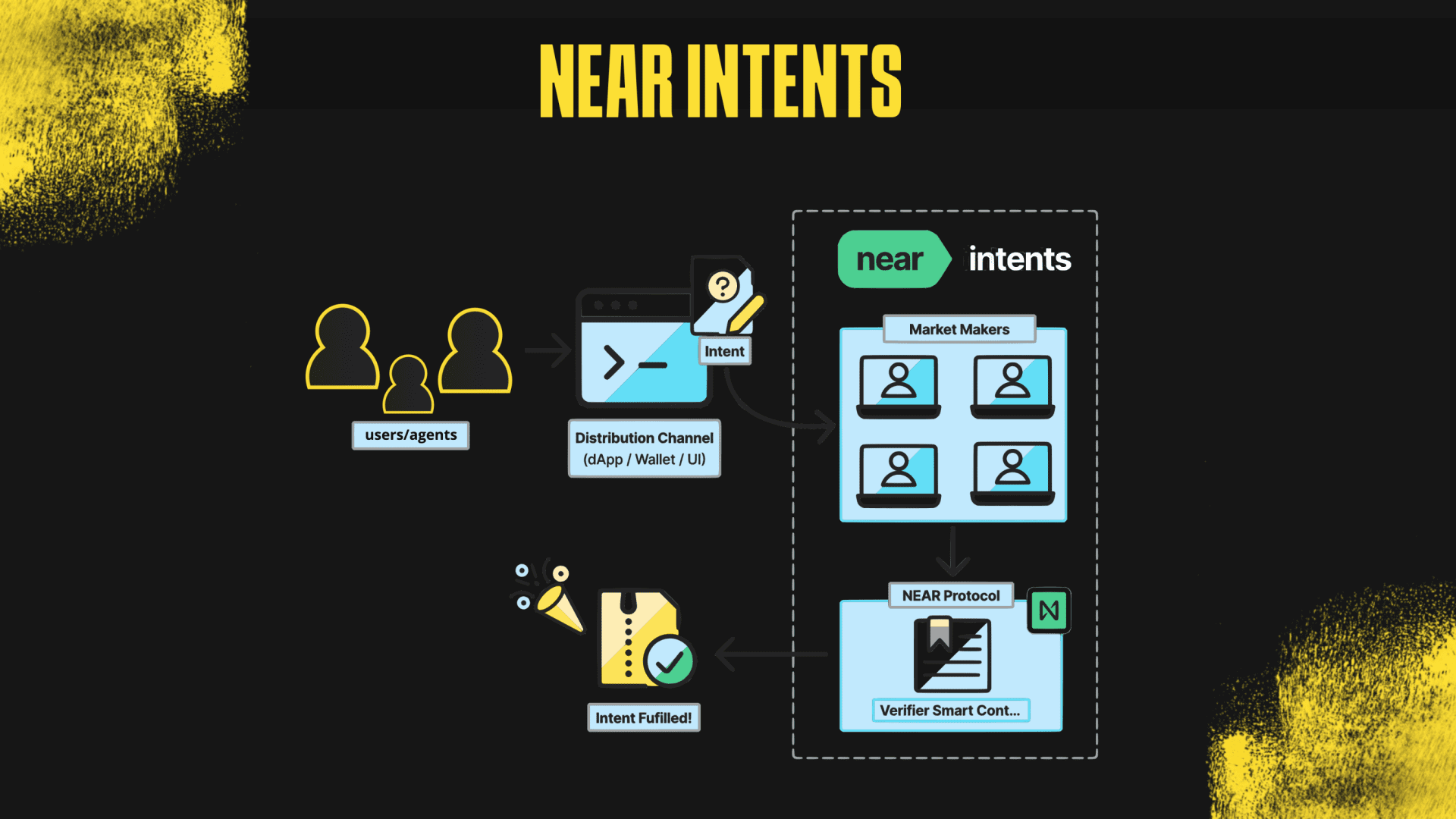
Intents represent a paradigm shift in chain abstraction intents, where your intent – the desired outcome – drives execution. Solvers compete to fulfill it optimally, routing through the best paths, bundling transactions, and even sponsoring gas. From a risk perspective, this reduces exposure to bridge exploits, which have drained billions. Yet, caution is key: not all implementations are battle-tested, so prioritize protocols with robust solver networks and audited solvers.
NEAR Intents Widget: Plug-and-Play Cross-Chain Magic
NEAR leads with its Intents protocol, baked into a chain abstraction stack that feels like Web2. Picture trading any asset on any chain from one account, no wallet juggling. Aurora Labs’ new Intents Widget simplifies this for developers and wallets, abstracting routing, flows, and execution into a ready-made interface. Starknet dApps integrate it API-first for native cross-chain swaps, while SwapKit hails it as core to seamless experiences.
With over 500,000 users and surging volumes, NEAR Intents proves demand for bridge-free DeFi swaps. Aurora’s Virtual Chains, EVM-compatible smart contracts on NEAR, amplify scalability. As a risk specialist, I appreciate how this solver network mitigates single points of failure, but always verify solver decentralization to avoid centralization risks.
| Feature | NEAR Intents | Traditional Bridges |
|---|---|---|
| Bridge Requirement | 🚫 None | ✅ Required |
| User Friction | Low (1-click) | High (multi-step) |
| Security Model | Solver competition | Custodial risks |
| Gas Handling | Sponsored/bundled | Manual per chain |
Self Chain and Biconomy: Intent-Centric Innovations Reshaping UX
Self Chain’s intent-centric access layer conversationalizes DeFi: utter a phrase, get optimal paths across 100 and EVM and non-EVM chains. Bundled transactions slash costs, keyless self-custody bolsters security, and universal liquidity unlocks potential. Biconomy layers account abstraction atop intents, enabling gasless ops via a single interface – developer SDKs make it painless.
These tools foster seamless cross-chain wallets, where your assets and actions flow unbound by chain silos. Empowered users gain aggregated liquidity, but I caution: evaluate sponsored gas mechanisms for hidden costs and ensure keyless wallets align with your security tolerance.
Trails and Across: Unifying Liquidity Without Compromise
Trails’ universal intents platform aggregates spending power across chains, tokens, and wallets, with gasless magic using any ERC20. Its lightweight toolkit – widgets and APIs – slots into apps effortlessly. Across Protocol turns desires into 1-click actions, abstracting cross-chain chaos.
This convergence drives broader DeFi adoption, as unified markets emerge. For risk managers like me, the appeal lies in reduced attack surfaces, though solver reliability demands ongoing scrutiny. Standardization via ERC-7683 and Open Intents Framework will cement interoperability, defining cross-chain orders for scalable settlement.
These standards foster a mature ecosystem for cross-chain intents UX, where protocols interoperate without proprietary lock-in. As solver networks mature, execution becomes more reliable, but my frameworks stress auditing solver incentives and monitoring for front-running risks inherent in competitive fulfillment.
Protocol Showdown: Key Players in Chain Abstraction Intents
Bridge-Free Cross-Chain Intent Protocols: Comparison for Seamless DeFi Swaps
| Protocol | Chains Supported | Gas Model | Key UX Feature | Security Highlight |
|---|---|---|---|---|
| Self Chain | 100+ EVM & non-EVM | Sponsored & Bundled | Conversational UX with optimal bridge-free paths | Native self-custody & keyless wallets |
| Biconomy | Multiple EVM chains | Gasless | Single-interface account abstraction for multi-chain swaps | Account abstraction protections |
| Trails | Multi-chain | Gasless (any ERC20) | Unified liquidity across chains & wallets | Secure universal intents execution |
| NEAR Intents | Ethereum, Bitcoin & beyond | Abstrated via solvers | Seamless one-account cross-chain swaps | Decentralized intent solver network |
| Across Protocol | Multiple EVM chains | Intent-optimized | 1-Click bridge-free actions | Efficient intents-based settlement |
Self Chain stands out for its conversational interface across 100 and chains, bundling transactions to minimize fees while keyless wallets preserve self-custody. Biconomy’s account abstraction bridge excels in gasless flows, its SDKs empowering developers to embed seamless cross-chain wallets effortlessly. Trails unifies liquidity with ERC20 gas payments, sidestepping native token hurdles, and its plug-and-play tools accelerate dApp upgrades. NEAR’s Intents Widget, with Aurora’s virtual chains, delivers API-first swaps that feel native, backed by explosive adoption metrics. Across Protocol’s 1-click actions abstract execution complexities, prioritizing speed without custodial handoffs.
Each shines in niches, yet no silver bullet exists. Prioritize protocols with transparent solver auctions and insurance funds; I’ve seen immature systems falter under volume spikes, exposing users to slippage or failed intents. Diversify across solvers to hedge, and always simulate high-value intents first.
Empowering Your Web3 Journey: Practical Steps and Risk Mitigations
Transitioning to intent-based systems demands deliberate strategy. Start with NEAR’s ecosystem for its proven scale: integrate the Intents Widget into your wallet or dApp for instant bridge-free DeFi swaps. Test Self Chain’s conversational UX for complex trades, verifying paths via dashboards. Biconomy suits gas-averse users; pair it with multi-sig setups for added layers. Trails and Across complement for liquidity aggregation, but cap exposure per intent to 1-2% of portfolio.
From my FRM vantage, the true power lies in probabilistic risk models tailored to intents. Track solver win rates, latency under load, and historical fill accuracy. Tools like on-chain dashboards reveal centralization red flags, while sponsored gas warrants scrutiny for token dilution. This cautious approach unlocks unified liquidity without the bridge black swan events that have cost billions.
DeFi’s fragmentation fades as chain abstraction intents mature, birthing a fluid multi-chain reality. Developers gain lightweight integrations; users reclaim simplicity and control. By selecting audited, decentralized solvers and layering personal safeguards, you position yourself at Web3’s forefront – secure, efficient, unbound. Explore deeper frameworks at intent-based cross-chain transactions to fortify your edge.
About the Author