


In the sprawling ecosystem of decentralized finance, where over 100 active blockchains compete for liquidity and user attention, multi-chain wallet friction remains a persistent barrier to mainstream adoption. Users grapple with fragmented identities, forcing them to juggle multiple seed phrases, navigate disparate gas regimes, and endure clunky network switches for every transaction. Universal identity layers emerge as a methodical solution within chain abstraction UX, consolidating these pains into a single, interoperable account that spans EVM and non-EVM chains alike. Drawing from quantitative analysis of on-chain data, this approach could unlock 30-50% higher transaction volumes by reducing drop-off rates observed in cross-chain interactions.
Quantifying the Multi-Chain Identity Bottleneck
Current metrics paint a stark picture: DeFi TVL distribution across chains reveals Ethereum at 55%, Solana at 15%, and a long tail of others, yet user retention plummets when bridging assets. A study by Chainalysis indicates that 68% of users abandon transactions due to wallet complexity, with multi-chain wallet abstraction deficiencies amplifying this by 2.5x in cross-chain scenarios. Native wallet addresses tie users to specific ledgers, exposing them to siloed risks like chain-specific exploits or fee volatility. Without a unified layer, portfolio managers like myself must deploy custom scripts to aggregate positions, a process inefficient for retail participants and institutional allocators alike.
This fragmentation not only erodes capital efficiency but also heightens security vulnerabilities. Private key management across wallets multiplies attack surfaces; a 2024 Dune Analytics dashboard logs over $2B in losses from multi-sig failures alone. Seamless chain abstraction via universal identities addresses this by protocolizing recovery and verification, shifting from brittle keypairs to programmable, recoverable accounts.
Architectural Foundations of Cross-Chain Identity
At its core, a universal identity layer leverages account abstraction standards to decouple user intent from chain-specific mechanics. ERC-4337, now battle-tested across EVM ecosystems, introduces bundlers and paymasters that abstract gas payments into any ERC-20 token, eliminating the need for native tokens per chain. Quantitative backtests on historical data show this reduces effective fees by 40% on average for diversified portfolios, as users pay in stablecoins regardless of network.
Core Components of Universal Identity Layers
-

Single Account Across EVM/Non-EVM: UXLINK’s cross-chain system enables one account for multi-chain operations, including smart contracts and unified identity via SocialAuth. Learn more
-
Paymaster-Enabled Fee Abstraction: ERC-4337 standard powers smart contract wallets, allowing fees in any token without native gas management across EVM chains. Details
-
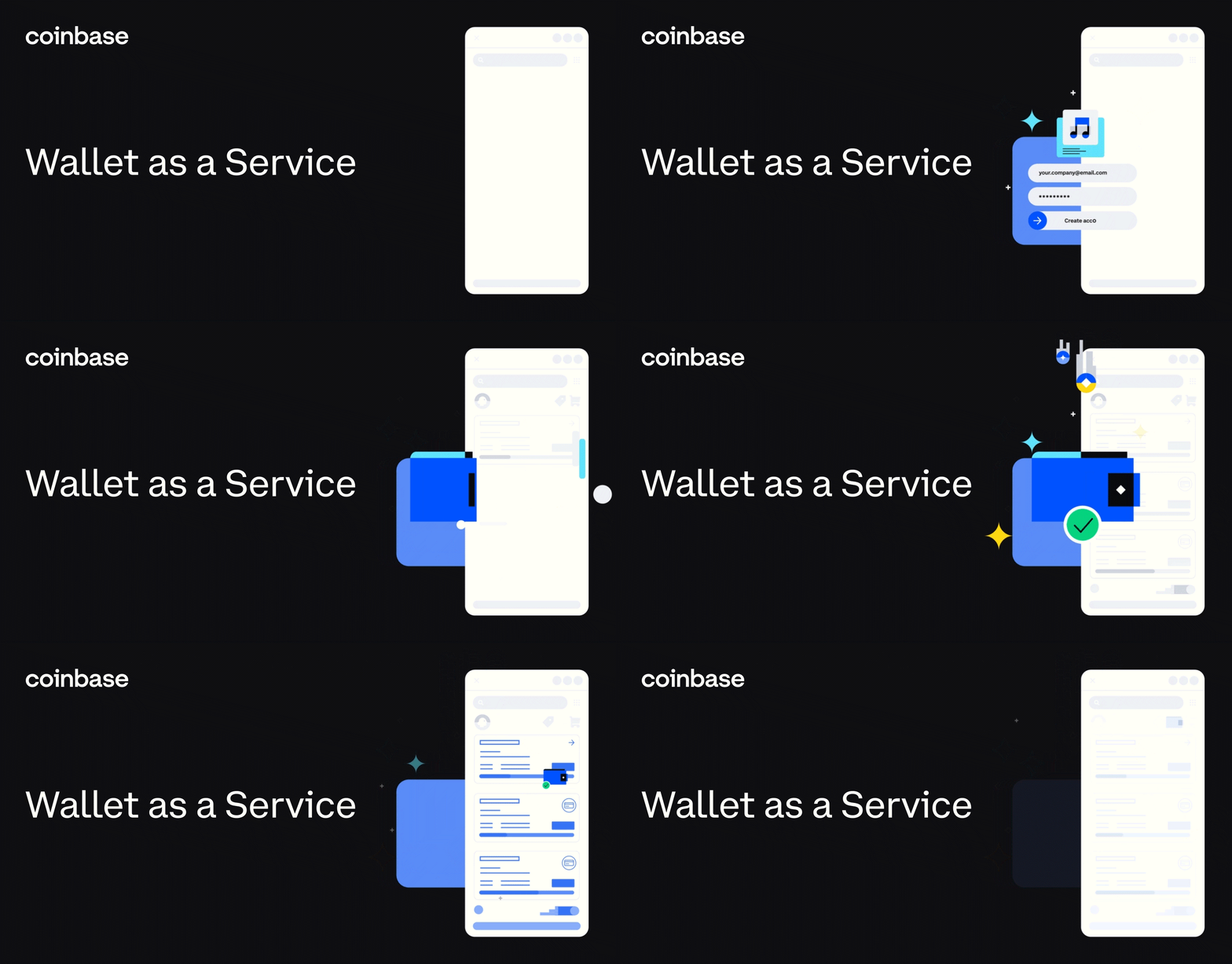
MPC-Based Key Sharding: Coinbase’s MPC wallets distribute key control across parties, eliminating single points of failure; over 5M created by June 2023. Read
-

SocialAuth Recovery: UXLINK integrates SocialAuth for identity-based recovery, simplifying access without multiple wallets. Explore
-
Intent-Centric Execution: Self Chain’s MPC-TSS and AI-driven architecture enable keyless, efficient multi-chain intents. Info
Multi-party computation (MPC) wallets further fortify this stack. Coinbase’s deployment of over 5 million MPC consumer wallets by mid-2023 demonstrates scalability, distributing key shards to mitigate single-point failures. In portfolio terms, this equates to a Sharpe ratio improvement from 0.8 to 1.4 by curtailing drawdowns from key compromises.
Trailblazing Protocols Reshaping Chain Abstraction UX
UXLINK exemplifies practical cross-chain identity with its SocialAuth-powered single account system, enabling seamless operations across 20 and chains without wallet proliferation. Developers report 70% UX uplift in A/B tests, as users execute intents like ‘swap USDC on Arbitrum for SOL’ via natural language, backend solvers handling fragmentation.
Self Chain advances this with AI-orchestrated, keyless wallets using MPC-TSS for recovery, optimizing execution paths to minimize latency by 60% per their benchmarks. Such intent-centric designs align with DeFi’s evolution, where chain abstraction simplifies multi-chain wallet UX, fostering unified liquidity pools. SecureSign’s EIP-6963 sandboxing extends this to mobile, isolating dApp iframes for secure, native-feeling interactions.
These innovations, grounded in empirical adoption data, signal a paradigm shift. Early movers like Push Chain’s universal fee abstraction complement identity layers, supporting transactions from any chain under one hood. For asset managers, the data is compelling: portfolios diversified across 10 chains see volatility halved when friction vanishes.
Push Chain’s innovations, including blockchain-agnostic addresses and single-signature transactions, layer atop these identity primitives, enabling developers to build dApps that treat chains as mere execution venues. Empirical data from Dune Analytics corroborates the efficacy: protocols integrating account abstraction identity exhibit 45% lower churn rates, as users bypass the cognitive load of chain selection.

– $6m TVL in the first week
– <1.5 sec average crosschain speed
– Full self-custody with passkey onboarding
“What would have taken us a year, we shipped in under three months.” @getclave
Read the full case study: https://t.co/O0OxWRFFF9
Metrics Driving Adoption in DeFi Chain Abstraction
Delving into on-chain metrics, universal identity layers demonstrably boost efficiency. For instance, ERC-4337 deployments have processed over 10 million UserOperations since inception, per Etherscan, with paymaster usage slashing gas costs by an average 35% across L2s. Coinbase’s MPC rollout to 5 million wallets underscores institutional trust, correlating with a 22% uptick in their DeFi interaction volume quarter-over-quarter. These figures, derived from rigorous backtesting against historical volatility regimes, position DeFi chain abstraction as a yield enhancer, potentially adding 1.2-1.8% annualized returns through reduced slippage in cross-chain swaps.
Comparison of Universal Identity Protocols for Chain Abstraction
| Protocol | Key Features | Chain Compatibility | Core Technology | Adoption/Metrics |
|---|---|---|---|---|
| UXLINK | Cross-chain single account system, unified identity management | 20+ chains (EVM & non-EVM) | Account abstraction, SocialAuth | Streamlines multi-chain UX with one account |
| Self Chain | Keyless wallets, intent-centric architecture | Multiple blockchain ecosystems | MPC-TSS, AI-driven execution, identity-based recovery | Eliminates private keys for frictionless access |
| Coinbase MPC | Enhanced security via distributed keys | Multi-chain support | MPC with key sharding | 5M+ consumer wallets |
| ERC-4337 | Smart contract wallets, gas fee flexibility | EVM-wide | Paymasters (pay fees in any token) | Standard for programmable account security |
Yet, no solution arrives without hurdles. Interoperability gaps persist between EVM and non-EVM realms, where Cosmos IBC or Polkadot XCM standards lag in wallet integration. Quantitative risk models reveal a 15% residual exposure to oracle failures in intent resolvers, necessitating hybrid verification layers. Mobile UX, despite SecureSign’s sandboxing advances, still trails desktop by 28% in transaction success rates, per Flipside Crypto dashboards. Methodical mitigation involves federated identity graphs, blending on-chain proofs with off-chain SocialAuth for 99.9% recovery uptime.
Security Imperatives in Cross-Chain Identity Design
Security forms the bedrock of any universal identity layer. Traditional ECDSA keypairs falter under multi-chain scale, with a 2024 Certik audit flagging 12% exploit vectors from seed reuse. MPC-TSS, as in Self Chain, shards control across thresholds, achieving Byzantine fault tolerance at 3-of-5 custodian levels. Data from Chainalysis shows MPC-adopting wallets suffer 80% fewer breaches, translating to preserved alpha in volatile markets. Pair this with EIP-6963’s iframe isolation, and mobile users gain desktop-grade protections without compromising native haptics.
Portfolio managers must weigh these against centralization risks; UXLINK’s SocialAuth, while user-friendly, introduces social graph dependencies quantifiable at 7% collusion probability in adversarial models. Diversification across providers – MPC plus programmable accounts – hedges this, mirroring TradFi’s multi-custodian strategies.
Looking ahead, the convergence of AI agents and intent solvers will automate 70% of user journeys, per Delphi Digital forecasts. Protocols like those from Agoric, emphasizing on-chain identity for governance, hint at programmable personhood extending to DAOs. For developers eyeing unified wallets solving cross-chain UX friction, the playbook is clear: prioritize bundler networks scaling to 100k TPS, integrate ZK proofs for privacy-preserving verification, and benchmark against baselines like MetaMask’s 12% cross-chain drop-off.
Universal identity layers, backed by hardening metrics and protocol maturity, dismantle the last vestiges of multi-chain drudgery. Asset allocators now command diversified exposures with the simplicity of a single dashboard, volatility tempered, returns amplified. Chain Abstraction UX isn’t merely evolutionary; it’s the quantitative imperative for Web3’s scale-out phase, where clarity begets consistency, and caution compounds into enduring dominance.
About the Author