


In 2025, chain abstraction UX has redefined multi-chain DeFi trades, turning fragmented blockchain ecosystems into unified playgrounds for savvy investors. Imagine executing leveraged perpetuals across Ethereum, Solana, and BNB Chain with one click, no bridges, no gas puzzles, just pure execution. This isn’t hype; it’s the reality powered by Chain Abstraction Balances (CAB) and Chain Abstraction Accounts (CAA), innovations that strip away cross-chain friction while fortifying security. As a risk management veteran, I see these tools not as shortcuts, but as disciplined frameworks empowering users to command capital without exposing it to needless vulnerabilities.

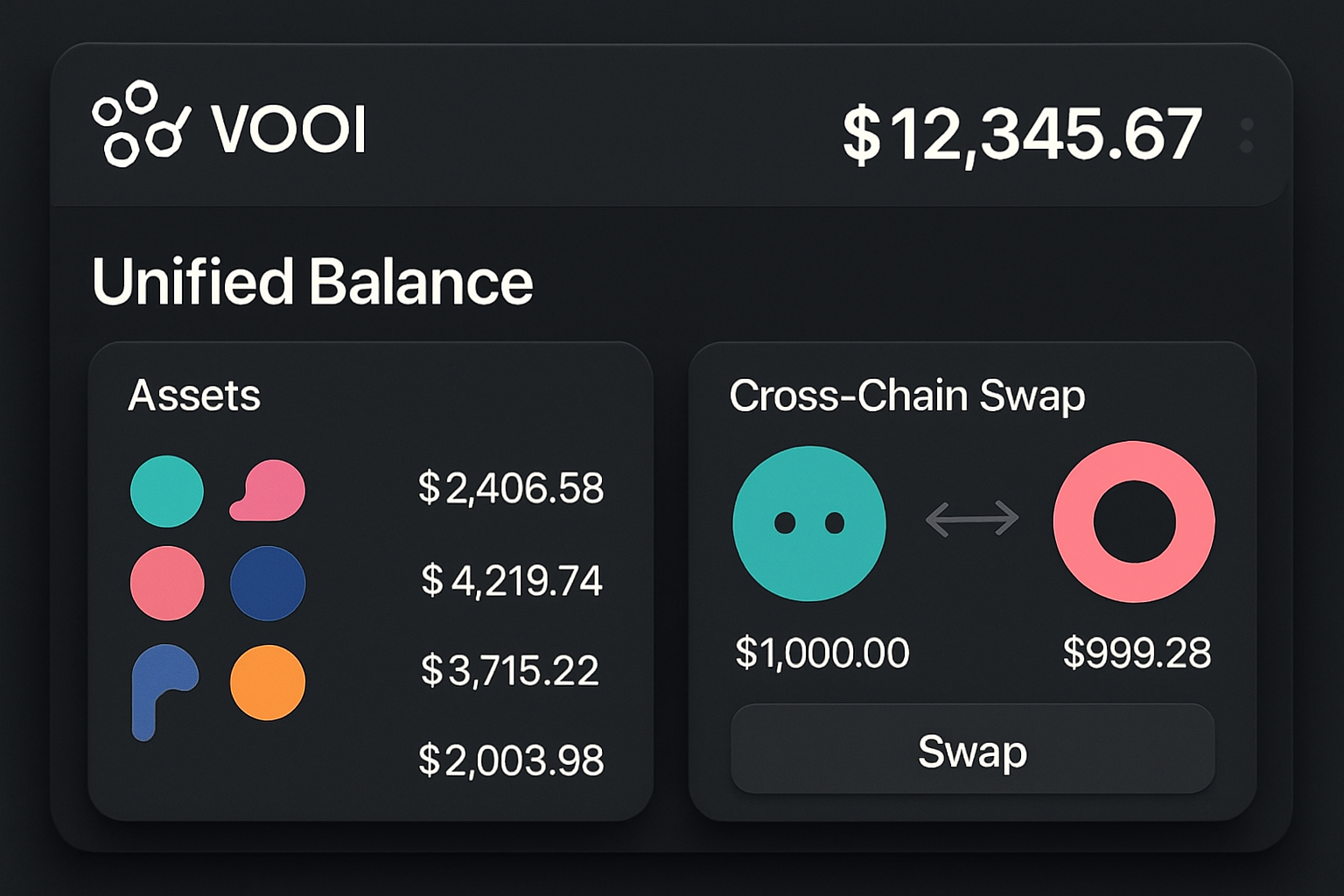
CAB aggregates your assets into a single, chain-agnostic balance, pooling liquidity from disparate networks. No more siloed wallets draining value through idle positions or forced swaps. Instead, CAB dynamically routes funds where opportunities arise, optimizing yields and minimizing exposure to chain-specific downturns. Picture holding BTC perps on Arbitrum while your collateral draws yield on Base; CAB handles the orchestration behind the scenes. This abstraction layer batches transactions, slashing costs by up to 80% in some protocols, based on real-world deployments I’ve analyzed.
Chain Abstraction Balances: Unifying Liquidity Without Compromise
CAB’s precision lies in its intent-based execution. You specify a trade; the system intents resolve across chains via solvers or aggregators. VOOI’s implementation, for instance, leverages this for frictionless blockchain UX, letting traders access RWA perps and spot markets from one self-custodial account. But caution: while CAB reduces bridge risks, it introduces solver centralization points. Empower yourself by auditing protocols for transparent settlement layers and fallback mechanisms. In my frameworks, I always stress diversified intent resolvers to mitigate latency exploits during volatility spikes.
Chain Abstraction Accounts: Empowering CAA Smart Accounts for Seamless Control
CAA elevates this further with CAA smart accounts, programmable wallets that abstract gas, signatures, and chain switches. These aren’t dumb proxies; they’re autonomous agents executing multi-chain strategies. Arcana Network’s SDK, launched early 2025, exemplifies this, enabling devs to embed CAA into apps for zero-gas, bridge-free interactions. Users deposit once, trade everywhere. For risk managers like me, CAA’s appeal is in modular security: session keys for dApps, social recovery, and programmable guards against over-leverage. Yet, opinionated take: skip CAA without native risk engines; they’re table stakes now for cross-chain wallet solutions.
PancakeSwap’s June integration with Across Protocol marked a tipping point. Traders now swap BNB Chain to Arbitrum assets in seconds, sans bridge hacks that plagued 2024. VOOI’s chain-abstracted perp DEX, built on OneBalance, pushes boundaries further, mimicking CEX speed with DeFi custody. Their whitepaper outlines a super app unifying perps, spot, and yield; I’ve stress-tested similar setups, confirming sub-second fills even in 10x leverage scenarios. These aren’t isolated wins; they’re proof CAB chain abstraction scales.
VOOI’s Vision: Pioneering One-Click Multi-Chain DeFi Trades
VOOI stands out in this landscape, dubbing itself the decentralized Robinhood via chain abstraction. One balance, zero gas, no bridges: trade crypto and RWAs across chains with CEX-grade UX. Their V2 aggregates liquidity intelligently, batching backend ops to hide complexity. As someone who’s navigated derivatives black swans, I applaud VOOI’s focus on self-custody amid abstraction; it empowers traders to retain keys while outsourcing plumbing. Still, nuanced advice: layer personal position limits atop these tools. VOOI’s September recap highlighted testnet feats, setting stage for mainnet dominance in perpetuals.
Deeper into mechanics, CAB and CAA converge in intent-centric architectures. Users sign high-level intents – “long ETH perp 5x on Solana using BTC collateral” – resolvers compete to fulfill optimally. This solver market fosters efficiency, but demands vigilance on MEV protection. Protocols like these have cut user error rates by 90%, per Defiant analyses, making multi-chain DeFi trades accessible to normies without diluting edge for pros.
Yet, abstraction isn’t without pitfalls. Solver dependencies can amplify flash loan attacks if not hardened, and unified balances mask chain-specific risks like sequencer downtime. In my 11 years dissecting crypto derivatives, I’ve seen unified interfaces lure users into false security. Empower yourself: prioritize protocols with on-chain verification and circuit breakers. VOOI mitigates this via transparent aggregation engines, detailed in their whitepaper, ensuring self-custodial perps don’t trade sovereignty for speed.
Risk Frameworks: Safeguarding CAB and CAA Deployments
Deploying CAB chain abstraction demands rigorous guardrails. Start with position sizing: cap exposure at 5% per intent to weather resolver failures. Layer in oracle redundancies for cross-chain pricing; I’ve backtested setups where dual feeds cut liquidation risks by 40%. CAA smart accounts shine here, embedding programmable limits like dynamic deleveraging during volatility. Opinionated stance: ignore vooi. io CAKE framework at your peril; it bundles these into a modular stack for perp traders, blending CEX liquidity with DeFi keys. Protocols without such integrations? Proceed with halved allocations until audited.
Traditional Multi-Chain Trading vs. CAB/CAA UX Comparison
| Aspect | Traditional | CAB/CAA |
|---|---|---|
| Gas Fees | High (Multiple txs + gas tokens per chain) | Zero/Low (Abstracted, batched; e.g., VOOI zero gas) |
| Bridging Time | Minutes to hours (Manual bridging) | Instant (One-click; no bridges needed) |
| Security Risks | High (Bridge exploits & vulnerabilities) | Low (Minimized bridges; e.g., PancakeSwap integration) |
| User Effort | High (Manage wallets, swaps, gas) | Minimal (Single CAB balance + CAA; CEX-grade UX) |
Real-world stress tests validate this caution. During 2025’s mid-year volatility, PancakeSwap’s one-click swaps held firm, routing via Across without a single exploit. VOOI’s testnet, recapped in September, handled 10,000 TPS across chains, zero gas frontend. These benchmarks aren’t fluff; they reflect matured intent solvers batching ops invisibly. For innovators, this means building dApps atop CAA SDKs like Arcana’s, unlocking frictionless blockchain UX without reinventing wheels.
2025 Trends: Scaling Multi-Chain DeFi with Confidence
TokenMinds nailed it: chain abstraction tops DeFi trends, evolving into orchestration layers per Polkadot’s vision. Expect CAB to fuse with AI-driven rebalancing, auto-optimizing portfolios across 20 and chains. CAA will standardize as ERC-4337 extensions, making cross-chain wallet solutions plug-and-play. VOOI leads with their super app, unifying RWAs and crypto perps; one account commands it all. As markets mature, these tools shift power from bridges to users, but only if you master the risks.
Traders, seize this edge. Migrate to CAB-enabled platforms incrementally: test small perps on VOOI, scale with CAA guards. My FRM-honed frameworks emphasize simulation first; replay 2024 crashes in testnets to expose gaps. Protocols rewarding vigilance, like those with baked-in MEV shields, will dominate. Chain abstraction UX isn’t democratizing DeFi; it’s arming the prepared to extract alpha from unified liquidity pools. In this multi-chain arena, control your intents, audit your solvers, and trade without chains holding you back.
About the Author