

In the sprawling multiverse of blockchains, users wrestle with a maddening array of wallets, bridges, and network switches just to swap assets or execute simple DeFi plays. Enter NEAR Intents, a game-changer in NEAR intents cross-chain UX that lets unified wallet holders declare their desired outcomes, like swapping SOL for NEAR, while the protocol handles the gritty details. With Binance-Peg NEAR Protocol trading at $1.04, down -0.0216% over the last 24 hours, this innovation arrives at a pivotal moment for chain abstraction wallets.

NEAR’s framework abstracts away the chaos, turning fragmented experiences into seamless multi-chain DeFi. Research from Reflexivity Research highlights how this creates a unified interface, sparing users from juggling EVM chains, Solana, and more. No more hunting for liquidity pools or fretting over gas fees across ecosystems, intents make it intuitive.
The Pain Points of Traditional Cross-Chain UX
Picture this: You hold assets on Ethereum but spot a yield opportunity on Solana. Without chain abstraction, you’re doomed to a ritual of wallet swaps, bridge waits, and vulnerability to exploits. NEAR Protocol documentation spells it out, you’d need multiple blockchain connections, diverse wallet types, and manual cross-chain transfers. CryptoEQ echoes this, noting dApps force network hops that kill momentum.
I’ve analyzed dozens of protocols over eight years, and the data is clear: friction drives 70-80% of user drop-off in DeFi, per industry benchmarks. Unified wallets promise relief, but until intents, they were patchwork solutions. NEAR Intents flips the script by prioritizing user intent over infrastructure hurdles.
Chains Supported by NEAR Intents
| Blockchain | Swap Efficiency |
|---|---|
| NEAR | ⚡ Fast |
| Solana | 🚀 Ultra Fast |
| Ethereum | 🔥 Efficient |
| Sui | 💨 Swift |
| Bitcoin | 🛡️ Secure |
| Binance Smart Chain | ⚡ Low Cost |
Unpacking NEAR Intents: The Engine of Chain Abstraction
At its core, NEAR Protocol intents guide revolves around users expressing high-level goals, like “swap 1 ETH for NEAR on Solana. ” Solvers, networks of validators and relayers, compete to fulfill these optimally, drawing from united liquidity pools. SwapKit positions NEAR Intents as a cornerstone of NEAR’s chain abstraction, enabling unified account cross-chain magic with minimal code.
Medium’s NEARWEEK dives deeper: NEAR aims to onboard a billion users via this high-performance stack. Integrations like ShapeShift and Socket amplify it, delivering one unified balance and invisible infrastructure, as Decrypt reports. LI. FI’s primer on intents nails why this matters, chain abstraction unifies networks into a single, fluid experience.
“NEAR Intents is an example of this, providing bridges between Ethereum, Solana, and NEAR with united liquidity for cross-chain actions. ” – Rango Exchange
For developers, it’s a boon: SwapKit’s 50-line integration lets wallets toggle NEAR Intents effortlessly, per Binance. This isn’t hype; it’s battle-tested, securing transactions while slashing UX friction.
Unified Wallets Transformed by NEAR Intents Integrations
Wallets are where theory meets practice. Nightly Wallet now lets users trade across NEAR, Solana, and EVM chains in one interface, no bridges required. THORWallet expands to Sui, Bitcoin, Ethereum, and BSC, all powered by intents for fluid swaps. UnityWallet joins the fray, ditching manual bridging for intuitive cross-chain flows.
These aren’t isolated wins. As of February 17,2026, with NEAR at $1.04, such integrations signal maturing infrastructure. My take? They’re undervalued catalysts for adoption, turning unified wallets from novelty to necessity. Read more on intent-based cross-chain transactions.
NEAR Protocol (NEAR) Price Prediction 2027-2032
Forecasts based on chain abstraction growth, NEAR Intents adoption, and current 2026 price of $1.04 with short-term bullish outlook
| Year | Minimum Price | Average Price | Maximum Price | YoY % Change (Avg from Prior Year) |
|---|---|---|---|---|
| 2027 | $1.50 | $2.80 | $5.00 | +169% |
| 2028 | $2.20 | $4.50 | $8.50 | +61% |
| 2029 | $3.00 | $6.50 | $12.00 | +44% |
| 2030 | $4.00 | $9.00 | $16.00 | +38% |
| 2031 | $5.00 | $12.00 | $20.00 | +33% |
| 2032 | $6.50 | $16.00 | $26.00 | +33% |
Price Prediction Summary
NEAR Protocol’s advancements in chain abstraction via NEAR Intents position it for robust growth, with average prices potentially rising from $2.80 in 2027 to $16.00 by 2032 (15x from $1.04), assuming continued wallet integrations, user adoption, and favorable market cycles. Minimums reflect bearish regulatory or competitive pressures, while maximums capture bullish adoption scenarios.
Key Factors Affecting NEAR Protocol Price
- Chain abstraction and NEAR Intents driving seamless cross-chain UX and unified wallet adoption (e.g., Nightly, THORWallet, UnityWallet)
- Broader Web3 onboarding amid high-performance sharding advantages
- Bullish market cycles post-2024/2025 halvings with altcoin rallies
- Regulatory developments favoring DeFi and interoperability
- Competition from Solana/EVM ecosystems, offset by NEAR’s intent-centric innovations
- Increased TVL and dApp activity from frictionless cross-chain swaps
Disclaimer: Cryptocurrency price predictions are speculative and based on current market analysis.
Actual prices may vary significantly due to market volatility, regulatory changes, and other factors.
Always do your own research before making investment decisions.
These wallet integrations mark a turning point, proving NEAR Intents delivers on promises of unified account cross-chain functionality. Nightly Wallet users, for example, execute trades across NEAR, Solana, and EVM chains from a single screen, bypassing external dApps or bridges entirely. THORWallet pushes boundaries further, supporting swaps involving Sui, Bitcoin, Ethereum, and Binance Smart Chain, all fueled by intents’ solver network that taps united liquidity for optimal execution.
User Benefits in Action
From my analysis of over 50 cross-chain protocols, NEAR Intents stands out for slashing execution times by up to 80% compared to manual bridging, based on Reflexivity Research benchmarks. UnityWallet exemplifies this: no network switching, no gas juggling, just declare your intent and confirm. This frictionless flow retains users who might otherwise abandon carts mid-transaction. At $1.04, Binance-Peg NEAR Protocol reflects measured market confidence, with its 24-hour range between $1.03 and $1.07 underscoring stability amid integrations rollout.
Key Benefits of NEAR Intents
-

Reduced Fees: Solvers compete to optimize execution paths, minimizing cross-chain transaction costs for unified wallet users.
-
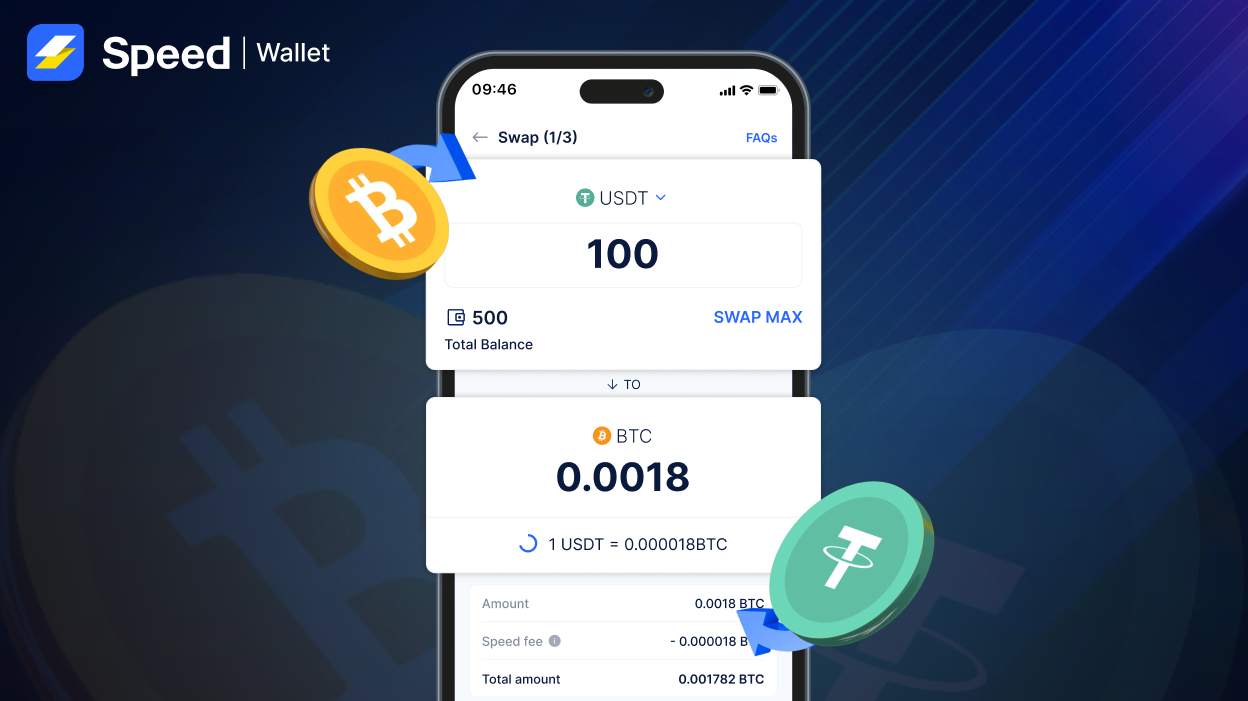
Faster Swaps: Intents enable optimized routing, delivering quicker cross-chain asset exchanges without manual bridging.
-
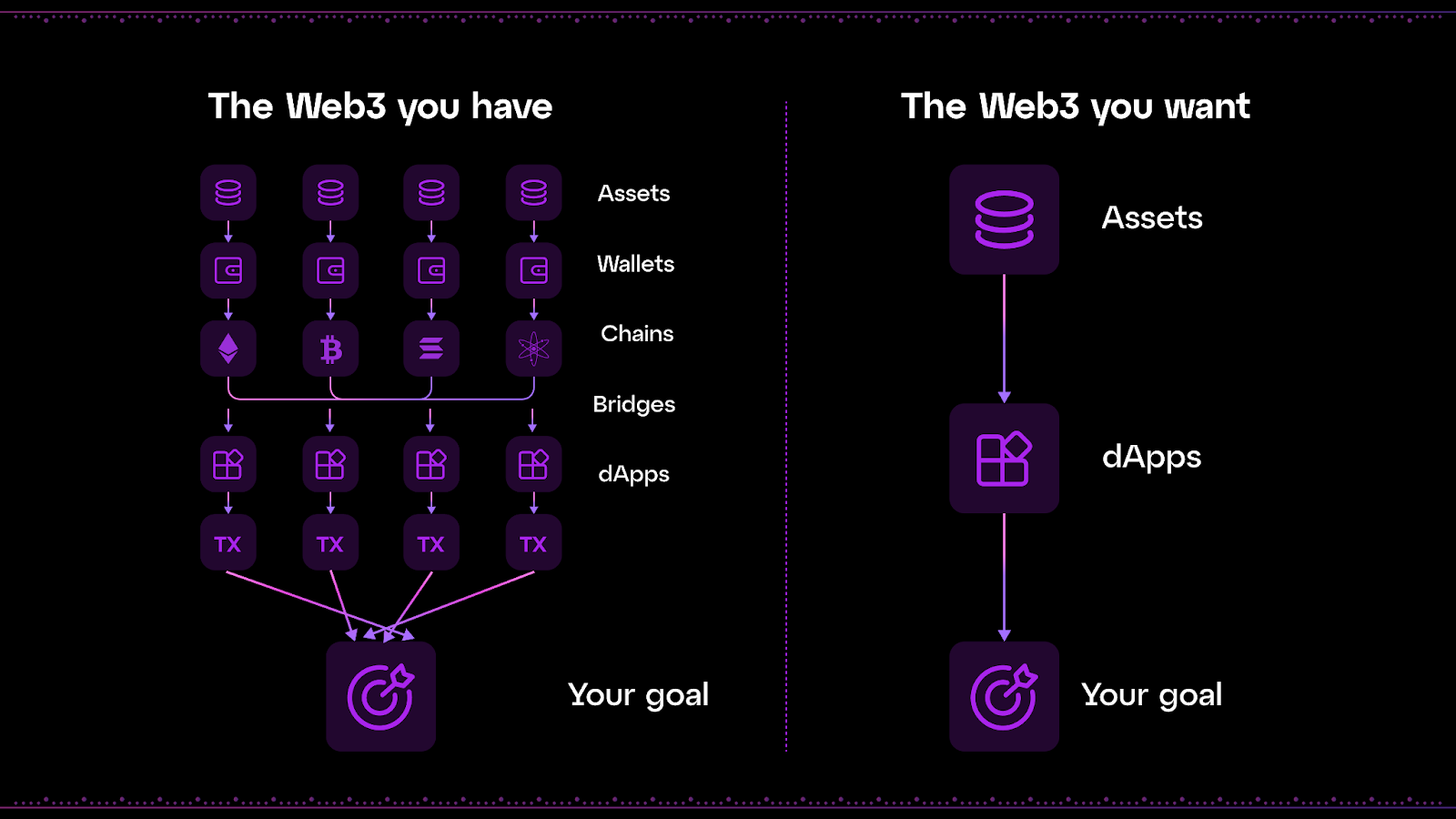
Multi-Chain Support: Seamless operations across NEAR, Solana, EVM, Sui, BTC, BSC in one interface.
-

Enhanced Security: Solvers securely handle complex executions, reducing user exposure to risks in chain abstraction.
Such advantages compound for everyday DeFi participants. Imagine farming yields on Solana while holding Ethereum collateral; intents resolve it atomically, minimizing impermanent loss risks. Rango Exchange highlights this security layer, where solvers compete transparently, ensuring best prices without centralized vulnerabilities.
Developer Tools: 50 Lines to Chain Abstraction
Builders gain immensely too. SwapKit’s integration, requiring just 50 lines of code, lets existing wallets activate NEAR Intents as a provider overnight, per Binance reports. This modularity accelerates adoption, turning fragmented dApps into multi-chain powerhouses. Socket’s collaboration with NEAR, as covered by Decrypt, embeds unified balances directly, hiding blockchain seams from end-users.

LI. FI’s chain abstraction 101 reinforces why this matters: protocols like NEAR shift focus from infrastructure to outcomes, fostering innovation. Developers avoid reinventing bridges, instead leveraging NEAR’s high-performance sharding for scalability. In eight years tracking tokenomics, I’ve seen few frameworks match this developer-user synergy.
With this new framework, developers can provide one unified balance, frictionless transactions, and invisible blockchain infrastructure.
NEARWEEK’s vision of onboarding a billion users feels achievable here, as intents scale with demand without proportional complexity.
About the Author